


What Is a Hybrid Tanning Bed? The 2026 Guide to UV and Red Light Fusion
The "leather" skin look of the 1990s is officially a relic of the past. If you've ever stepped out of a session feeling tight, itchy, or worried about premature fine lines, you're not alone. Most tanners assume that a deep bronze requires sacrificing skin health, but the latest equipment proves otherwise. You're likely wondering, what is a hybrid tanning bed, and why is it dominating the market in 2026? It's a sophisticated fusion of UV light for pigment and red light therapy for cellular rejuvenation.
We're here to help you understand how this technology creates a synergistic effect where specific light wavelengths prepare your skin to absorb UV more efficiently while maintaining critical moisture. This guide promises to show you how to achieve superior, long-lasting results without the dry, itchy side effects of traditional units. You'll get a clear breakdown of the technical specifications behind leading models like the ProSun Jade and Onyx series. We'll also provide the clarity you need to identify the best hybrid system for either home or commercial environments, ensuring your investment delivers both a perfect tan and healthier skin.
Key Takeaways
- Understand what is a hybrid tanning bed by exploring how it fuses UV spectrums with 633nm red light to deliver simultaneous bronzing and skin rejuvenation.
- Discover the physiological benefits of red light therapy, which increases micro-circulation and oxygen levels to ensure a more efficient, moisture-rich tanning process.
- Compare the performance of UV, red light, and hybrid modalities to see why a combined approach prevents the "leather" skin effect common with traditional tanning.
- Evaluate critical technical specifications, including the difference between 120V plug-and-play home units and 220V commercial-grade systems like the ProSun Onyx.
- Gain insights into selecting the right lamp configurations and ratios to maximize both cosmetic results and long-term skin health.
What Is a Hybrid Tanning Bed? Defining the Technology
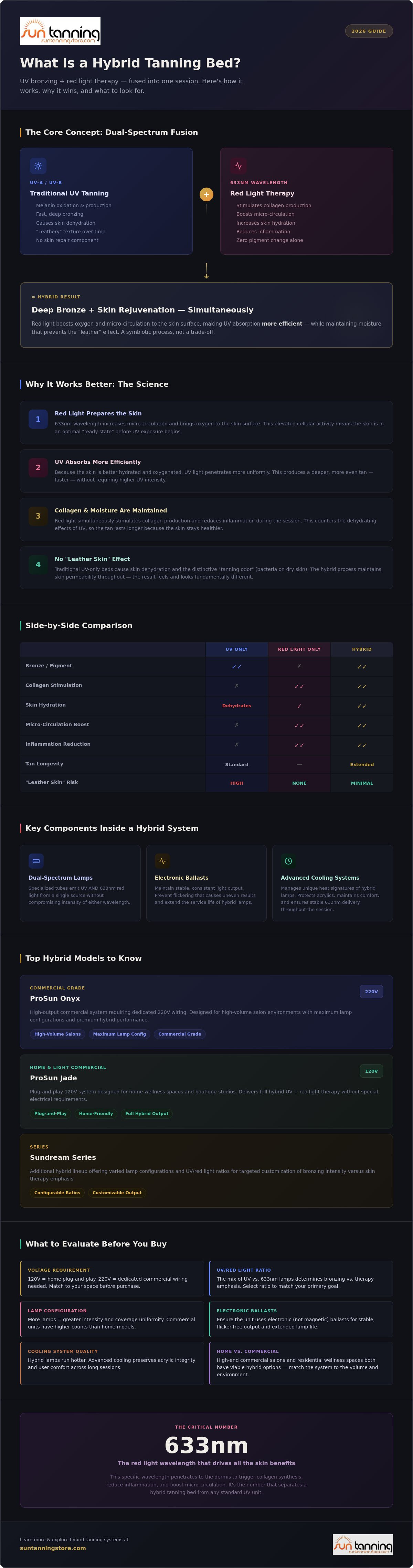
Understanding what is a hybrid tanning bed begins with looking at the specific spectrum of light delivered to your skin. Unlike traditional equipment that relies solely on ultraviolet output, hybrid systems utilize specialized lamps designed to emit both UV spectrums and 633nm red light simultaneously. This dual-action approach represents the most significant advancement in the industry in decades. It moves beyond simple pigment darkening to incorporate active skin therapy during the session.
The "hybrid" name refers to this dual-purpose strategy: achieving deep cosmetic bronzing while promoting skin rejuvenation. You can identify these units almost immediately by their visual output. Hybrid beds often feature distinct pink or red-tinted lamps positioned alongside standard blue UV tubes. This isn't just for aesthetics. The red light works to boost micro-circulation and skin hydration. By bringing more oxygen to the surface, the red light actually helps the UV light produce a more efficient tan. It's a symbiotic process that prevents the dry, "leathery" texture often associated with older tanning methods.
The Evolution of Indoor Tanning
The industry has seen a massive transition from the high-pressure UV-only units of the late 20th century to multi-spectrum wellness devices. Modern Indoor tanning has evolved into a sophisticated branch of photobiomodulation. By 2026, consumer demand for "beauty-light" has fundamentally changed the equipment market. People no longer want just a tan; they want a treatment that supports collagen and skin elasticity. This shift has made hybrid technology the standard for both high-end commercial salons and residential wellness spaces.
Key Components of a Hybrid System
The performance of a hybrid unit depends on several high-tech components working in unison. These include:
- Dual-Spectrum Lamps: Specialized tubes engineered to emit multiple wavelengths from a single source without compromising intensity.
- Electronic Ballasts: These components are critical for maintaining a consistent light output. They prevent the flickering that can lead to uneven results and extend the life of the hybrid lamps.
- Advanced Cooling Systems: Hybrid lamps have unique heat signatures. Manufacturers design internal cooling systems to manage this heat, protecting the acrylics and ensuring the user remains comfortable.
These components ensure that the delivery of 633nm light is stable and effective. When you step into a unit like the ProSun Jade or Onyx, these systems work behind the scenes to balance heat and light for optimal skin permeability. The result is a deeper tan that lasts longer because the skin is healthier at the start of the process.
Tanning Bed vs. Red Light Therapy: The Hybrid Middle Ground
Choosing between a deep tan and healthy skin used to be a binary decision. You either opted for the rapid results of a UV session or the restorative benefits of a red light treatment. Today, understanding what is a hybrid tanning bed allows you to stop compromising. These units function as a middle ground, merging two distinct light-based therapies into a single, high-efficiency session that addresses both aesthetic and physiological needs.
Traditional Tanning (UV-A/UV-B Focus)
Traditional equipment focuses exclusively on melanin oxidation and production. The primary goal is speed. While effective for color, the trade-off is often significant skin dehydration and the development of a distinct "tanning odor" caused by bacteria on dry skin. High-intensity UV exposure without skin support can lead to serious health risks if not managed correctly. When researching what to look for when buying a tanning bed, many users now prioritize units that offer more than just raw UV output to mitigate these drying effects.
Red Light Therapy (633nm Focus)
Pure red light therapy units operate at the 633nm wavelength to stimulate collagen and reduce inflammation. These systems are excellent for full-body recovery and improving skin texture. However, they offer zero pigment change. You won't get a tan from a red light unit alone. For those focused on wellness, the red light therapy bed benefits are undeniable, but they leave the "bronze" seeker wanting more. This gap is exactly why the hybrid category was created.
The Hybrid Advantage (Combined Spectrum)
The hybrid approach changes the tanning process by using red light to prepare the skin. Red light increases micro-circulation, which brings more oxygen to the skin surface. Melanin requires oxygen to darken. By increasing this bio-availability, what is a hybrid tanning bed actually provides is an accelerated bronzing process that requires less total UV exposure for the same result. The outcome is a "softer" tan that looks natural and lasts longer because the skin remains hydrated and elastic. It's the ideal solution for "dry skin" tanners who have historically struggled with the itchy, tight sensation of traditional beds.
Hybrid tanning beds serve as the essential technological bridge between pure cosmetic bronzing and professional-grade skin wellness. If you're ready to upgrade your routine, you can explore our latest hybrid tanning bed inventory to find the right fit for your space.
The Science of Hybrid Results: Why It Works Better
The effectiveness of hybrid technology rests on the specific 633nm wavelength of red light. This isn't just a visual choice. This precise frequency penetrates the dermal layers to stimulate cellular activity and increase skin permeability. To fully grasp what is a hybrid tanning bed, you must look at the cellular level. When the skin is more permeable, it becomes more receptive to the tanning process, allowing for a more even and deeper distribution of color without requiring the extreme UV intensity of older systems.
Oxygen is the silent partner in any successful tanning session. Red light therapy triggers a process called vasodilation, which increases micro-circulation throughout the body. This surge in blood flow brings a fresh supply of oxygen directly to the skin surface. Since oxygen is the primary catalyst in the UV-induced tanning process, its increased presence allows melanin to oxidize more rapidly. You aren't just hitting the skin with more light; you're making the skin more efficient at processing the light it receives.
Traditional UV sessions are often criticized for their impact on skin elasticity. While the FDA on tanning device risks highlights the potential for premature aging and fine lines from overexposure, the hybrid approach introduces a "collagen boost" to the environment. The 633nm light stimulates fibroblasts, which are the cells responsible for producing collagen and elastin. This helps mitigate the drying effects of UV rays, providing a built-in defense against the wrinkles typically associated with indoor tanning.
Photobiomodulation and Melanin
This synergy is known as photobiomodulation. The red light prepares the cells by boosting ATP (adenosine triphosphate) production, which gives your skin the energy it needs to repair and regenerate. Because the skin is in a heightened state of readiness, hybrid sessions often require less total UV exposure to achieve the same color depth as a standard bed. Consistent 633nm exposure doesn't just help with the tan; it supports long-term skin health by maintaining the underlying structure of the dermis.
Moisture Retention and Tanning Longevity
Dry skin is the enemy of a long-lasting tan. When skin becomes dehydrated, it sheds more quickly, taking your color with it. Hybrid technology prevents the "ashy" look of over-tanned skin by maintaining the skin's natural moisture barrier. Healthy, hydrated skin holds pigment significantly longer than dry, damaged skin. Additionally, by improving the health of the skin surface, these units help reduce the "after-tan" smell. This odor is usually caused by bacteria reacting to the high heat and dry conditions of a standard UV bed, a problem that is largely neutralized by the soothing environment of a hybrid system.
Key Features to Evaluate in a Hybrid Tanning Bed
Selecting the right equipment requires a technical understanding of how these units operate in different environments. When asking what is a hybrid tanning bed in a logistical sense, you have to look at the power draw first. Residential users often prefer 120V plug-and-play models. These units don't require specialized electrical work or dedicated circuits in most modern homes. In contrast, commercial facilities typically utilize 220V power to support higher lamp counts and the advanced ballast cooling systems required for back-to-back sessions.
The lamp configuration is another critical metric for performance. High-performance hybrid beds don't just swap a few bulbs; they utilize a specific ratio of hybrid lamps to standard UV lamps to balance bronzing and therapy. Most professional-grade units, such as the ProSun Onyx, feature 12-minute cycles. This efficiency is possible because the red light prepares the skin so effectively that longer exposure isn't necessary to achieve deep pigment. Comfort features also play a role in the experience. Look for adjustable body fans and ergonomic acrylics that reduce pressure points during the session.
Residential vs. Commercial Hybrid Units
The ProSun Jade 32 120v Hybrid is a top choice for luxury home use. It provides a full-body experience without the need for professional rewiring. For those with limited space, a hybrid canopy like the ProSun Sundream 12V offers a smaller footprint while maintaining the dual-spectrum benefits. Commercial buyers must prioritize the durability of acrylics and the efficiency of the cooling system. High-volume salons need equipment that can maintain consistent light output even during peak hours. You can browse our full range of commercial and residential hybrid tanning beds to compare these specifications side-by-side.
Maintenance and Lamp Replacement
Maintenance for hybrid systems is straightforward but requires specific supplies. Hybrid lamps generally have a lifespan of 800 to 1,000 hours, which is comparable to high-end UV bulbs. However, replacement costs for these specialized multi-spectrum lamps are typically higher than standard tubes. It's also vital to use approved sanitizers. Standard household cleaners can cloud or damage specialized tanning bed acrylics, which reduces light penetration and compromises your results. Consistent cleaning protocols ensure the 633nm red light remains effective throughout the life of the unit.
Top Hybrid Solutions: ProSun Onyx, Jade, and Sundream
The transition from understanding what is a hybrid tanning bed to selecting a specific model requires a focus on performance and logistical compatibility. The market in 2026 is dominated by a few elite systems that successfully bridge the gap between UV bronzing and red light rejuvenation. Choosing the right unit depends on your volume requirements and available electrical infrastructure. As an authorized distributor, we've identified the ProSun series as the gold standard for both reliability and technological integration.
The Commercial Standard: ProSun Onyx
The ProSun Onyx 12 Minute Level 4 Hybrid Commercial Tanning Bed stands as the powerhouse of professional salons. It delivers Level 4 tanning performance, which is designed for rapid melanin oxidation in a condensed timeframe. This efficiency is supported by high-capacity cooling fans and digital timers that integrate seamlessly with salon management software. For business owners, this means higher turnover rates without sacrificing the premium skin therapy experience. You can shop our commercial hybrid beds to see how these units maximize floor space while providing top-tier results.
Luxury Home Tanning: ProSun Jade and Sundream
Homeowners don't need a commercial electrical setup to enjoy professional-grade fusion technology. The ProSun Jade 32 120v Hybrid Red Light Tanning Bed provides a full-body experience on a standard household circuit. It's an ideal choice for those who want the convenience of a permanent home unit without the cost of professional rewiring. It delivers the same dual-spectrum benefits discussed in previous sections, ensuring your skin stays hydrated and elastic.
If space is at a premium, the ProSun Sundream 12V Hybrid Red Light Tanning Canopy offers a versatile alternative. This unit provides targeted treatment and can be easily stored when not in use. Reading a red light therapy canopy guide reveals how these specialized tools allow for focused photobiomodulation. Both the Jade and Sundream models are engineered for ease of assembly, making them accessible for residential users who prioritize long-term reliability.
Sun Tanning Store serves as the essential bridge between these advanced manufacturers and your home or business. We provide the technical expertise needed to answer what is a hybrid tanning bed in the context of your specific space. Our role as a major distributor ensures you receive authorized equipment, genuine replacement lamps, and the logistical support necessary for a successful installation. Whether you're upgrading a commercial fleet or investing in your personal wellness routine, these ProSun systems represent the pinnacle of 2026 tanning technology.
Future-Proof Your Skin and Your Tan
Hybrid technology represents a fundamental shift in how we approach indoor tanning. By integrating 633nm red light therapy directly into the UV process, these units eliminate the need to choose between a deep bronze and healthy skin. You now understand that what is a hybrid tanning bed is actually a sophisticated wellness device designed to boost collagen, maintain moisture, and deliver more efficient pigment oxidation through increased micro-circulation. It's a symbiotic approach that yields a longer-lasting tan while actively combating the signs of premature aging.
As an Authorized National Distributor, Sun Tanning Store provides the technical expertise and logistics required to bring this technology into your home or commercial space. We offer A+ Rated Customer Support and Free Shipping on ProSun Hybrid Units to ensure your investment is protected from purchase to installation. It's time to leave the dry, itchy results of traditional beds behind and embrace a superior standard of skin care that prioritizes both aesthetics and long-term health.
Explore our full collection of Hybrid Tanning Beds at Sun Tanning Store today and discover the difference that multi-spectrum light can make for your skin. We're ready to help you find the perfect unit for your needs.
Frequently Asked Questions
Do hybrid tanning beds actually work for tanning?
Yes, hybrid tanning beds are highly effective for developing a deep, natural-looking bronze. They utilize standard UV lamps to trigger melanin production while simultaneously using 633nm red light to increase blood flow and oxygenation at the skin's surface. This increased oxygen acts as a catalyst for the tanning process. Most users find they achieve a darker color with less total UV exposure compared to traditional equipment.
Can I get a sunburn in a hybrid tanning bed?
Yes, it's entirely possible to get a sunburn because hybrid units still utilize UV radiation to produce pigment. While the red light component helps soothe the skin and promotes healing, it doesn't provide a shield against overexposure. You must follow the manufacturer's recommended exposure schedule based on your specific skin type to avoid burning and ensure a safe session.
Is red light therapy the same as a hybrid tan?
No, pure red light therapy and hybrid tanning are distinct modalities. Red light therapy uses specific wavelengths to stimulate collagen and reduce inflammation without any pigment change. When you ask what is a hybrid tanning bed, you're looking at a system that fuses these restorative wavelengths with UV lamps. A hybrid unit provides the cosmetic tan that a standalone red light unit cannot deliver.
How long are sessions in a hybrid tanning bed?
Session times typically range from 10 to 20 minutes depending on the unit's power and lamp configuration. Commercial-grade models like the ProSun Onyx often feature high-efficiency 12-minute cycles. Residential models, such as the ProSun Jade 32, usually operate on 20-minute timers to allow for a more gradual tanning process. Always start with shorter durations to gauge your skin's sensitivity to the combined light spectrum.
Do I need special lotion for a hybrid tanning bed?
You should use lotions specifically formulated for indoor tanning, and ideally, those labeled as "hybrid compatible." These products are designed to be translucent enough for both UV and red light to penetrate effectively. Avoid using outdoor oils or cheap moisturizers. These can contain ingredients that damage the specialized acrylics and block the beneficial 633nm wavelengths from reaching your dermal layers.
Are hybrid tanning beds safer than traditional beds?
Hybrid beds are often considered a "healthier" alternative for your skin's appearance, but they aren't inherently "safer" regarding UV risks. The red light helps mitigate common side effects like dryness, itching, and fine lines. However, the UV component still carries standard risks. Understanding what is a hybrid tanning bed means recognizing it as a tool for better skin maintenance during the tanning process rather than a risk-free tanning solution.
How often should I use a hybrid tanning bed for best results?
Most users achieve the best results by tanning 2 to 3 times per week when building a base tan. Once you've reached your desired color, one session per week is typically enough for maintenance. This schedule also ensures your skin receives consistent red light exposure, which is necessary to maintain the collagen-boosting and hydrating benefits of the 633nm spectrum.
Can I use a hybrid bed if I have sensitive skin?
Yes, many individuals with sensitive skin prefer hybrid units because the red light helps reduce the inflammation and "tight" feeling often caused by UV rays. The soothing nature of the red light can make the experience much more comfortable. It's still vital to start with very short sessions, perhaps 3 to 5 minutes, to see how your skin reacts before moving to a full professional cycle.