


Red Light Therapy Bed Benefits: The Ultimate Guide to Full-Body Photobiomodulation
Why settle for targeted relief when you can optimize your entire body's cellular performance in a single 15-minute session? While small panels have their place, systemic health requires systemic exposure. You might feel skeptical about "tanning-style" equipment or find yourself confused by conflicting advice on wavelengths. It's a common hurdle. With the global market for these devices projected to reach $9.29 billion in 2026, it's clear that the shift toward full-body solutions is accelerating. Understanding the specific red light therapy bed benefits is essential for anyone looking to move beyond localized treatments and into comprehensive mitochondrial support.
We've designed this guide to cut through the marketing noise. You'll discover how full-body photobiomodulation triggers skin rejuvenation and muscle recovery by delivering precise irradiance across your entire frame. We'll clarify the distinction between FDA-cleared pain relief and speculative wellness claims, ensuring you have the technical knowledge needed to select a high-performance unit. From session frequency to the science of 660nm and 850nm wavelengths, you'll gain total confidence in how to utilize this technology for peak biological performance. It's about moving from uncertainty to a results-driven protocol that works.
Key Takeaways
- Understand the biological mechanism of photobiomodulation and how full-body photons interact with cytochrome c oxidase to optimize cellular health.
- Discover the primary red light therapy bed benefits, including accelerated skin rejuvenation and reduced muscle soreness for high-performance athletes.
- Learn why full-body coverage provides superior efficiency and dosage consistency compared to targeted, time-consuming handheld panels.
- Establish a professional-grade protocol using proper skin preparation and a targeted session frequency to ensure maximum biological impact.
- Identify the technical differences between residential and commercial equipment, including the unique advantages of modern hybrid tanning systems.
What is a Red Light Therapy Bed and How Does It Work?
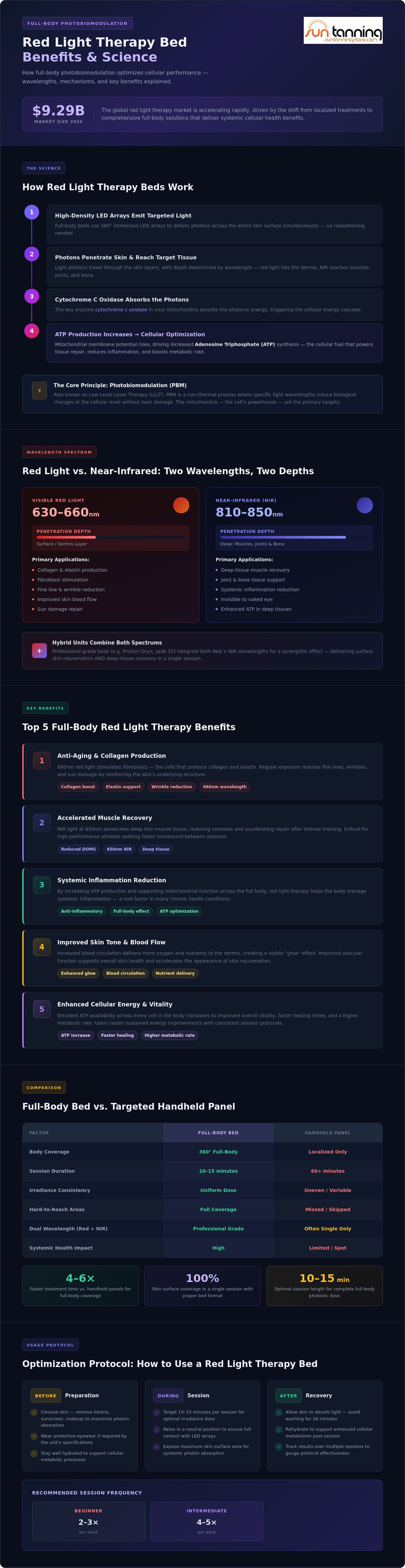
Full-body exposure. Clinical precision. A red light therapy bed is a sophisticated wellness unit that utilizes high-density LED arrays to emit specific wavelengths of light across the entire human frame. Understanding the core red light therapy bed benefits starts with the delivery mechanism itself. Unlike small, localized panels that require multiple repositioning steps, these beds provide a 360-degree immersion environment. This atmospheric exposure is critical for achieving systemic results. The underlying science is known as Low-level laser therapy (LLLT), or photobiomodulation (PBM). During a session, light photons pass through the skin to interact with cytochrome c oxidase, an enzyme within your cells that plays a pivotal role in energy metabolism.
One of the most significant red light therapy bed benefits is the efficiency of the delivery system. By maximizing the total skin surface area treated at once, the body can absorb a higher volume of photons in a fraction of the time required by handheld devices. Most sessions last only 10 to 15 minutes, ensuring consistent irradiance for the front and back of the body simultaneously. This uniform dosage is necessary for those seeking comprehensive physiological changes rather than just spot treatments for minor injuries. It's a pragmatic solution for busy professionals who don't have an hour to spend on targeted lamp sessions. Atmospheric exposure ensures that light permeates even hard to reach areas, providing a consistent therapeutic dose that flat panels simply cannot match.
The Role of Mitochondria and ATP Production
The primary target of red light therapy is the mitochondria, the powerhouse of the cell. When these organelles absorb light photons, they experience an increase in mitochondrial membrane potential, which directly stimulates the production of Adenosine Triphosphate (ATP). ATP is the cellular currency that fuels tissue repair and energy. By increasing this available energy, the body can more effectively manage systemic inflammation and maintain a higher metabolic rate. This cellular optimization is what leads to the broad range of health outcomes reported by regular users, from improved vitality to faster healing times.
Red Light vs. Near-Infrared (NIR) in a Bed Format
Effective beds utilize a strategic spectrum of light to reach different tissue depths. Visible red light, typically in the 630nm to 660nm range, is absorbed by the skin's surface to boost collagen and elastin production. Near-infrared light, ranging from 810nm to 850nm, is invisible to the naked eye and penetrates much deeper to reach muscles, joints, and even bone tissue. Professional-grade equipment, such as the ProSun Onyx or Jade 32 hybrid units, often integrates both spectrums to create a synergistic effect. This hybrid approach ensures that the user receives the aesthetic benefits of red light alongside the deep-tissue recovery advantages of NIR in a single, streamlined session. It's an all-in-one solution for both surface rejuvenation and internal structural support.
Top 5 Health and Wellness Benefits of Red Light Therapy Beds
Systemic cellular health requires more than a localized lamp. By utilizing a full-body format, you unlock a suite of physiological advantages that targeted devices simply cannot match. The core red light therapy bed benefits stem from the ability to deliver consistent irradiance to every square inch of your skin simultaneously. This comprehensive approach triggers widespread biological responses, ranging from improved aesthetic appearance to profound structural recovery. Here are the top five ways this technology transforms your health profile through full-body photobiomodulation.
Anti-Aging and Collagen Production
Visible red light at the 660nm wavelength is a powerhouse for dermal health. It works by stimulating fibroblasts, which are the cells responsible for producing collagen and elastin. Regular exposure helps reduce the appearance of fine lines, wrinkles, and sun damage by reinforcing the skin's underlying structure. This process creates a noticeable "glow" as blood flow increases and vital nutrients are delivered more efficiently to the dermis. For those interested in the clinical background, this guide on Red Light Therapy: Benefits, Safety and Things to Know provides an excellent overview of how these wavelengths interact safely with human tissue. Consistency is the primary requirement for success. You won't see a structural shift overnight, but a dedicated protocol leads to visible skin tightening and improved texture.
Rapid Recovery and Inflammation Control
Athletes and fitness enthusiasts often turn to full-body beds to combat delayed onset muscle soreness (DOMS). While localized icing or heating pads only address specific joints, a bed format allows near-infrared (NIR) light at 850nm to reach deep muscle groups across the entire body at once. This systemic reduction in inflammation is one of the most sought after red light therapy bed benefits. By increasing ATP production in muscle cells, the body can repair micro-tears faster and clear metabolic waste more effectively. It's a pragmatic alternative to the discomfort of ice baths, providing a soothing, non-invasive path to peak physical readiness.
For those who require intensive, targeted joint recovery alongside their systemic sessions, high-performance tools like the Lampa na Podczerwień MOVE+ Pro offer a portable way to deliver concentrated therapeutic energy exactly where it is needed most.
The advantages extend beyond the physical surface. Chronic pain management becomes more attainable when you address inflammation systemically rather than chasing symptoms from limb to limb. Additionally, regular sessions help regulate circadian rhythms by mimicking the natural light spectrum, which can enhance natural melatonin production for better sleep quality. Emerging research also points to a link between photobiomodulation and improved cognitive performance, as better cellular energy often translates to sharper focus and a more stable mood. For those looking to integrate these advantages into a daily routine, exploring professional-grade red light therapy units is the most efficient way to secure long-term results.
Full-Body Beds vs. Targeted Panels: Why Coverage Matters
Total immersion changes the math. While targeted panels are effective for spot treatments, they often fail to deliver the systemic results most users seek without a massive time commitment. Maximizing your red light therapy bed benefits requires an understanding of why total body coverage is superior for mitochondrial optimization. A standard handheld or small hanging panel typically covers less than 20% of the body at once. To achieve a full-body dose with a panel, you'd need to rotate through five or six different positions, turning a brief wellness habit into a 60-minute chore. In contrast, a red light therapy bed treats the entire skin surface in a single 10 to 15-minute session. This efficiency is a primary driver for both commercial salons and high-end residential users who prioritize time management.
Consistency of dosage is another critical factor. When using a panel, it's difficult to maintain a uniform distance and angle for every body part, leading to uneven irradiance. A bed provides a fixed, 360-degree environment where the distance between the light source and your skin is optimized for every limb. This ensures that your back receives the same therapeutic energy as your chest and legs simultaneously. Beyond the technical specs, there's a significant psychological advantage. The meditative, 'set and forget' experience of lying in a bed encourages relaxation and parasympathetic nervous system activation, which localized standing treatments often lack. To deepen this restorative state, many wellness enthusiasts also incorporate professional mobile treatments from The Outcall Spa into their recovery routine. This systemic exposure triggers a more robust anti-inflammatory response than localized therapy can provide.
Irradiance and Light Density
Irradiance refers to the power of light delivered to a specific area of the skin, usually measured in milliwatts per square centimeter (mW/cm²). In a bed or canopy format, the close proximity of the lamps ensures high light density without the power "drop-off" often seen in wall-mounted units. Distance from the light source determines therapeutic efficacy because light intensity follows the inverse square law, meaning even a few inches of extra space can drastically reduce photon absorption. Professional beds are engineered to keep you within the "sweet spot" for maximum energy transfer across your entire frame.
Home Convenience vs. Salon Quality
You don't need a commercial facility to access high-level photobiomodulation. The rise of 120v home units, such as the ProSun Jade 32, allows residential users to enjoy professional-grade results without specialized electrical wiring. When choosing between hardware options, you must balance the unit's footprint against its power requirements and your available therapy time. For a deeper dive into making the right selection, consult What to Look for When Buying a Tanning Bed: The 2026 Buyer’s Guide for technical hardware tips. Whether for home or salon use, the goal remains the same: achieving systemic cellular health through the most efficient delivery method available.
How to Use a Red Light Therapy Bed: A Step-by-Step Optimization Guide
Efficiency is only half the battle. To maximize the red light therapy bed benefits for your cellular health, you must follow a disciplined protocol. It's a structured process that begins long before you activate the lamps. Lying in a professional bed provides systemic exposure, but the quality of that exposure depends on how well you prepare your body for photon absorption. If you don't optimize the environment, you're essentially leaving potential results on the table. Following these practical steps ensures that every 10 to 20-minute session delivers the highest possible irradiance to your mitochondria.
Preparing Your Skin for Maximum Absorption
Clean skin is the most critical factor for successful penetration. You should remove all sunscreens, thick lotions, and makeup before your session. These products contain minerals and oils that reflect or scatter light, preventing the specific red and near-infrared wavelengths from reaching the deeper dermal layers. If you're taking light-sensitive medications, such as certain antibiotics or topical retinoids, check with a physician before starting a regimen. Safety is a priority, and some prescriptions can increase the risk of photosensitivity. Naked skin is the gold standard for PBM therapy. By ensuring there are no physical barriers on the skin's surface, you allow for a direct and uninterrupted energy transfer.
Determining Your Ideal Session Schedule
Consistency drives the most significant red light therapy bed benefits. For most users, establishing a baseline of 3 to 5 sessions per week is the "thrive" zone for maintaining cellular energy. Beginners should start with shorter durations, typically 10 minutes, to assess how their body responds to the light density. As you acclimate, you can gradually increase the time to the 15 or 20-minute mark. It's vital to recognize the law of diminishing returns; exposing yourself to light for two hours won't provide ten times the benefit of a 20-minute session. Your cells have a saturation point where they can no longer process additional photons effectively.
- Beginner Phase: 10 minutes per session, 3 times per week for the first 14 days.
- Maintenance Phase: 15-20 minutes per session, 3-5 times per week to sustain skin and muscle health.
- Recovery Phase: Daily 15-minute sessions for short durations (1-2 weeks) during periods of intense athletic training.
To begin your journey with professional-grade equipment, you can browse our full-body red light therapy units to find the right fit for your schedule. Once your session is complete, prioritize hydration. Photobiomodulation can slightly increase local circulation and metabolic activity, so drinking water helps your body process the systemic changes more efficiently. Additionally, applying a clean, high-quality moisturizer after the session can help lock in the skin rejuvenation effects triggered by the 660nm wavelengths. Always wear approved eye protection during the session to shield your retinas from the high-intensity LED output, even if your eyes are closed.
Selecting the Right Red Light Therapy Equipment for 2026
Hardware selection is the final bridge between scientific theory and tangible results. To secure the full scope of red light therapy bed benefits, you must invest in equipment engineered for high-irradiance delivery and long-term durability. The 2026 market offers a clear distinction between residential and commercial-grade units. Commercial beds are designed with advanced cooling systems and heavy-duty ballasts to handle high-traffic duty cycles without power degradation. Residential units focus on accessibility, typically utilizing 120v circuitry to allow for plug-and-play installation in a standard home environment. Understanding these technical nuances ensures you don't overspend on unnecessary power or underspend on a unit that fails to meet your biological goals.
The hybrid revolution is the most significant shift in the industry this year. Modern units now combine UV tanning capabilities with red light (PBM) lamps, allowing users to maintain a bronze aesthetic while simultaneously triggering cellular repair. This dual-action approach maximizes the utility of the footprint, whether in a professional salon or a home gym. Beyond the lamps, you must consider the electrical requirements. While many entry-level beds run on 120v, high-performance commercial models often require a 220v dedicated circuit to maintain consistent light density. Buying from an authorized national distributor is critical to ensuring you receive a valid warranty and access to replacement components, such as specialized acrylics and lamps, as the unit ages.
Top-Rated Home Units: The ProSun Jade 32 Hybrid
Easy home integration is the hallmark of the ProSun Jade 32. This 120v hybrid unit is specifically designed for residential use, requiring no expensive electrical rewiring or panel upgrades. It features 32 high-output lamps that provide consistent full-body coverage, ensuring that the irradiance levels remain uniform from head to toe. This model is a pragmatic choice for those who want professional-grade skin rejuvenation and muscle recovery without the footprint of a massive commercial bed. If you have limited floor space, you might also consider The Ultimate Guide to Red Light Therapy Canopies for overhead alternatives that offer similar therapeutic power.
Commercial Excellence: ProSun Onyx and Sundream
High-volume environments require equipment that can withstand constant use while delivering peak performance. The ProSun Sundream 12V Canopy is an excellent space-saving professional solution, offering the benefits of PBM in a versatile format. For the ultimate salon-grade experience, the ProSun Onyx Level 4 Hybrid stands as the industry standard. It delivers rapid 12-minute sessions with a focus on high-density light output and maximum comfort. These units are built for efficiency and customer satisfaction, providing a reliable ROI for business owners. You can explore our full collection of Red Light Therapy Units to find the specific model that matches your power requirements and space constraints.
Future-Proof Your Wellness Strategy
Systemic cellular optimization is no longer reserved for clinical environments. By transitioning from localized panels to full-body immersion, you're choosing the most efficient path to mitochondrial health and structural recovery. The core red light therapy bed benefits lie in the ability to deliver uniform irradiance across your entire frame in a single, time-saving session. Whether you're targeting skin rejuvenation or systemic inflammation, the right hardware determines the quality of your results. It's about integrating high-performance technology into a sustainable daily protocol that supports your long-term biological goals.
As an authorized national distributor for ProSun, we provide the technical expertise and logistics support needed to upgrade your facility or home gym. We offer free shipping on professional units and flexible financing available for home and commercial use. Don't leave your cellular performance to chance. Shop our Authorized Selection of ProSun Red Light Therapy Beds today to secure the latest in hybrid photobiomodulation technology. Your body's peak performance is within reach.
Frequently Asked Questions
How long does it take to see benefits from a red light therapy bed?
Initial physiological responses like reduced muscle soreness can occur within 24 hours of a session, but structural changes take longer. For skin rejuvenation such as collagen production and wrinkle reduction, a consistent protocol of 8 to 12 weeks is typically required. It's a cumulative process where cellular energy builds over time, leading to more visible red light therapy bed benefits as the treatment protocol progresses and your mitochondria optimize.
Can you do red light therapy every day in a bed?
You can utilize a red light therapy bed daily, though most users find that 3 to 5 sessions per week are sufficient for maintaining peak biological results. While there's no known harm in daily use, your cells have a biological saturation point. Exceeding recommended session times won't necessarily accelerate results because the mitochondria can only process a finite amount of light energy during a single 24-hour period.
Do I need to wear eye protection in a red light therapy bed?
Yes, you must wear approved eye protection during every session to shield your retinas from the high-intensity LED output. Even with your eyes closed, the brightness of clinical-grade beds can be intense and potentially harmful over long-term exposure. Using specialized goggles ensures that you receive the systemic advantages of the treatment without risking ocular strain or damage from the concentrated red and near-infrared light spectrum.
Is a red light therapy bed the same as a tanning bed?
No, a standard red light therapy bed does not emit UV radiation and won't tan your skin. Traditional tanning beds use UVA and UVB rays to trigger melanin production, whereas red light units use visible and near-infrared light to stimulate cellular repair. However, hybrid models like the ProSun Onyx integrate both technologies, allowing you to achieve a bronze tan while benefiting from photobiomodulation in a single session.
Are there any side effects to full-body red light therapy?
Side effects are rare and typically mild, often manifesting as temporary redness or a slight flush in the skin. Because the technology is non-thermal and non-invasive, it doesn't cause the cellular damage associated with UV exposure. If you have light-sensitive medical conditions or take photosensitizing medications, it's essential to consult a physician before beginning a full-body regimen to ensure your safety and comfort.
Can red light therapy beds help with weight loss or cellulite?
Red light therapy beds are primarily FDA-cleared for pain relief, circulation, and skin rejuvenation, rather than direct weight loss. While some studies suggest that photobiomodulation might influence fat cell metabolism, these results aren't guaranteed. Improvements in skin elasticity and collagen density can, however, reduce the visible appearance of cellulite by strengthening the dermal structure and smoothing the skin's surface for a firmer look.
Do I need to strip down for red light therapy to work?
Direct skin exposure is necessary because clothing fibers block the light photons from reaching your cells effectively. While you can wear minimal athletic gear, "naked skin" remains the gold standard for maximizing photon penetration across your entire body. For the most effective systemic treatment, you should ensure that the red and near-infrared light can reach the target tissue without any physical barriers like fabrics.
How much does a professional red light therapy bed cost in 2026?
Professional red light therapy equipment represents a significant investment that varies based on irradiance, lamp count, and cooling technology. Commercial-grade units command a higher price point due to their heavy-duty construction and advanced technical specifications, while residential models are scaled for home electrical systems. To get accurate, up-to-date pricing for specific units like the ProSun Jade or Onyx, it's best to contact an authorized distributor directly for a quote.