


What to Look for When Buying a Tanning Bed: The 2026 Buyer’s Guide
High lamp counts are no longer the gold standard for professional bronzing. While more bulbs once signaled better results, the 2026 market is defined by hybrid technology and energy efficiency. You want the deep, lasting glow of a commercial salon without the headache of a massive electrical rewiring project. It's a common frustration to feel stuck between confusing Level 3 versus Level 4 classifications and the uncertainty of whether your existing power setup can handle the load. Understanding exactly what to look for when buying a tanning bed ensures you don't end up with an expensive, underpowered piece of equipment that fails to deliver the professional results you expect.
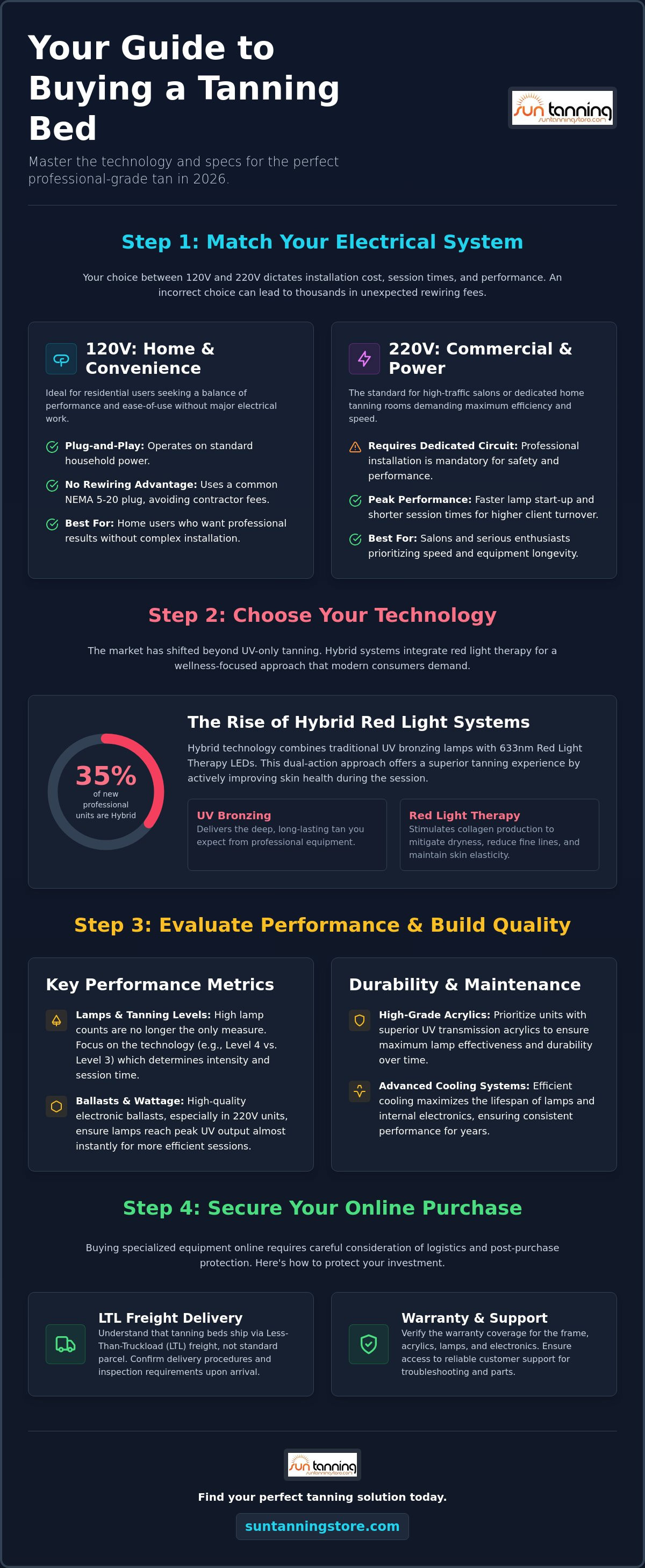
We've designed this guide to help you master the technical specifications, electrical requirements, and hybrid technology needed to choose the perfect tanning bed for your home or salon. You'll learn how to match a bed to your current electrical capacity, why red light therapy is now integrated into 35% of new professional units, and how to maintain your equipment for years of reliable operation. We'll simplify the complex jargon so you can make an informed, confident purchase that fits your space and your bronzing goals.
Key Takeaways
- Electrical Compatibility. Match your equipment to your existing infrastructure by understanding the critical differences between 120V plug-and-play models and 220V dedicated commercial circuits.
- Hybrid Innovation. Discover what to look for when buying a tanning bed by exploring how hybrid technology integrates UV bronzing with red light therapy to mitigate skin dryness.
- Performance Metrics. Decipher the relationship between lamp counts and tanning levels to ensure your chosen model delivers professional-grade results within your desired session timeframe.
- Durability and Maintenance. Prioritize high-grade UV transmission acrylics and advanced cooling systems to maximize the lifespan of your lamps and ensure consistent performance.
- Secure Acquisition. Navigate the complexities of LTL freight delivery and warranty coverage to protect your investment when purchasing specialized equipment online.
Electrical Requirements: 120V vs. 220V Tanning Beds
Voltage is the foundation of your tanning experience. It dictates your installation costs, your session times, and the long-term reliability of your equipment. Understanding these technical specifications is essential when determining what to look for when buying a tanning bed, as an incorrect choice can lead to thousands of dollars in unexpected electrical contractor fees. You must match the unit to your existing infrastructure or be prepared to upgrade your panel.
Most residential users find that 120V models provide the best balance of performance and convenience. These units are engineered to operate on standard household power. In contrast, 220V systems are the requirement for high-volume commercial environments. These higher-voltage systems offer faster lamp start-up times and a level of sustained intensity that 120V circuits cannot replicate. Before finalizing any purchase, you must identify your NEMA plug type and circuit capacity.
The "No Rewiring" Advantage for Home Tanning
Choosing a 120V model like the ProSun Jade 32 120v Hybrid Red Light Tanning Bed provides immediate utility. These units typically utilize a NEMA 5-20 plug, which is compatible with a 20-amp household outlet. You can identify these by the "T" shaped slot on the neutral side of the receptacle. This "plug-and-play" capability is the primary draw for residential buyers who want to avoid the mess of opening walls for new conduit. For a foundational Indoor tanning overview, one can see how technology has evolved to make professional-grade results available through standard residential power. Voltage is the first technical filter that determines whether your installation is a simple afternoon project or a complex construction job.
When to Upgrade to a 220V Commercial Circuit
High-traffic salons and dedicated home tanning rooms often require the efficiency of 220V power. Professional equipment, such as the ProSun Onyx 12 Minute Level 4 Hybrid Commercial Tanning Bed, relies on this higher voltage to drive heavy-duty electronic ballasts. These ballasts ensure that lamps reach peak UV output almost instantly, which is why 220V beds often feature shorter session times. This efficiency allows a business to serve more clients per hour while reducing the electrical strain on individual components.
Safety is the priority for any high-voltage installation. A 220V circuit requires a dedicated breaker and specific wire gauges, typically 10 or 12 AWG depending on the distance from the panel, to prevent overheating. While the initial investment in a 220V setup is higher, the long-term benefit is clear. You get superior ballast longevity and a more stable electrical draw. This protects the internal electronics from premature wear and ensures the lamps operate at their intended wattage. Knowing these limits is a critical part of what to look for when buying a tanning bed to ensure you achieve professional bronzing results without compromising your property's safety.
Technology Choice: Traditional UV vs. Hybrid Red Light Systems
The 2026 market has moved beyond simple UV exposure. Modern consumers are increasingly focused on skin health, leading to a significant shift toward hybrid technology. This innovation combines traditional UV bronzing with red light therapy (typically in the 633nm range) to address the primary drawback of indoor tanning: skin dryness. By stimulating collagen production during the tanning process, hybrid systems mitigate the appearance of fine lines and maintain skin elasticity. When evaluating what to look for when buying a tanning bed, understanding this synergy is critical for those seeking a "wellness-first" approach to bronzing.
Hybrid beds are no longer a niche product; they are a dominant market force. LED red-light therapy technology is now integrated into 35% of new salons globally. These units command higher per-session prices because they offer a multi-modality experience that appeals to a broad demographic. In the U.S., individuals aged 18-34 account for 62% of tanning visits, and this group frequently prioritizes advanced skin conditioning over basic UV output. While hybrid lamps are a larger investment, often costing between $55 and $80 per bulb, the professional-grade results and improved skin texture often justify the higher operating costs.
The Rise of Hybrid Red Light Tanning
Equipment like the ProSun Sundream 12V Hybrid Red Light Tanning Canopy demonstrates how manufacturers are bridging the gap between traditional tanning studios and high-end beauty salons. These units use specialized dual-spectrum lamps to condition the skin while the tanning process occurs, providing a comprehensive aesthetic treatment in a single session. This dual-action approach satisfies the growing demand for "skin-conscious" tanning services. For users with limited space or those looking for an entry-point into this technology, red light therapy canopies offer a portable, professional-grade solution that fits easily into a residential setting.
Red Light Therapy Units as a Standalone Investment
Choosing between a dedicated red light unit and a hybrid bed depends on your specific goals. Standalone Red Light Therapy Units focus exclusively on skin rejuvenation and cellular repair without any UV radiation. These are ideal for those who prioritize anti-aging benefits or already use sunless spray tanning for their color. However, if your goal is a deep bronze with a smooth finish, a hybrid bed is the more efficient choice. Integrating these diverse technologies into tanning salon equipment packages allows businesses to offer tiered pricing and specialized wellness memberships. Regardless of the model you select, you must remain compliant with state tanning laws regarding safety warnings and age restrictions. Identifying the right balance of UV and red light is a core component of what to look for when buying a tanning bed to ensure long-term value. You can explore our selection of hybrid tanning solutions to find the specific technology that fits your lifestyle or business model.
Performance Metrics: Lamps, Wattage, and Tanning Levels
Performance metrics are the engine of your tanning experience. When researching what to look for when buying a tanning bed, don't focus solely on the aesthetic design or the outer shell. The lamp configuration, typically found in 24, 32, or 48-bulb setups, directly impacts the uniformity of your tan. A 48-lamp configuration provides more consistent coverage across the body, which reduces "cold spots" where UV exposure might be insufficient. However, the raw count is only part of the equation. The ratio of UVA to UVB determines the depth of your results. UVA provides the immediate bronzing effect, while UVB is necessary for stimulating melanin production. Balancing these two is what creates a professional, long-lasting glow.
Industry standards categorize equipment from Level 1 to Level 4. Level 1 and 2 units are generally entry-level models with lower wattage and higher UVB percentages, often requiring longer session times to see results. Level 3 and 4 systems utilize high-pressure lamps and specialized ballasts to deliver intense UVA output for rapid bronzing. These professional-grade units often include high-pressure facial tanners. These specialized lamps use filtered bulbs to provide targeted results for the face and neck, which are areas that often require more precision. All such equipment must adhere to FDA tanning bed safety regulations to ensure user protection and performance consistency.
Commercial Power: The Level 4 Advantage
For high-volume salons, throughput is a critical metric for profitability. The ProSun Onyx 12 Minute Level 4 Hybrid Commercial Tanning Bed is engineered for this high-efficiency environment. Short 12-minute sessions allow for more client rotations per hour, which directly increases your daily revenue potential. This performance is sustained by specialized ballasts that maintain a consistent UV output throughout the entire session. Without these high-quality internal components, lamps can flicker or lose intensity, leading to uneven results and increased maintenance costs over time.
Lamp Life and Maintenance ROI
Your lamps are your primary consumable cost and your biggest performance variable. Most professional UV bulbs have a functional lifespan of 500 to 800 hours. While they may still illuminate after this point, their UV output degrades significantly, rendering them ineffective for tanning. Calculating your long-term ROI requires factoring in the cost of Replacement Tanning Lamps. High-output or hybrid bulbs represent a larger initial investment than standard lamps, but they deliver the intense results that premium clients demand. Buying from an authorized distributor is essential. It ensures you receive fresh, high-output bulbs that provide the full value of every hour of operation. This technical precision is a key part of what to look for when buying a tanning bed for either home or commercial use.
Build Quality: Cooling, Acrylics, and Ergonomics
Physical construction determines the equipment's lifespan. When considering what to look for when buying a tanning bed, the structural integrity of the frame and the quality of the internal airflow are just as important as the lamps themselves. High-performance units like the ProSun Onyx utilize reinforced steel frames rather than lightweight plastic housings. This ensures the unit remains stable and aligned over years of heavy use. This level of durability is essential for any 10-year investment.
The most critical physical component is the acrylic shield. Tanning bed acrylics aren't standard plastic; they're high-grade materials engineered for maximum UV transmission. If the acrylic is low-quality or aged, it acts as a filter that blocks the very UV rays you're paying for. Professional-grade acrylic is the most overlooked maintenance cost because it gradually loses its UV-transmission properties over several hundred hours of use, even if it looks perfectly clear to the naked eye. Regularly inspecting these for micro-cracks and solarization ensures your lamps can actually reach the user's skin.
Heat Management and User Comfort
Advanced cooling systems are a dual-purpose necessity. High-velocity internal airflow keeps the lamps at their optimal operating temperature. This prevents the drop in UV intensity caused by overheating. Simultaneously, body cooling fans manage the user's environment. Perspiration can act as a barrier to UV light. This leads to an uneven tan and a less comfortable session. Premium models often include integrated sound systems and digital control interfaces that are compatible with T-Max timers. This allows salon owners to manage multiple beds from a central front-desk hub.
Durability Standards for Commercial Use
Maintenance efficiency is a hallmark of professional build quality. Look for beds that feature easy-access designs. Acrylics should be removable and lamps replaceable without specialized tools. This reduces downtime and labor costs for your staff. Whether you're setting up a home studio or a high-traffic salon, the ergonomics of the bed surface will define the customer experience. Contoured acrylics provide pressure point relief, while traditional flat surfaces are often easier to sanitize quickly between sessions. You can find high-durability tanning bed acrylics and maintenance supplies to keep your equipment performing at factory specifications.
The Online Buying Process: Shipping, Warranty, and Support
Logistics and support are the final, yet most critical, considerations in your acquisition strategy. When determining what to look for when buying a tanning bed, you must evaluate the seller's ability to manage high-value freight. These units aren't standard parcel shipments; they arrive via LTL (Less Than Truckload) freight carriers. Most professional-grade units are made to order and ship within 7-10 business days. Because these items are heavy and specialized, the delivery process requires specific logistical coordination, including liftgate service to safely lower the unit from the truck to the ground.
Standard delivery is typically "curbside," meaning the driver is only responsible for moving the crate to the end of your driveway. For those who require more assistance, "white glove" options may be available to move the equipment into a specific room. Regardless of the service level, you must inspect the shipment for any visible damage before signing the delivery receipt. This signature is a legal acknowledgment that the equipment arrived in good condition. Failing to document damage at the time of arrival can complicate future insurance claims, so meticulous inspection is non-negotiable.
Warranty and Authorized Dealer Benefits
Securing your investment requires buying from an authorized national distributor. This status ensures that your manufacturer warranty remains valid and enforceable. A typical 2026 warranty for a new unit covers the frame, electronics, and mechanical components for one year, while lamps and acrylics are usually warranted against defects for a shorter 30-day window. Sun Tanning Store acts as a direct bridge to the manufacturer, facilitating warranty claims and providing technical advice that non-authorized resellers or auction sites can't offer. Buying from an unverified source often results in receiving units with aged lamps or missing components, which significantly increases your total cost of ownership.
Preparing for Delivery and Installation
Success starts with a pre-delivery checklist. You must verify that your new bed will fit through your facility's doorways. Most residential and commercial units require a minimum clearance of 30 to 36 inches. Additionally, confirm that your floor load capacity can support the weight of a commercial bed, which can exceed 300 pounds for high-lamp-count models. To ensure you can begin using your equipment immediately, many professional units include startup kits containing essential tanning lotions, sanitizers, and protective eyewear. These inclusions provide immediate value and ensure your initial sessions meet professional hygiene standards. This preparation is a vital part of what to look for when buying a tanning bed to avoid installation day delays. Browse our full collection of ProSun Tanning Beds today.
Securing Your Professional Glow for 2026
Choosing the right equipment requires a balance of technical precision and practical logistical planning. You now understand that voltage compatibility is the first filter for any installation and that hybrid technology represents the future of skin-conscious bronzing. By prioritizing high-grade UV-transmission acrylics and advanced cooling systems, you ensure your investment delivers consistent results for years to come. Mastering what to look for when buying a tanning bed transforms a complex purchase into a streamlined upgrade for your home or business.
As an Authorized National Distributor for ProSun, we provide the expert technical support you need; a standard we've maintained since 2010. Our team ensures your equipment arrives safely via professional freight, and we offer free shipping on select commercial packages to maximize your value. Don't settle for unverified resellers when you can partner with a seasoned industry leader. Shop Professional Tanning Beds for Home and Salon today and take the first step toward achieving a flawless, professional-grade bronze in the comfort of your own space.
Frequently Asked Questions
Is a 120V tanning bed as good as a 220V model?
A 120V model is excellent for residential use because it avoids the need for expensive electrical rewiring. While 220V systems offer faster session times and higher lamp intensity, 120V units like the ProSun Jade 32 provide a professional-grade tan using standard household power. The choice depends on your volume. If you're a single user at home, 120V is efficient and cost-effective.
How much space do I really need for a home tanning bed?
You should plan for a dedicated space approximately 7 feet by 8 feet to ensure proper ventilation and user comfort. While the bed's footprint is roughly 7 feet long, you need additional clearance to open the canopy fully and move around the unit safely. Proper airflow is critical to prevent the internal electronics from overheating during back-to-back sessions in a residential setting.
What is the difference between a hybrid tanning bed and a regular one?
Hybrid beds combine traditional UV bronzing lamps with red light therapy bulbs to condition the skin while you tan. Regular beds focus exclusively on UV output for color. Understanding this technology is a vital part of what to look for when buying a tanning bed if you want to reduce skin dryness and promote collagen production during your sessions.
Do I need to hire a professional to install my tanning bed?
You can typically install 120V "plug-and-play" models yourself, but 220V units require a licensed electrician. Most home beds use a NEMA 5-20 outlet, which is a standard 20-amp household receptacle. However, 220V commercial units require a dedicated circuit and a specific breaker installation to ensure the equipment operates safely and remains compliant with your manufacturer warranty terms.
How often will I need to replace the lamps in my new bed?
Lamps generally require replacement every 500 to 800 hours of active use to maintain peak tanning performance. Although the bulbs may still illuminate after this point, their UV output degrades significantly, leading to weaker results. Tracking your session hours allows you to plan for replacement costs and ensures your equipment continues to deliver the professional bronzing results you expect.
Can I use a tanning bed for red light therapy only?
You can only perform red light therapy exclusively if the unit is a dedicated Red Light Therapy Unit or has a specific "therapy only" mode. Most hybrid beds activate both UV and red light spectra simultaneously to provide a combined treatment. If you want the skin-rejuvenation benefits without any UV exposure, you should look for standalone red light units instead of a tanning bed.
What should I look for in a tanning bed warranty?
A strong warranty should cover the frame, electronics, and ballasts for at least one year. You should also verify the coverage for "wear items" like acrylics and lamps, which typically have a shorter 30-day defect window. Buying from an authorized national distributor ensures the manufacturer honors these terms and provides you with access to genuine replacement parts and technical support.
Is it better to buy a new tanning bed or a used one?
Buying new is generally the superior investment because it includes a full warranty and the latest energy-efficient technology. Used beds often require immediate, expensive replacements for aged lamps and solarized acrylics, which can quickly erase any initial savings. Knowing what to look for when buying a tanning bed regarding its maintenance history is much simpler when you start with a factory-fresh unit.