


Red Light Therapy Tanning Bed Before and After: Myths vs. Reality in 2026
What if the secret to a perfect, dark tan isn't more UV exposure, but preparing your skin's cellular foundation first? You've likely felt the frustration of uneven results or the nagging worry about premature aging after a standard session. It's common to feel confused about whether to use red light before or after UV, especially as hybrid technology becomes the industry standard in 2026. Understanding the red light therapy tanning bed before and after process is essential for anyone looking to balance aesthetic goals with long-term skin health. Red light isn't just a marketing gimmick; it's a biological optimizer.
We're here to settle the debate. You'll discover the honest biological truth behind red light tanning results and how to optimize your skin for a deeper, healthier glow. We'll explore how modern hybrid equipment, such as the ProSun Onyx, leverages specific wavelengths to stimulate collagen and improve circulation. This article provides a clear roadmap for achieving a longer-lasting tan and reduced fine lines. We'll look at the technical specifications of hybrid beds and the pragmatic steps you can take to ensure every session delivers maximum value for your skin.
Key Takeaways
- Understand that red light therapy (photobiomodulation) does not emit UV rays; it acts as a skin optimizer rather than a direct tanning agent.
- Discover why red light exposure before UV sessions increases skin oxygenation, providing the necessary biological foundation for a more efficient and even tan.
- Analyze the red light therapy tanning bed before and after impact on skin recovery, specifically how it mitigates inflammation and promotes collagen synthesis.
- Evaluate the logistical advantages of hybrid systems like the ProSun Jade 32 120v, which streamline the dual-therapy process for professional results.
- Access a practical five-step checklist for optimizing results, including the critical role of specialized lotions designed for hybrid equipment.
The Reality of Red Light Tanning Before and After Results
Red light therapy isn't a shortcut to a dark tan; it's a sophisticated biological primer. Technically known as Low-level laser therapy or photobiomodulation, this technology uses specific wavelengths to trigger cellular energy production. When analyzing red light therapy tanning bed before and after expectations, it's vital to distinguish between pigment and health. Red light doesn't interact with melanin directly. Instead, it improves the skin's environment, making it more receptive to UV while protecting the underlying structure. Modern 2026 equipment, such as the ProSun Onyx, utilizes hybrid lamps to provide these benefits simultaneously. This integration ensures maximum efficiency for the user by combining preparation and tanning into a single session.
The "Magic Filter" Myth: What Red Light Wont Do
Don't expect an instant bronze glow from red light alone. It is not a bronzer and provides no immediate pigment change. Many users mistakenly believe red light acts as a total shield against UV damage. While it certainly mitigates inflammatory responses, it doesn't eliminate the risks associated with overexposure. Red light therapy is a non-UV cellular stimulant for skin health. Its primary role is to optimize the "after" state by supporting the skin's natural repair mechanisms rather than acting as a physical block. It is a tool for longevity and texture, ensuring that your tan looks vibrant rather than leathered.
The Biological Timeline: When to Expect Results
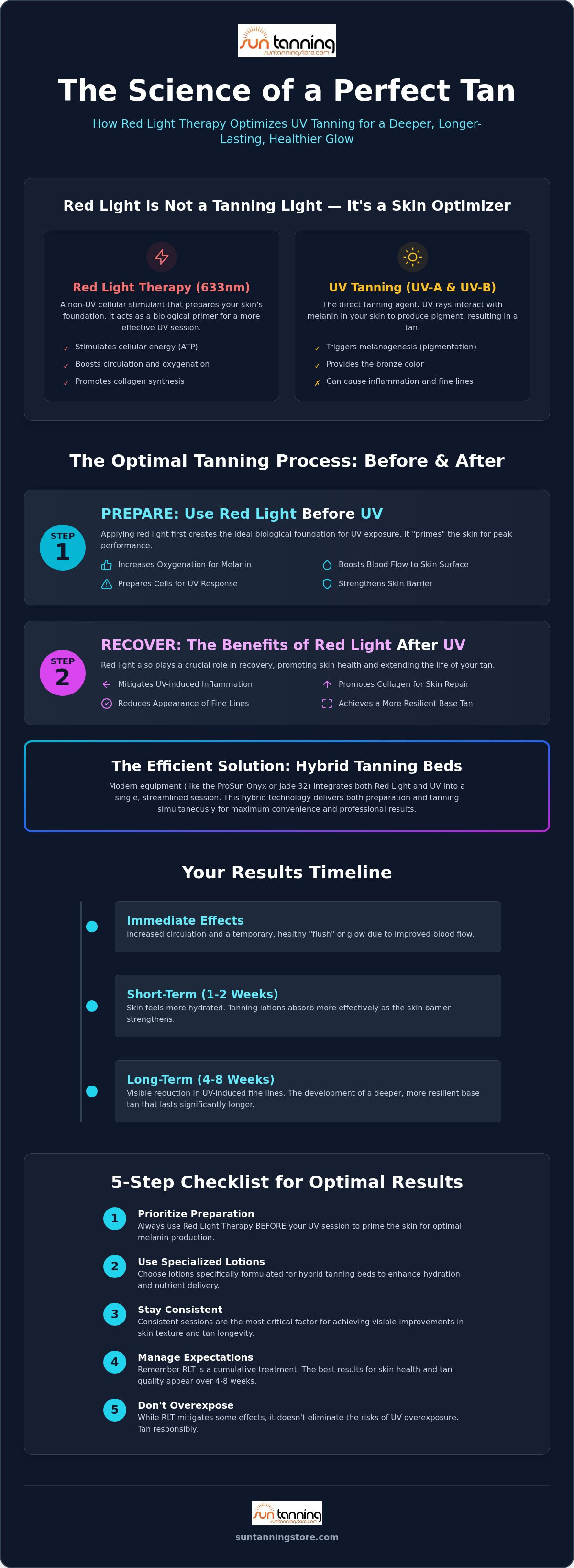
Results are cumulative. You won't see a transformation overnight, but the biological shifts begin immediately. Understanding this timeline helps manage expectations for your red light therapy tanning bed before and after journey. The process moves through three distinct phases:
- Immediate effects: You'll notice increased circulation and a temporary "flush" or healthy glow due to improved blood flow.
- Short-term (1-2 weeks): Users typically report improved skin hydration and better absorption of tanning lotions as the skin barrier strengthens.
- Long-term (4-8 weeks): This is where the real value appears. You'll see a visible reduction in UV-induced fine lines and a deeper, more resilient "base" tan that lasts significantly longer than traditional UV-only results.
By 2026, the focus has shifted toward hybrid systems. These units, like the ProSun Jade 32, are designed for performance and ease of acquisition. They allow users to maintain a consistent schedule, which is the most critical factor in achieving visible textural improvements. Consistency ensures that the "after" state of your skin remains youthful, regardless of your tanning frequency.
Biological Preparation: Why Red Light Before UV Matters
Preparation is the key to efficiency. By utilizing light in the 633nm range, you trigger a cascade of biological benefits that enhance the red light therapy tanning bed before and after experience. This specific wavelength penetrates deep into the dermis to stimulate the mitochondria, increasing the production of adenosine triphosphate (ATP). When skin cells have higher energy levels, they respond more effectively to UV-A and UV-B exposure, leading to a faster and more resilient tan. Research highlighted by Harvard Health on red light therapy suggests that these cellular shifts support overall skin vitality and repair. For those seeking maximum convenience, a hybrid red light tanning bed provides a seamless transition from preparation to pigmentation.
Vasodilation and Melanin Production
Increased blood flow is a critical component of a superior tan. When red light induces vasodilation, it brings a fresh supply of oxygenated blood directly to the skin’s surface. This is vital because oxygen is the essential catalyst for the chemical reaction that turns skin brown. Without sufficient oxygen, the melanogenesis process is less efficient, often resulting in a shallower tan that fades quickly. Red light "primes" the melanocytes before the UV lamps even turn on. This biological head start ensures that the oxidation of melanin occurs at a peak rate, separating a standard session from a professional-grade result.
Softening the Stratum Corneum
Texture determines how light interacts with your skin. UV exposure alone can cause the stratum corneum, the outermost layer of the skin, to become dry and thick. This often leads to the "leathery" texture associated with traditional tanning methods. Red light therapy counters this by maintaining skin elasticity and hydration. Skin that remains supple allows for more even UV penetration, preventing the patchy or uneven results often seen in "UV only" routines. Comparing the two, the "red light before" approach results in a smoother, more radiant surface that reflects health as much as color. If you're ready to upgrade your routine, you can explore high-performance tanning equipment designed for these specific biological needs.
Recovery and Longevity: The Case for Red Light After Tanning
Recovery is a logistical necessity for serious tanners. UV exposure, while essential for pigment, creates an inflammatory response that can lead to irritation or erythema. Red light therapy mitigates this response by calming the skin immediately after exposure. When you analyze red light therapy tanning bed before and after data, the recovery phase is where tan quality is actually solidified. Selecting between home vs commercial hybrid tanning beds is a critical decision for users who prioritize this post-session cellular repair. Commercial units often provide higher intensity, but home units offer the consistency required for long-term skin health.
Collagen Synthesis as a Defense Mechanism
Collagen synthesis is your primary defense against UV-induced aging. Red light wavelengths reach the fibroblasts to repair the dermal matrix after UV stress. This process is essential for reducing photo-aging and maintaining skin thickness. According to a clinical trial on red light therapy efficacy, consistent exposure leads to measurable increases in collagen density and skin smoothness. Red light penetrates deeper than UV, reaching the foundation of the skin to stimulate long-term structural health. It ensures that your skin remains thick and elastic, effectively preventing the fine lines often associated with frequent tanning sessions.
Extending the Life of Your Glow
Longevity depends on skin health. Dry skin peels. When your skin is damaged or dehydrated, it sheds rapidly and takes your bronze glow with it. Red light therapy helps maintain the skin's natural moisture barrier, which is vital for tan retention. Healthy, hydrated skin sheds at a significantly slower rate, allowing your results to last much longer. This "tan retention" effect is a major factor in the red light therapy tanning bed before and after experience. Don't overlook the importance of cellular hydration; it's what keeps a tan looking vibrant rather than dull.
A practical tip is to pair your red light sessions with specialized tanning lotions. These are designed to support the skin's moisture levels and cellular energy. High-quality products ensure that your investment in a hybrid session pays off with a deeper, more durable tan. By supporting the skin's recovery with red light, you're not just tanning; you're investing in a more sustainable and professional skin finish.
Hybrid Tanning Beds: The Efficient Solution for 2026
Hybrid technology represents the pinnacle of tanning engineering in 2026. These systems integrate UV and Red Light lamps within a single canopy, allowing for a streamlined workflow that simplifies the entire process. This integration is essential for achieving the best red light therapy tanning bed before and after results without doubling the time spent in the salon or at home. By delivering both therapies at once, units like the ProSun Onyx 12 Minute Level 4 Hybrid maximize salon throughput while ensuring customers receive the full spectrum of skin-optimizing benefits. It's an efficient solution that prioritizes both results and time management, catering to the needs of busy professionals who demand high performance.
The rise of hybrid systems has effectively ended the debate over whether red light should come before or after a UV session. When these wavelengths are delivered simultaneously, the skin is continuously primed for oxygenation while the UV lamps trigger melanogenesis. This dual-action approach ensures that the skin remains hydrated and resilient throughout the entire exposure period. For residential users, the ProSun Jade 32 120v Hybrid has become a standout choice, offering a professional-grade experience that fits into a standard home environment. If you are ready to invest in this technology, you can browse the latest hybrid tanning beds to find a model that fits your specific space and goals.
Simultaneous vs. Sequential Therapy
Receiving red light wavelengths at the exact moment UV triggers the skin is a major biological advantage. Hybrid lamps, such as those found in ProSun units, are precision-engineered to balance the spectrum for safety and performance. This simultaneous delivery means the skin is being repaired at the cellular level even as the pigment is being developed. A single 12-minute hybrid session provides the same biological impact as 30 minutes of separate treatments. It's a pragmatic shift that eliminates the "before or after" debate entirely, providing a more cohesive and effective treatment window.
Comparing Levels: ProSun Onyx and Beyond
Choosing the right equipment depends on your specific goals and electrical capacity. In a commercial setting, understanding the difference between level 4 vs level 5 tanning beds in a hybrid context is vital for managing client expectations and session pricing. While the ProSun Onyx is a powerhouse for high-volume salons, the ProSun Jade 32 is often considered the gold standard for "luxury tanning without rewiring." The pragmatic value of 120v compatibility for residential red light therapy tanning bed before and after transformations cannot be overstated. It allows users to achieve professional results without the logistical headache of installing a 220v dedicated circuit.
Optimizing Your Results: Practical Guidance and Maintenance
Execution is the final pillar of a successful skin transformation. While the biological mechanisms discussed earlier provide the foundation, your daily habits and equipment upkeep determine the ceiling of your success. Achieving a professional red light therapy tanning bed before and after result is a matter of discipline and technical precision. It isn't enough to simply have the right bed; you must ensure the environment is optimized for light penetration and cellular response. This involves a combination of topical preparation and rigorous hardware standards. Consistency remains the most significant variable in 2026, as cumulative exposure is what drives long-term textural improvements.
The Hybrid Tanning Checklist
Maximizing efficiency requires a structured protocol. Follow this five-step checklist to ensure your skin is perfectly primed for every hybrid session:
- Step 1: Exfoliate. Perform a thorough exfoliation 24 hours prior to your session. This removes dead skin cells that can reflect or block light, ensuring even UV and red light penetration.
- Step 2: Apply Hybrid Lotions. Use a pH-balanced hybrid lotion specifically formulated for both UV and red light. These products often contain specialized ingredients that enhance the skin's ability to utilize 633nm wavelengths.
- Step 3: Verify Lamp Specs. Ensure your equipment utilizes high-output 633nm lamps. This specific wavelength is the industry standard for photobiomodulation in a tanning environment.
- Step 4: Maintain Frequency. Stick to a schedule of 2-3 sessions per week. This frequency is ideal for sustaining red light benefits without overstressing the skin with UV.
- Step 5: Post-Session Hydration. Use an antioxidant-rich moisturizer after your session to support the recovery process and lock in hydration.
Hardware Maintenance for Consistent Results
Equipment performance directly impacts your aesthetic outcome. Many disappointing red light therapy tanning bed before and after comparisons are the result of neglected hardware rather than biological failure. Red light lamps, much like UV lamps, lose their irradiance over time. Once they pass their rated hour life, the cellular stimulation decreases significantly, even if the lamps still appear bright. Monitoring your lamp hours is a pragmatic necessity for anyone serious about skin health. If your lamps have reached their limit, you can browse our selection of replacement tanning lamps to ensure your sessions remain effective.
Cleanliness is another critical factor. Tanning bed acrylics must be cleaned with approved, non-filming sanitizers after every use. Standard household cleaners can create a microscopic film or cause the acrylic to "craze" (develop fine cracks), both of which scatter light and reduce the intensity of the treatment. For optimal skin health and color, we recommend a consistent maintenance schedule that includes checking acrylic transparency and lamp output every 100 hours of operation. This professional approach ensures that every minute spent in the bed delivers the maximum possible value for your skin's appearance and longevity.
Elevate Your Skin Health Standards with Hybrid Technology
The integration of photobiomodulation into your routine is a pragmatic shift toward cellular health and superior aesthetic results. You've seen that red light isn't a mere secondary feature; it's a critical catalyst for oxygenation and collagen synthesis. By utilizing high-performance hybrid equipment, you effectively bypass the "before or after" debate while securing a deeper, more resilient glow. Achieving a professional red light therapy tanning bed before and after transformation requires this synergy of modern technology and consistent biological preparation. It's about working with your skin's natural chemistry rather than against it.
As an Authorized National Distributor for ProSun, we provide the specialized equipment needed to reach these 2026 industry standards. We offer Free Shipping on Commercial Tanning Beds and provide expert support for both salon and home setup to ensure your transition is seamless. Whether you're upgrading a high-volume commercial facility or building a luxury home spa, our team is ready to assist with technical specifications and logistical planning. Shop the ProSun Hybrid Red Light Tanning Collection today to experience the next generation of skin optimization. You're ready to achieve the radiant, long-lasting results your skin deserves.
Frequently Asked Questions
Do I use red light therapy before or after tanning for the best results?
For optimal results, use red light therapy before UV exposure to increase blood flow and oxygenate skin cells. This preparation allows for a more efficient tanning process. However, using it after tanning helps mitigate inflammation and supports long-term recovery. Hybrid beds eliminate this choice by providing simultaneous exposure. Most professionals recommend the hybrid approach because it ensures the skin is continuously primed while receiving repair benefits throughout the entire session duration.
Can I use a red light therapy bed and a tanning bed on the same day?
You can absolutely use both on the same day; in fact, the synergy between the two is the foundation of the red light therapy tanning bed before and after experience. Using them together ensures that the skin is biologically primed for UV while receiving immediate repair benefits. This combination is standard in professional hybrid environments. It's a pragmatic way to maximize your time while ensuring your tan looks vibrant and your skin stays healthy.
Does red light therapy help prevent sunburn or UV damage?
Red light therapy does not prevent sunburn or act as a physical block against UV radiation. It helps mitigate the inflammatory response and supports cellular repair after exposure, but it won't stop a burn if you exceed your skin's UV limit. Always follow recommended exposure times regardless of red light usage. Think of it as a recovery tool rather than a preventative shield; it repairs damage but doesn't stop it from happening.
How long does it take to see "before and after" results from a hybrid tanning bed?
Immediate results include a temporary glow from increased circulation. For significant changes in skin texture and tan longevity, expect a timeline of 4 to 8 weeks of consistent use. Short-term improvements in skin hydration and lotion absorption typically appear within the first 14 days of a regular schedule. Achieving a professional red light therapy tanning bed before and after result is a cumulative process that rewards those who maintain a steady routine.
Do I need a special lotion for red light therapy tanning beds?
Specialized hybrid lotions are highly recommended because they are formulated to be pH-balanced and light-permeable. These products contain ingredients that react positively to 633nm wavelengths while supporting the melanogenesis process. Using standard lotions can sometimes block the specific red light frequencies intended to reach the dermis. Investing in a high-quality hybrid lotion ensures you aren't wasting the biological benefits of the red light lamps during your session.
Is a red light therapy bed the same as a hybrid tanning bed?
No, a standalone red light therapy bed only emits red or near-infrared light and contains no UV lamps. A hybrid tanning bed, such as the ProSun Jade 32, combines both UV and red light lamps in a single unit. This allows for simultaneous tanning and skin treatment in one session. Hybrids are the efficient solution for users who want the aesthetic results of a tan alongside the health benefits of light therapy.
Are there any side effects to combining red light and UV tanning?
Combining these therapies is generally safe and often results in less skin irritation than UV tanning alone. The primary risk remains overexposure to UV, which red light cannot entirely neutralize. Some users may experience temporary redness from increased blood flow, but this usually fades shortly after the session. It's important to monitor your skin's reaction and adjust your UV exposure times according to your specific skin type and the equipment's intensity.
How many sessions of red light therapy are needed to improve skin texture?
Improving skin texture typically requires a commitment of 2 to 3 sessions per week over a period of at least 8 to 12 weeks. Red light therapy relies on cumulative cellular energy production to stimulate collagen and elastin. Consistency is the most important factor in achieving a visible reduction in fine lines. While you might feel a difference in skin softness early on, structural changes to the dermal matrix take time to manifest.