


Level 4 vs Level 5 Tanning Beds: The Ultimate Comparison for 2026
Is the jump to Level 5 equipment a genuine technological upgrade or just a marketing label used to justify premium pricing? You likely already know that tanning levels aren't industry-standardized. This lack of uniformity makes comparing level 4 vs level 5 tanning beds a difficult task for even the most seasoned salon owners. You want to provide fast, deep results without compromising skin health or overspending on equipment that might be obsolete by next season. It's a pragmatic balancing act between client satisfaction and your business bottom line.
We'll help you cut through the noise. This guide delivers a technical breakdown of high-end tanning tiers to determine which professional equipment provides the best results and ROI for your facility. You'll discover the specific differences in UVA/UVB ratios that separate high-pressure units from standard commercial beds. We also analyze the performance of top-tier models like the ProSun Onyx and the hybrid Jade 32. We'll preview how 2026 trends like skin diagnostics and red light integration are changing the market. By the end, you'll have the precise data needed to justify your equipment investment, ensuring your salon remains a leader in both performance and safety.
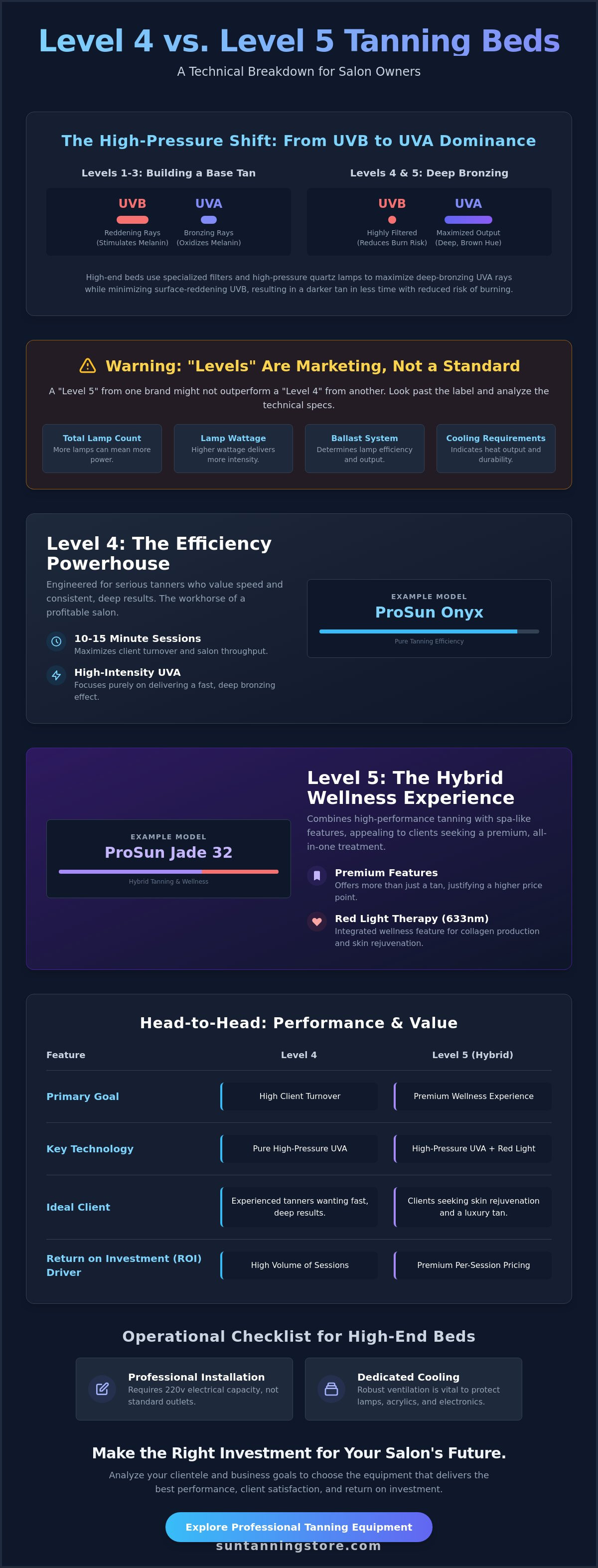
Technical UV Ratios: High-end tiers shift the focus from UVB to UVA; this allows for a darker bronzing effect with a significantly reduced risk of surface burning.
Performance Benchmarks: When comparing level 4 vs level 5 tanning beds, Level 4 units like the ProSun Onyx are engineered for maximum efficiency and high client turnover in commercial settings.
Hybrid Wellness Integration: Level 5 equipment often functions as a hybrid system. These units, such as the ProSun Jade 32, combine traditional UV tanning with 633nm red light therapy for collagen production and skin rejuvenation.
Operational Requirements: Professional installations typically require 220v electrical capacity and dedicated cooling space to maintain the longevity of high-pressure lamps and internal acrylics.
Understanding Tanning Bed Levels: The High-Pressure Shift
Tanning levels aren't a government mandate; they're an industry classification tool. In the debate of level 4 vs level 5 tanning beds, the core difference lies in the UVA to UVB ratio. Levels 1 through 3 focus on building a base with higher UVB concentrations. Moving to levels 4 and 5 signifies a professional-grade shift. These units utilize high-pressure technology to deliver intense bronzing results in significantly less time. It's a jump from simple skin darkening to a sophisticated cosmetic treatment that prioritizes efficiency and depth of color.
The Role of UVA vs. UVB in High-Level Tanning
High-level beds prioritize UVA rays. These are often called "bronzing rays" because they oxidize existing melanin to create a deep, brown hue. UVB rays are "reddening rays" that stimulate new melanin production but can lead to surface burns if overexposed. Level 4 and 5 beds use specialized filters. These filters block a high percentage of UVB while allowing pure UVA to pass through. This is why sessions are shorter but more effective for experienced tanners. High-pressure quartz lamps are the primary engine here. Unlike standard fluorescent tubes, they concentrate light into a powerful, controlled output. This Tanning Lamps Explained resource provides the technical foundation for how these gas-discharge lamps operate differently than low-pressure lamps. By filtering out the rays most likely to cause a burn, these beds allow tanners to reach their darkest potential without the skin stress associated with lower-tier equipment.
Why Levels Are Not Standardized Across All Brands
"Level 4" is a relative term. One manufacturer's top-tier bed might be another's mid-range option. It's a marketing designation rather than a strict legal requirement. Smart buyers look past the level number. You should examine the total lamp count and the specific wattage of the ballast system. A bed with 50 lamps at 160 watts will generally outperform a "higher level" bed with fewer, weaker lamps. When you evaluate tanning salon equipment packages, prioritize technical specifications over creative labels. This ensures you get consistent performance across your entire facility. Checking the lamp life ratings and cooling requirements is also vital. High-pressure beds generate more heat than standard units, requiring robust ventilation to protect the internal acrylics and electronics. Don't let a level number dictate your purchase; let the technical data drive the decision.
Level 4 Tanning Beds: The Gold Standard for Efficiency
Level 4 beds are the backbone of most successful tanning facilities. They provide a high-intensity experience that bridges the gap between basic maintenance and luxury wellness. When evaluating level 4 vs level 5 tanning beds, the Level 4 category stands out for its pure tanning efficiency. These units are built for serious users who want to maintain a deep base with just two or three sessions per week. By prioritizing a high-intensity UV output, these machines deliver a professional bronzing effect that satisfies the most demanding clients. It's a pragmatic choice for those who value time and consistent results over additional spa-like amenities.
Efficiency is the primary driver for this equipment tier. Most Level 4 units feature a 10 to 15 minute maximum exposure time. This allows for high client turnover, which is essential for a profitable commercial environment. While these beds offer powerful results, users must remain aware of the dangers of indoor tanning and follow strict exposure schedules. The goal is to maximize the bronzing effect of UVA while minimizing the reddening potential of UVB through sophisticated filtration systems. This balance ensures a deeper tan that lasts longer than results from entry-level equipment.
Technical Specifications of a Level 4 Powerhouse
The ProSun Onyx 12 Minute Level 4 Hybrid Commercial Tanning Bed serves as a prime example of this category's performance. Its 12-minute session timer is engineered specifically to maximize salon throughput, allowing you to serve more clients per hour without sacrificing the quality of the tan. High-intensity UV environments place significant stress on equipment. This is why the quality of the tanning bed acrylics is critical. Premium acrylics ensure optimal UV transmission and resist the clouding or cracking that often plagues lower-quality materials over time. Durable construction and advanced cooling systems are standard at this level, protecting your investment from the wear and tear of frequent use.
Who Should Invest in Level 4 Equipment?
Deciding between level 4 vs level 5 tanning beds often comes down to your specific business model or personal goals. Residential users who demand salon-quality results at home often find Level 4 beds to be the perfect middle ground. You get professional power without the extreme investment required for Level 5 wellness features. For new salon owners, these beds provide a reliable foundation for your equipment lineup. The ROI on these units is particularly strong due to bulb longevity. Many professional lamps in this category are rated for 800 to 1,000 hours of use, ensuring your operating costs remain predictable. If you're ready to upgrade your current setup, you can browse professional tanning equipment to find the right fit for your space.
Level 5 Tanning Beds: The Ultimate Hybrid Experience
Level 5 equipment represents the absolute pinnacle of professional tanning technology. It's no longer just about the UV output; it's about the total skin experience. When comparing level 4 vs level 5 tanning beds, the most striking difference is the concentration of power. Level 5 units often feature ultra-short 10-minute sessions. These provide the most concentrated bronzing available by utilizing advanced lamp arrays and high-pressure quartz components. Because these systems are so powerful, users must strictly follow FDA regulations on UV radiation to manage exposure levels safely. The focus here is on achieving the deepest possible tan with the least amount of total UV exposure time.
The Hybrid Revolution: UV + Red Light
The integration of Red Light Therapy (633nm) is the defining characteristic of this tier. Hybrid beds like the ProSun Jade 32 120v Hybrid Red Light Tanning Bed combine traditional UV lamps with red light LEDs or specialized lamps. This combination stimulates collagen production while you tan, directly addressing concerns about skin aging and texture. It's a dual-purpose treatment. It appeals to high-end clients who prioritize wellness as much as color. If you're considering this technology for a smaller space, you might explore our ultimate guide to red light therapy canopies for professional results at home. These hybrid systems often feature spectrum-shifting settings that allow users to customize the balance of red light and UV based on their specific skin goals.
Luxury Amenities as Standard Features
At this level, the physical design is as important as the lamp technology. Ergonomic bases are standard. These are contoured to eliminate pressure points and ensure an even tan across the entire body. Premium cooling systems are a logistical necessity here. High-output lamps generate significant heat; advanced climate control prevents sweating and ensures the user remains comfortable throughout the session. Many units also include aromatherapy and misting systems to create a spa-like environment. Integrated high-fidelity sound systems and Bluetooth connectivity allow for a fully customized experience. This transforms a routine session into a luxury escape, justifying the higher price point for both salon owners and their clients.
Level 4 vs. Level 5: Comparing Performance and Value
Choosing between level 4 vs level 5 tanning beds requires a clear understanding of your tanning philosophy. Level 4 equipment is engineered for pure UV performance. It's the workhorse tier, focusing on high-intensity bronzing and maximum efficiency. In contrast, Level 5 beds represent a shift toward comprehensive skin wellness. While you still achieve a deep tan, the inclusion of red light and luxury amenities reposition the session as a rejuvenation treatment. This distinction is critical for salon owners deciding how to allocate floor space and for home users determining personal priorities.
Electrical requirements are a primary logistical consideration. Most high-performance units in both tiers require a 220v dedicated circuit. This ensures the ballasts have sufficient power to drive high-output lamps without overheating. While some hybrid models, like the ProSun Jade 32, offer 120v compatibility for easier home installation, the majority of commercial-grade equipment necessitates professional electrical work. You must verify your facility's capacity before committing to either level to avoid unexpected infrastructure costs. It's a pragmatic step that prevents operational downtime later.
Maintenance and Lamp Replacement Considerations
Maintenance complexity increases as you move up the equipment tiers. Traditional UV lamps in Level 4 beds are straightforward to monitor and replace. However, Level 5 hybrid beds require a more precise maintenance schedule. These units utilize specialized replacement tanning lamps that manage both UV and red light spectrums. Keeping these spectrums active and balanced is essential for maintaining the wellness promise of a Level 5 session. You'll need to track lamp hours diligently. If the red light output diminishes, the value proposition of the bed drops significantly. Consistent cleaning of internal reflectors and high-quality acrylics is more critical in hybrid units to ensure the red light (633nm) penetrates the skin effectively.
ROI for Salon Owners: Level 4 or Level 5?
ROI is calculated differently for these two categories. Level 4 beds are often priced as high-turnover sessions. They attract the daily tanner who wants speed and results. Level 5 beds are the elite tier. They allow for higher membership pricing because they offer a service standard beds cannot replicate. Marketing "Hybrid Tanning" attracts a demographic that might otherwise avoid UV tanning due to concerns about skin texture. By offering red light rejuvenation alongside bronzing, you expand your potential client base. Level 4 beds provide faster session turnover, but Level 5 units command a higher price per minute. This often balances out the longer maintenance requirements and higher lamp costs. To find the best fit for your business, you can compare our professional tanning equipment to see specific ROI data for each model.
Buyer’s Guide: Choosing the Right High-End Bed
Selecting between level 4 vs level 5 tanning beds requires a strategic look at your operational goals. It's a choice between two distinct service models: high-volume efficiency or premium wellness. Before you commit to a commercial unit, you must evaluate your existing space and electrical infrastructure. High-end beds are significant investments that demand specific environmental conditions to perform at peak capacity. It's not just about the footprint of the bed; it's about the support systems that keep it running profitably year after year.
Your decision should ultimately be driven by your target audience's priorities. If your clients value speed and a deep bronze above all else, Level 4 equipment is your most pragmatic option. If you're positioning your facility as a luxury spa or wellness center, the skin-care benefits of Level 5 hybrid technology provide a necessary competitive edge. Long-term success also depends on the availability of specialized parts. Choosing established brands like ProSun ensures you'll have access to replacement tanning bed acrylics and specific ballasts as the equipment ages. Reliability is the cornerstone of ROI in the tanning industry.
Installation Checklist for Level 4/5 Beds
Successful installation starts long before the freight truck arrives. You must verify your electrical capacity immediately. Most professional Level 4 and 5 units require a dedicated 220v circuit with specific amperage, typically ranging from 30 to 50 amps depending on the lamp count. High-heat output is another critical factor. These units generate significant thermal energy; you'll need a robust ventilation system to exhaust hot air and pull in cool air. Without proper airflow, internal components can overheat, leading to premature lamp failure or warped acrylics. We recommend consulting with an authorized distributor to coordinate logistics. Freight delivery for these heavy units often requires a liftgate or specialized offloading equipment to prevent damage during transit.
Top Recommendations for 2026
For those focused on commercial ROI, the ProSun Onyx 12 Minute Level 4 Hybrid Commercial Tanning Bed remains the industry benchmark. It's designed for durability and high turnover, making it the perfect foundation for a busy salon. If your goal is luxury home use or a wellness-focused commercial suite, the ProSun Jade 32 120v Hybrid Red Light Tanning Bed is the superior choice. It offers the dual benefits of UV bronzing and red light therapy in a package that's easier to integrate into various settings. You can browse all commercial tanning beds for sale at Sun Tanning Store to compare specific dimensions and technical data for these top-tier models. Choosing the right equipment today ensures your facility remains a leader in the level 4 vs level 5 tanning beds market throughout 2026 and beyond.
Optimizing Your Tanning Infrastructure for 2026
Choosing between level 4 vs level 5 tanning beds isn't just about a marketing label. It's a strategic decision that defines your facility's service standards and revenue potential. Level 4 units focus on high-intensity UV output for rapid bronzing and maximum client turnover. Level 5 systems represent a shift toward wellness, integrating red light therapy (633nm) to offer a hybrid experience that appeals to health-conscious tanners. Both tiers require specific electrical capacity and proactive maintenance to maintain peak performance.
As an Authorized National Distributor for ProSun, we provide the expert technical support for salon owners needed to navigate these complex specifications. We maintain a comprehensive inventory of replacement parts and lamps, ensuring your investment remains protected and operational. Our role is to bridge the gap between manufacturer technology and your practical business needs. Whether you're a new owner or a seasoned professional, having a reliable equipment partner is essential for maintaining a competitive edge.
Ready to upgrade your facility with the latest high-pressure or hybrid technology? Shop our full collection of professional tanning equipment to secure your 2026 equipment lineup. Your commitment to quality results starts here.
Frequently Asked Questions
Is a Level 4 tanning bed safer than a Level 2?
Level 4 beds aren't inherently safer, but they emit a lower percentage of UVB rays, which are primarily responsible for surface burning. By using high-pressure filtration, these units allow for a deeper bronzing effect with less reddening potential. However, users must still adhere to strict exposure schedules to manage total UV intake. It's about the precision of the light spectrum rather than a general safety rating.
Do I need a special lotion for Level 5 hybrid tanning beds?
You should use lotions specifically formulated for hybrid light to get the best results from a Level 5 bed. Standard tanning lotions can contain ingredients that reflect or absorb the 633nm red light spectrum, reducing its effectiveness on the skin. Hybrid-specific products are designed to be transparent to these wavelengths while providing the hydration necessary for deep UV bronzing. This ensures you receive the full wellness benefits of the equipment.
How many sessions does it take to see results in a Level 4 bed?
Visible bronzing typically occurs within two to three sessions in a high-intensity Level 4 unit. Because these beds prioritize UVA rays to oxidize existing melanin, the color develops faster and deeper than in lower-level equipment. This efficiency is a hallmark of the level 4 vs level 5 tanning beds comparison. Consistent maintenance of a base tan usually requires only one or two sessions per week thereafter.
Can I put a Level 5 commercial tanning bed in my home?
You can install a Level 5 commercial bed in a residential setting if your home meets the necessary electrical and ventilation standards. Most of these units require a dedicated 220v circuit and a specific NEMA outlet. You must also ensure the room has adequate airflow to handle the heat generated by high-output lamps. It's a significant logistical undertaking, but it provides professional-grade results in a private environment.
What is the difference between high-pressure and low-pressure tanning?
High-pressure tanning uses small quartz lamps and specialized glass filters to emit almost pure UVA, whereas low-pressure tanning uses traditional long fluorescent tubes. High-pressure technology is the standard for Level 4 and 5 beds because it provides a darker tan with fewer sessions. Low-pressure beds contain more UVB, which is better for building a base tan but carries a higher risk of surface overexposure if not timed perfectly.
How often should I replace lamps in a Level 4 commercial bed?
Most commercial Level 4 lamps should be replaced every 800 to 1,000 hours of operation to maintain consistent tanning power. While bulbs may continue to light up past this point, their UV output degrades, leading to longer session times and dissatisfied clients. Regularly checking the output with a UV meter is the most pragmatic way to ensure your equipment delivers the results your customers expect.
Does Level 5 tanning help with anti-aging?
Hybrid Level 5 beds contribute to anti-aging by utilizing red light therapy to stimulate collagen and elastin production. The 633nm light spectrum works to improve skin texture and reduce the appearance of fine lines while you tan. It's important to note that while the red light provides rejuvenation benefits, the UV component still requires careful management. This dual-action approach is what defines the premium Level 5 experience.
What are the electrical requirements for a ProSun Onyx bed?
The ProSun Onyx commercial bed generally requires a 230V AC power supply and a dedicated 30-amp circuit. It typically uses a NEMA 6-30R outlet for a secure and efficient connection. You should always consult with a licensed electrician to verify your facility's wiring before installation. Proper electrical setup is vital for the longevity of the ballasts and the overall safety of the tanning environment.