


Professional Mobile Spray Tanning Kit Comparison: Best Options for 2026
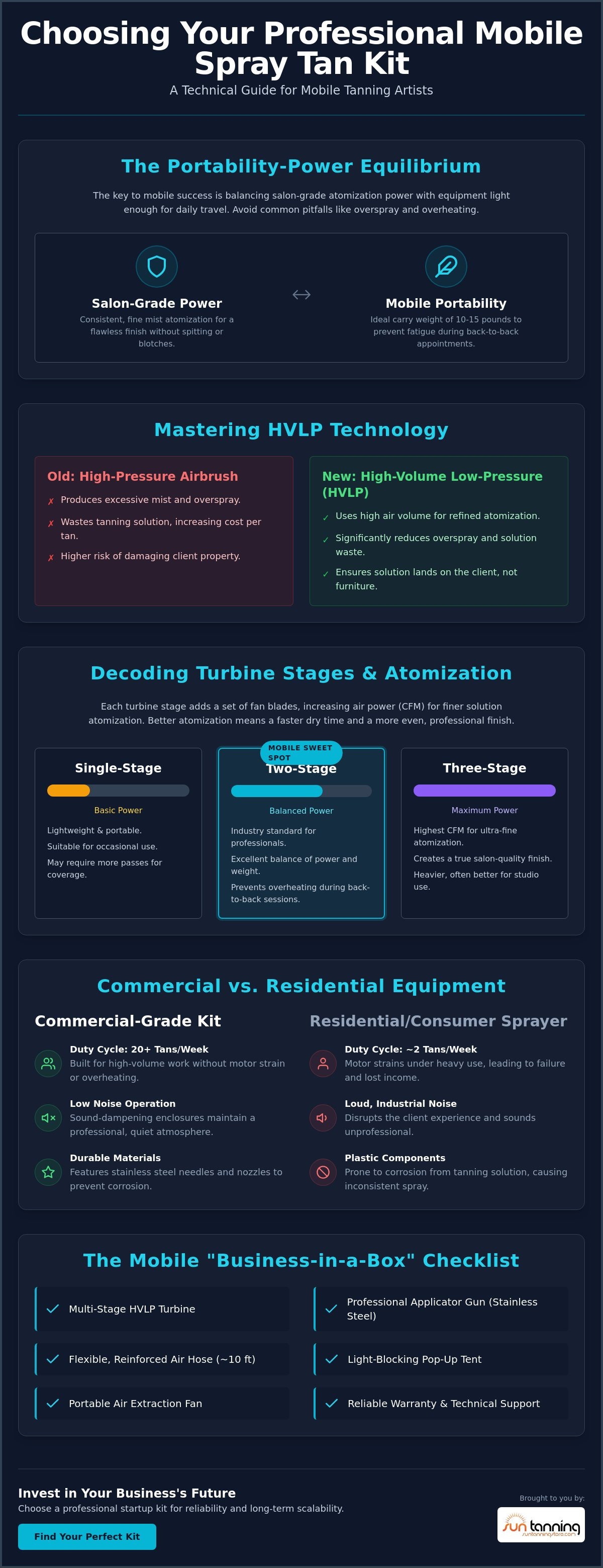
The success of your business hinges on the "Portability-Power Equilibrium," the specific ability to deliver salon-grade atomization without your equipment exceeding a 15-pound carry weight. It's a difficult balance to strike. You likely worry about overspray damaging a client's furniture or your turbine overheating during a busy Saturday of back-to-back appointments. Selecting the ideal mobile spray tanning kit requires a precise understanding of turbine stages and PSI ratings to eliminate technical confusion.
You will learn how to evaluate motor power, portability, and solution quality to secure a "business-in-a-box" solution that looks professional and stays cool during peak hours. We'll analyze the leading professional systems for 2026 to find the perfect fit for your mobile operation. From HVLP efficiency to setup speed, this guide provides the technical depth needed to make an informed investment for your growing brand.
Key Takeaways
- Master the transition to High-Volume Low-Pressure (HVLP) technology to minimize solution waste and achieve a refined, salon-quality finish.
- Decode technical specifications like turbine stages and PSI to identify equipment that prevents overheating and maintains consistent atomization during back-to-back sessions.
- Optimize your equipment selection by targeting the 10 to 15-pound weight range, ensuring your mobile spray tanning kit balances professional motor power with the necessary portability for daily travel.
- Evaluate essential "business-in-a-box" components, from DHA solution percentages to light-blocking tent designs that optimize visibility in diverse client home environments.
- Secure long-term business scalability by investing in professional startup kits from authorized distributors that offer reliable warranty support and technical longevity.
What is a Professional Mobile Spray Tanning Kit?
A professional mobile spray tanning kit is a specialized ecosystem of hardware designed to deliver a flawless finish while maintaining portability. It isn't just a sprayer. It's a precision-engineered setup that allows a technician to transform any residential space into a high-end tanning studio in minutes. The core of this system consists of a High-Volume Low-Pressure (HVLP) turbine, a professional-grade applicator gun, and a reinforced air hose. Unlike the older airbrush systems that utilized high-pressure compressors and produced excessive mist, HVLP technology focuses on high air volume to atomize the tanning solution at a lower pressure. This shift is critical for mobile artists because it significantly reduces "overspray," ensuring that the tanning solution lands on the client rather than their furniture.
Success in the mobile industry requires more than just a machine. Professional Spray Tanning Start Up Kits usually include secondary but essential environmental controls like pop-up tents and portable extraction fans. These components are vital for safety and professionalism. A tent contains the spray area, while an extraction fan pulls excess DHA particles out of the air. Understanding how spray tanning works on a chemical level makes it clear why proper ventilation is a requirement, not an option, for mobile operations.
The Essential Hardware Components
The turbine motor is the heart of the mobile spray tanning kit. It dictates the consistency of the airflow. Professional units use multi-stage motors to ensure the air remains steady, even during long sessions. The applicator gun is equally important. While entry-level models often use plastic components, professional-grade guns feature stainless steel needles and nozzles. This choice of material prevents corrosion from the tanning solution and provides a more consistent spray pattern. Just as Seacoat SCT, LLC focuses on advanced material science to create durable, non-toxic coatings for the maritime industry, professional tanning equipment relies on high-quality components to withstand chemical exposure. Finally, the air hose must offer a balance of length and flexibility. A 10-foot hose is typically the standard, allowing you to maneuver around the client without moving the turbine unit itself.
Commercial vs. Residential Tanning Equipment
Distinguishing between consumer-grade sprayers and professional equipment is essential for business longevity. Most professional mobile kits are designed for 120v outlets, making them compatible with standard residential power. However, the internal durability varies wildly. A residential sprayer might handle two tans a week before the motor begins to strain. In contrast, a commercial-grade turbine is built for a high-volume duty cycle, often capable of performing 20 or more tans per week without overheating. Noise levels also separate the two categories. Professional turbines are engineered with sound-dampening enclosures, allowing you to maintain a luxury, conversational atmosphere in a client's home rather than competing with a loud, industrial vacuum sound.
Technical Comparison: HVLP Turbine Stages and Atomization
The performance of a mobile spray tanning kit is dictated by its turbine stages. Each stage represents a set of fan blades that compress and move air. Single-stage motors are lightweight and suitable for occasional use, but they often lack the pressure needed for back-to-back appointments. Two-stage turbines are the industry standard for mobile professionals, providing a balanced "sweet spot" between motor power and portability. Three-stage units offer the highest CFM (Cubic Feet per Minute), allowing for ultra-fine atomization that creates a refined, salon-quality finish. This precision is vital when adhering to FDA safety regulations for DHA, as superior atomization reduces the volume of loose, inhalable particles in the air.
Understanding the relationship between PSI (Pounds per Square Inch) and CFM is essential for technical mastery. HVLP systems rely on high air volume rather than high pressure to break down the tanning solution. This ensures the product is pushed through the applicator gun efficiently without creating a cloud of overspray. Better atomization also directly impacts "dry time" on the client's skin. A finer mist sets faster, eliminating the sticky sensation often caused by lower-end machines that "spit" larger droplets. When selecting your gear, prioritize Spray Tanning Start Up Kits that feature integrated thermal protection. This failsafe ensures your turbine remains operational during busy Saturday schedules where heat dissipation is a constant challenge.
Understanding Turbine Stages
Motor power dictates your solution waste. Single-stage turbines are portable but often require more passes to achieve full coverage, increasing your cost per tan. Multi-stage turbines provide the consistent airflow required for advanced techniques like muscle contouring. By maintaining a steady CFM, these motors allow the technician to work faster while ensuring the solution is applied in a uniform, micro-fine layer that looks natural upon development.
Spray Gun Technology: Bleeder vs. Non-Bleeder
The applicator gun is your primary tool for precision. Bleeder guns allow air to flow through the nozzle constantly, even when the trigger isn't pulled. This constant airflow helps dry the client as you spray, making it a favorite for high-speed mobile sessions. Non-bleeder guns only release air when the trigger is engaged. They are significantly quieter, which helps maintain a luxury atmosphere in a client's home. Both styles require regular maintenance, specifically the cleaning of stainless steel needles, to prevent clogs and maintain an even spray pattern. Choosing a non-bleeder gun often provides better trigger control, allowing for pinpoint accuracy during detailed applications.
Evaluating Portability: The Logistics of a Mobile Business
Portability is the lifeblood of a traveling artist. A professional mobile spray tanning kit must ideally fall within the 10 to 15-pound weight range to remain viable for a full day of appointments. This weight represents the "sweet spot" where motor power meets physical manageability. Anything heavier risks technician fatigue and potential injury, while anything significantly lighter often sacrifices the industrial durability required for a high-volume business. The physical footprint of your gear determines how quickly you can navigate stairs, elevators, and narrow hallways in diverse residential settings.
Case design plays a critical role in equipment longevity and professional presentation. Hard-shell cases offer maximum impact protection for the turbine, but they can be cumbersome to store in smaller vehicles. Soft-carry bags with reinforced, padded compartments are the preferred choice for many mobile professionals. These bags provide better ergonomics and integrated storage for the applicator gun, solution bottles, and hose. Your operational goal should be a sub-5-minute setup and breakdown time. Efficiency in your transition allows you to maximize your daily schedule and increases the number of clients you can service in a single window.
Weight Distribution and Mobility
Compact handheld turbines integrate the motor directly into the gun, offering maximum mobility for light use. However, separate motor-and-hose units are generally superior for high-volume days because they distribute the weight to the floor rather than your wrist. Look for kits with center-balanced handle placement or those compatible with shoulder straps and rolling cases. This setup allows you to move seamlessly from your vehicle to the client's door in a single trip. Most professional systems are engineered to fit into a standard vehicle trunk alongside a pop-up tent, ensuring your entire business remains compact and organized.
The Mobile Environment Challenge
Residential visits present unpredictable layouts and limited space. You need a power cord and air hose long enough to reach outlets behind heavy furniture without creating tripping hazards. Air quality management is another significant logistical hurdle. Using portable extraction fans is essential for maintaining a clean environment and adhering to FDA safety regulations for sunless tanners. Beyond safety, organized equipment improves the client's perception of your value. Arriving with a clean, well-maintained system suggests a level of expertise that justifies premium pricing and builds long-term trust.
The Mobile Business-in-a-Box Checklist
A comprehensive mobile spray tanning kit serves as your entire business infrastructure. It's a mistake to view it strictly as a mechanical purchase. A true "business-in-a-box" includes the consumables and environmental controls that allow you to operate safely in a client's living room. Beyond the turbine, your inventory must be stocked with professional disposables like sticky feet, hair nets, and barrier creams. These small additions prevent solution from staining soles or discoloring hair, maintaining the high standards of a professional service.
Solution variety is non-negotiable for a growing business. You need DHA percentages ranging from 8% to 12% to handle diverse skin tones effectively. Fair-skinned clients require lower concentrations to avoid unnatural undertones, while those with olive complexions need higher percentages for a visible change. Visibility within the tent is another common mobile hurdle. Clear-top tents allow ceiling lights to reach the client, which is essential for spotting missed areas or streaks. Light-blocking black fabric on the bottom half helps hide solution stains, keeping your setup looking clean for the next house call.
Marketing materials should be considered part of your physical kit. Professionalism extends to the aftercare process. Including printed prep and aftercare guides helps clients maintain their tan, which reduces service complaints and increases re-booking rates. It shows you're a seasoned expert who cares about the longevity of the result, not just the initial application.
Choosing Your Solution Range
Standard solutions are reliable, but rapid-rinse formulas are the modern mobile standard. These allow clients to rinse off the cosmetic bronzer in 2 to 4 hours, which is a major selling point for busy professionals who don't want to wait 12 hours to shower. Always store your solutions in a cool, dark place to maintain DHA stability. Shelf life is typically six months for opened bottles. Reviewing The Ultimate Checklist of Tanning Salon Startup Supplies for 2026 will help you track these inventory cycles and ensure you never run out of stock during a peak season.
Protective Gear and Sanitation
Sanitation builds trust in a residential environment. Use high-level disinfectants and tanning bed sanitizers on all reusable surfaces between visits. Technician protection is equally vital. Masks and gloves prevent cumulative DHA inhalation and skin staining on your own hands. Managing the "overspray zone" involves more than just the tent. Placing a floor mat outside the tent opening catches any stray mist before it hits the client's flooring. This attention to detail ensures you leave the client's home exactly as you found it. To get started with a professional-grade setup, explore our complete Spray Tanning Start Up Kits today.
Why Professional Spray Tanning Start Up Kits are the Smartest Investment
Your equipment is your storefront. In a mobile business, the visual quality of your mobile spray tanning kit establishes your authority before you even begin the application. Clients associate sleek, well-maintained hardware with safety and precision. Using professional-grade turbines and applicators eliminates the "hobbyist" perception that can limit a startup's growth. This commercial confidence allows you to command higher price points, as the equipment itself justifies the premium nature of the service you're providing. It's a psychological bridge that builds trust in your expertise.
Financial sustainability relies on maximizing your margins through technical efficiency. Professional kits achieve this through superior transfer efficiency. While consumer-grade sprayers often create a heavy mist that settles on the floor, a commercial turbine ensures that nearly every drop of solution reaches the skin. This reduction in solution waste can save a technician significant overhead costs over a single season. It's the difference between getting 15 tans per quart versus 20. Those extra sessions represent pure profit that would otherwise be lost to overspray and poor atomization.
Long-term maintenance is where the value of a professional investment becomes most apparent. A business can't survive equipment downtime. Access to technical support and replacement parts ensures that a minor motor issue doesn't result in a week of canceled appointments. Genuine replacement needles, gaskets, and filters are readily available for professional units, whereas entry-level machines are often "disposable" once a single component fails.
Authorized Distribution Benefits
Genuine parts and motors are essential for consistent performance. Buying from an authorized dealer ensures you receive a factory-tested unit backed by a legitimate manufacturer warranty. This protection is vital for mobile artists who rely on their gear for daily income. You aren't just buying a machine; you're securing a partnership that includes technical guidance and reliable logistics. For a deeper look at how these systems integrate into a broader business model, read The Comprehensive Guide to Tanning Salon Equipment Packages in 2026.
The Path to Salon Ownership
Mobile operations serve as a low-overhead testing ground for future brick-and-mortar expansion. You can build a loyal client list and refine your technique before committing to a commercial lease. Many successful owners eventually integrate their mobile spray services with high-demand treatments like red light therapy to diversify their revenue streams. When you're ready to scale your operation and move toward a permanent studio, Browse our Professional Spray Tanning Start Up Kits to find the gear that will carry your business from the first house call to a successful salon environment.
Scaling Your Mobile Sunless Business in 2026
Success in the mobile industry requires a strategic focus on the "Portability-Power Equilibrium." You've learned that a professional mobile spray tanning kit must offer more than just a motor; it must provide refined atomization to reduce solution waste and a weight profile that supports a high-volume schedule. Prioritizing 2-stage or 3-stage turbines and stainless steel applicator components ensures your business maintains a luxury reputation while protecting your physical health. Reliability is the foundation of your growth. Investing in commercial-grade hardware prevents the technical failures that can derail a busy season.
As an authorized national distributor for major brands, we provide the comprehensive professional warranty support and expert technical guidance needed for salon startups to thrive. You don't have to navigate technical specifications alone. Our team ensures you select equipment that grows alongside your client list. Shop Professional Spray Tanning Start Up Kits at Sun Tanning Store to secure the reliable tech your business deserves. Take the next step toward professional independence and start your mobile journey with confidence today.
Frequently Asked Questions
What is the best mobile spray tanning machine for a beginner?
Professional HVLP systems designed specifically for entry-level technicians are the most effective options. These machines feature adjustable flow controls that help beginners master application speed without excessive solution waste. Most professional startup units include a lightweight turbine and a basic applicator gun, offering a reliable entry point into the industry without a massive initial investment.
How much weight should a portable spray tan kit ideally be?
A professional setup should ideally weigh between 10 and 15 pounds to balance motor durability with physical manageability. This weight range allows for a multi-stage motor that can handle back-to-back appointments without overheating. Equipment that falls below this range often lacks the necessary industrial components for commercial use, while heavier kits can lead to significant technician fatigue during a full day of residential visits.
Can I use a mobile spray tan kit for high-volume salon work?
Yes, provided you select a commercial-grade mobile spray tanning kit equipped with a two-stage or three-stage turbine. While portable, these professional systems are designed to handle 20 or more sessions per week. However, for a stationary salon environment with constant back-to-back bookings every 20 minutes, you must ensure the unit features integrated thermal protection to maintain consistent atomization and prevent motor strain during peak hours.
What is the difference between HVLP and LVLP in tanning kits?
HVLP (High Volume Low Pressure) is the industry standard because it uses a high volume of air to atomize solution at a very low pressure. This technology is specifically engineered to reduce overspray, ensuring more product lands on the client. LVLP (Low Volume Low Pressure) systems are less common in the tanning industry as they typically lack the air volume required to create the micro-fine mist necessary for a streak-free, professional finish.
How many tans can I get from a standard liter of spray tan solution?
A standard liter of professional solution typically provides between 16 and 20 full-body applications. Your total yield depends heavily on the efficiency of your mobile spray tanning kit and your applicator's trigger settings. Technicians who use high-quality HVLP guns with stainless steel needles generally report less solution waste, allowing them to maximize the profit margins on every bottle of DHA solution they purchase.
Do I need a special electrical setup for a professional mobile kit?
No special electrical modifications are necessary for professional mobile equipment. These systems are engineered to run on standard 120v residential outlets, which makes them compatible with nearly any client home or hotel suite. It's a good practice to avoid plugging your turbine into an outlet shared with high-draw appliances like space heaters or hair dryers to ensure the motor receives a consistent, uninterrupted power supply during the session.
How do I clean and maintain my spray tan gun after a mobile session?
Flush your applicator gun with warm water or a specialized equipment cleaner immediately after every appointment to prevent DHA buildup. You should also perform a deeper cleaning once a week by disassembling the nozzle and needle assembly to remove any dried residue. Maintaining a clean air filter on your turbine is equally important; a clogged filter forces the motor to work harder, which can lead to overheating and a shortened equipment lifespan.
Is training included with most professional spray tan startup kits?
Basic instructional guides or access to online video modules are often included with professional kits, but comprehensive certification is usually a separate purchase. Many manufacturers provide introductory resources to help you understand basic application patterns and equipment maintenance. For those new to the industry, it's highly recommended to pursue a formal certification program to ensure full compliance with safety standards and to master advanced contouring techniques.