


The Ultimate Checklist of Tanning Salon Startup Supplies for 2026
Your revenue floor in 2026 isn't determined by how many beds you have, but by the diversity of the technology inside them. It's easy to feel overwhelmed by the sheer volume of tanning salon startup supplies required to launch. You're likely balancing the need for high-performance UV lamps against the rising demand for hybrid and red light therapy units. We understand the pressure to get these hardware decisions right the first time. It's frustrating to navigate equipment levels while worrying about hidden maintenance costs like acrylics and specialized sanitizers.
This guide provides a comprehensive, hardware-first checklist of every physical supply and equipment piece needed to launch a profitable salon this year. We've simplified the process so you can focus on growth instead of inventory guesswork. You'll get a clear breakdown of essential equipment tiers, a comparison of UV versus hybrid inventory, and a detailed list of the operational supplies that keep your business running smoothly. From professional spray tan systems to the latest in red light therapy, we're covering the exact specifications required for a modern, high-efficiency tanning environment.
Key Takeaways
- Map your service pricing tiers effectively by mastering the technical hardware differences between Level 1 and Level 4 tanning units.
- Navigate the essential requirements of tanning salon startup supplies, focusing on 120V hybrid technology to reduce immediate electrical infrastructure costs.
- Implement professional maintenance protocols, including specialized acrylic cleaners and lamp hour tracking, to ensure equipment longevity and consistent UV output.
- Optimize your revenue streams by stocking a diverse retail inventory of accelerators and bronzers, which typically drive a significant portion of total salon profit.
- Streamline your procurement process through comprehensive equipment packages from authorized national distributors to ensure full warranty coverage and technical support.
Core Infrastructure: Professional Tanning Beds and Hybrid Units
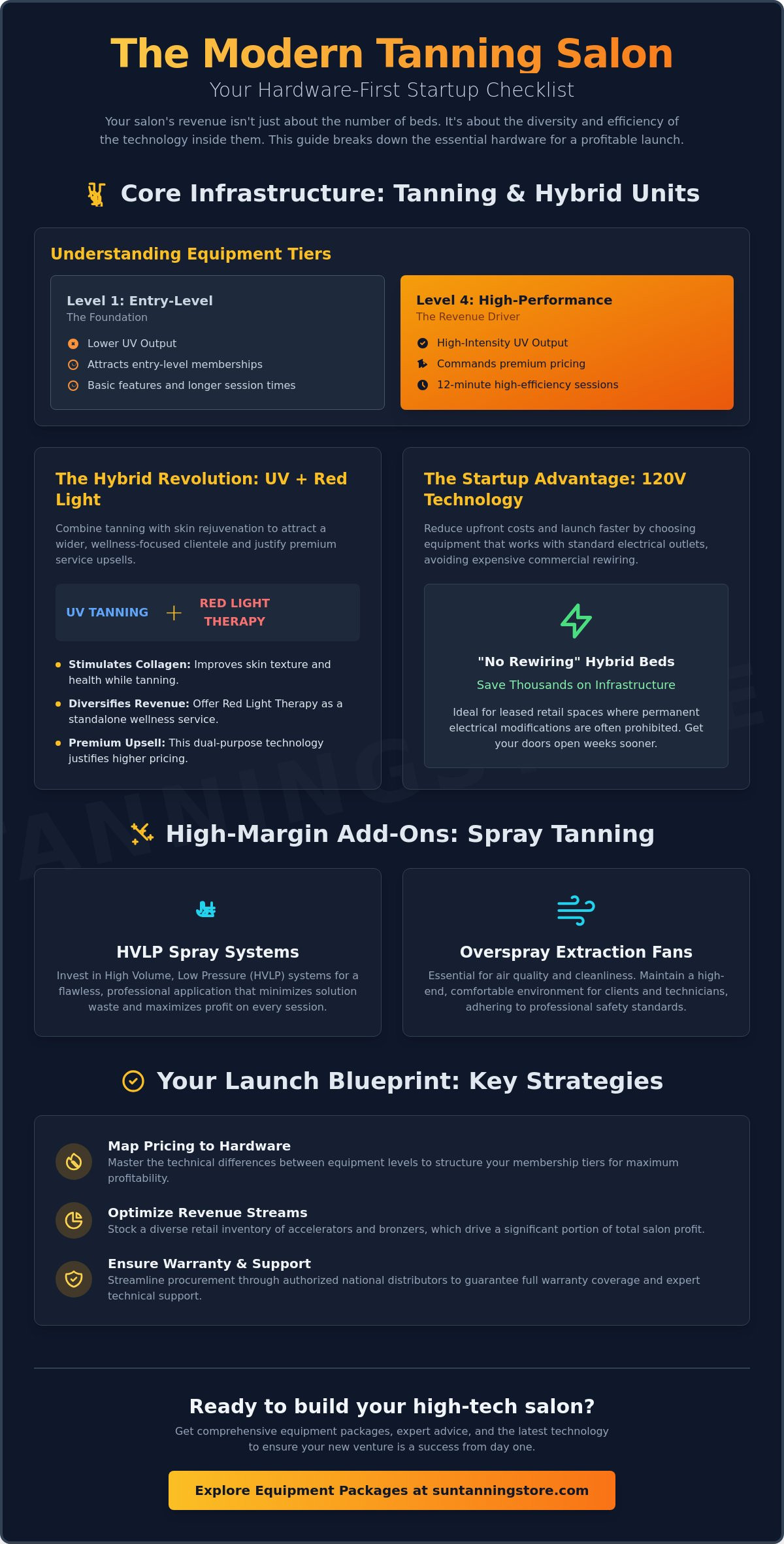
Hardware is the most critical investment for your new venture. Selecting the right tanning salon startup supplies requires a deep understanding of equipment levels, as these directly dictate your membership pricing and hourly revenue potential. Traditional Level 1 beds serve as entry-level units with lower UV output, while Level 4 units provide high-intensity sessions that command premium prices. Modern Indoor tanning equipment must balance session speed with power consumption to ensure your overhead doesn't eat into your margins. It's not just about the number of beds; it's about the technical capabilities of each unit you place on the floor.
Startups often face significant electrical renovation costs that can delay a grand opening by weeks. Units like the ProSun Jade 32 120v Hybrid Red Light Tanning Bed are essential for owners working with limited electrical budgets. These beds operate on standard power configurations, allowing you to launch without the need for expensive commercial rewiring. This technical flexibility is a major tactical advantage in leased retail spaces where permanent modifications are often restricted or prohibited by property managers; to address other environmental needs like privacy and heat reduction, you can learn more about Sun Guard Tint for professional window film applications.
Efficiency is the key to high-volume success. We're seeing a definitive shift toward 12-minute high-efficiency sessions across the industry. These shorter cycles significantly increase daily client turnover, letting you serve more people during peak hours without adding more square footage. You should also incorporate stand-up booths for clients who prioritize speed and hygiene. These vertical units eliminate skin contact with acrylic surfaces and provide a faster, more uniform tan for busy professionals on their lunch breaks.
Commercial UV Tanning Bed Standards
The ProSun Onyx 12 Minute Level 4 Hybrid Commercial Tanning Bed represents the peak of professional performance. It utilizes advanced ballast efficiency and specific lamp counts designed for heavy-duty commercial duty cycles. These units are built to run back-to-back without overheating or losing UV intensity. Because they're engineered as "no rewiring" units for specific commercial configurations, they minimize the logistical hurdles often associated with high-level equipment installations. Reliability in your tanning salon startup supplies ensures that your doors stay open and your clients remain satisfied with their results.
The Hybrid Revolution: UV + Red Light Therapy
Consumer demand is pivoting toward wellness and skin rejuvenation. Incorporating hybrid red light tanning beds allows you to offer more than just a bronze glow. These units combine UV lamps with red light therapy to stimulate collagen production and improve skin texture while the client tans. This dual-purpose technology justifies a premium service upsell and positions your salon as a high-end wellness destination. You can also integrate Red Light Therapy Units as standalone services to attract a demographic interested in skin health rather than tanning, effectively diversifying your revenue streams.
Specialized Spray Tanning Startup Kits and Solutions
Spray tanning represents a high-margin revenue stream that operates independently of UV bed cycles. To deliver professional results, you must invest in High Volume Low Pressure (HVLP) systems. These units are engineered to provide precise application while minimizing overspray, which protects your bottom line by reducing solution waste. Including a professional-grade spray system in your tanning salon startup supplies ensures you can cater to clients seeking immediate results or those who prefer UV-free alternatives. Buying these components as part of a dedicated spray tan startup kit is often the most cost-effective entry point for new owners.
Cleanliness and safety are paramount in a professional setting. Overspray extraction fans are essential for maintaining air quality and preventing solution from settling on salon surfaces. This isn't just about aesthetics; it's about adhering to professional standards and keeping your environment comfortable for both technicians and clients. Reviewing FDA tanning equipment requirements provides a clear baseline for the safety and regulatory standards your facility must meet to operate legally and safely. Proper ventilation is a technical requirement that cannot be overlooked if you intend to maintain a high-end brand image.
Professional Spray Tan Kit Components
Turbine-based systems are the industry preference for high-volume environments due to their reliability and consistent air pressure. Unlike older compressor models, modern turbines provide the steady airflow needed for a streak-free finish. Your setup also requires a dedicated spray booth area equipped with high-intensity lighting to help technicians see the guide color accurately. Non-slip flooring and pop-up tents are standard logistical additions that keep your workspace organized and professional. Investing in technician training is equally vital, as consistent application is the only way to build long-term client trust.
Solution Inventory and Prep Supplies
Managing your solution inventory requires a tiered approach to DHA percentages. You'll need a range of options, typically from 8% to 14%, to accommodate diverse skin types and desired tan depths. Rapid-rinse solutions are increasingly popular as they allow clients to shower within two to four hours, compared to the traditional eight-hour development window. Beyond the solution itself, you must stock essential consumables like barrier creams and pH-balancing prep sprays. These products ensure the DHA adheres evenly and lasts longer, which directly impacts client retention. Don't forget the logistical necessity of disposables; sticky feet, hair nets, and disposable underwear are mandatory for a professional client experience. If you're looking to streamline your initial procurement, choosing one of our Spray Tanning Start Up Kits provides a curated selection of these essentials in a single, cost-effective package.
Maintenance Essentials: The Hidden Supply Checklist
Launching a salon requires more than just high-end beds; it requires a rigorous maintenance protocol to protect your investment. Many owners overlook specialized cleaning agents in their initial tanning salon startup supplies list, assuming household products will suffice. This is a critical mistake. Standard household cleaners containing ammonia or alcohol will cause "crazing" or micro-cracking in tanning bed acrylic surfaces. This damage is irreversible and forces expensive, premature replacements that could have been avoided with the right chemistry. Keeping a small inventory of replacement tanning bed acrylics is a necessary precaution to prevent equipment downtime when wear and tear inevitably occur.
Compliance with local health codes is non-negotiable for a professional operation. You must use specialized salon sanitizers that meet stringent standards for broad-spectrum disinfection. These agents are specifically formulated to kill pathogens without degrading the equipment. Consult state tanning salon regulations to understand the specific documentation and safety supplies, like injury-reporting logs and sanitized eyewear, required in your jurisdiction. Failure to meet these requirements can lead to heavy fines or immediate closure during a routine inspection. Professional transparency starts with a clean, compliant facility.
UV Lamp Replacement Strategy
Consistent UV output is the foundation of client satisfaction and retention. You shouldn't wait for a lamp to burn out before replacing it, as output degrades long before the filament fails. Maintaining a backup inventory of replacement tanning lamps ensures your sessions remain effective and predictable. It's vital to distinguish between 100W and 160W configurations, as using the wrong wattage can damage your ballasts or result in poor tanning performance. Lamp life is the period before UV output drops below 70% of peak efficiency. Tracking these hours meticulously prevents the "weak tan" complaints that drive clients to competitors who maintain their hardware better than you do.
Sanitization and Surface Protection
Managing operational costs involves choosing between concentrated sanitizers and ready-to-use (RTU) sprays. Concentrates offer a significantly lower cost-per-ounce, though they require precise mixing to remain effective and safe for skin contact. Always use acrylic-safe microfiber towels and non-abrasive cleaning tools to avoid scratching the bed surfaces, which can harbor bacteria if damaged. Implementing daily, weekly, and monthly maintenance logs is the most efficient way to ensure equipment longevity. These records serve as a professional bridge between your staff's daily tasks and your long-term business health, proving to both inspectors and clients that you prioritize hygiene.
Retail Inventory and Front-of-House Essentials
Revenue isn't just about bed time. Retail products often account for 30% to 50% of total salon profit, making your initial selection of tanning salon startup supplies a vital driver of your bottom line. You need a tiered inventory strategy to maximize these margins. Stocking a range of accelerators, bronzers, and tingles allows your staff to recommend products based on individual skin types and tanning goals. High-volume salons prioritize retail because the shelf-life is manageable and the markup is significant compared to the overhead of a UV session.
Efficiency at the front desk requires professional salon accessories that integrate with your hardware. T-Max controllers and centralized timers are mandatory for managing session lengths across multiple rooms from a single location. These systems prevent overexposure and ensure your hardware duty cycles are tracked accurately for maintenance scheduling. Without a reliable controller system, your staff will struggle to manage client flow during peak hours, leading to longer wait times and decreased satisfaction.
Professional Tanning Lotion Inventory
Premium, salon-only brands are the gold standard for professional environments. These products contain higher concentrations of skin-nourishing ingredients compared to mass-market alternatives, which directly correlates to better tanning results and client retention. After-tan moisturizers and tan extenders are essential add-on sales that help clients maintain their results between sessions. Your display strategy should focus on maximizing impulse purchases; place these high-margin items at eye level near the point of sale where clients finalize their session bookings.
Salon Accessories and Disposables
Certified UV eye protection is a non-negotiable legal requirement. You must offer both "house" goggles, which are meticulously sanitized after every use, and retail options for clients who prefer the hygiene of their own pair. Towel service is another logistical pillar that requires specific hardware. Invest in high-absorbency towels and industrial-grade laundry detergents capable of removing tanning oils and solutions. Adding client comfort items like cooling fans and specialized pillow sanitizers elevates the perceived value of your service without significantly increasing your operational costs. To stock your shelves with professional-grade products, browse our full selection of Tanning Lotions and Sanitizers designed specifically for high-volume commercial use.
Procurement Strategy: Equipment Packages and Distribution
Strategic procurement is the final hurdle before your grand opening. Buying hardware individually often leads to logistical fragmentation and higher overall costs. Purchasing tanning salon equipment packages offers a clear financial advantage by bundling essential units with the necessary startup accessories. This approach streamlines your tanning salon startup supplies into a single, manageable delivery, which is vital for maintaining a strict build-out schedule.
Reliable partnerships are the foundation of a sustainable business. You must identify an authorized national distributor to ensure your manufacturer warranties remain valid and enforceable. This is especially critical for high-end brands like ProSun, where technical support and genuine OEM parts are required for long-term reliability. Resellers who aren't authorized often can't provide the specialized technical assistance needed when a ballast fails or a timer system needs calibration.
Major hardware investments can strain your initial capital. Many savvy owners explore equipment financing options to preserve their liquid cash for marketing and operational expenses during the first several months of business. When ordering commercial beds online, prepare for the logistics of LTL freight. These units arrive on heavy-duty pallets and typically require a liftgate service or a loading dock for safe offloading at your retail location.
Authorized Distribution Advantages
Buying from an authorized dealer ensures that every component, from the ballasts to the internal wiring, meets the manufacturer's original specifications. This is the only way to guarantee access to genuine replacement lamps and certified technical support. Navigating manufacturer warranties for ProSun and other major brands is significantly easier when your distributor has a direct relationship with the factory. They provide a level of installation guidance and troubleshooting that generic equipment resellers simply cannot match.
Scaling Your Supply Chain
Operational success depends on a consistent flow of consumables. You should set up recurring orders for high-turnover items like sanitizers, acrylic cleaners, and client disposables to prevent stockouts. As your salon matures, look for opportunities to integrate more Level 4 equipment to capture high-margin sessions. Your final procurement phase should follow a 30-day timeline; this allows sufficient time for shipping lead times, electrical inspections, and staff training before you officially open your doors.
Build a Profitable Salon Foundation
Success in the 2026 market requires a strategic balance of high-efficiency UV technology and wellness-focused hybrid units. You've seen how the right hardware choices, combined with a meticulous maintenance schedule and a robust retail inventory, create a sustainable revenue model. Securing your tanning salon startup supplies through a single, authorized source minimizes logistical friction and ensures your equipment remains under full warranty protection. This structured approach prevents the hidden costs of equipment downtime and protects your professional reputation from day one.
It's time to transition from planning to execution. We act as your reliable bridge between manufacturers and your front door, offering the technical expertise necessary for a seamless launch. Explore Professional Tanning Salon Equipment Packages at Sun Tanning Store to leverage our status as an Authorized National Distributor for ProSun. We provide competitive financing on commercial units and expert support for new salon startups to ensure your business is positioned for immediate growth. Your vision for a premier tanning destination is within reach, and we're ready to help you build it.
Frequently Asked Questions
What are the most expensive startup supplies for a tanning salon?
Commercial tanning beds and hybrid units represent the largest capital expenditures for any new salon. High-performance hardware, such as the ProSun Onyx Level 4, constitutes a significant portion of your initial investment. Beyond the equipment itself, electrical infrastructure upgrades and specialized HVAC systems often serve as the most substantial secondary costs in your build-out budget.
Can I use residential tanning beds for a commercial startup?
No, residential beds are not engineered for the high-volume duty cycles required in a professional environment. Using residential units for a commercial business will void manufacturer warranties and likely violate local fire or health department codes. Commercial-grade ballasts and advanced cooling systems are technically necessary to handle back-to-back sessions safely without equipment failure.
How many tanning beds do I need to start a small salon?
Most successful small salons launch with four to six units to provide a functional range of tanning levels. This variety allows you to offer entry-level sessions alongside premium Level 4 or hybrid services. Starting with too few beds can lead to bottlenecking during peak hours, which negatively impacts client retention and overall session revenue.
What kind of electrical work is required for commercial tanning beds?
Most commercial units require 220V dedicated circuits with specific amperage ratings, typically ranging from 20A to 40A per unit. However, specialized hardware like the ProSun Jade 32 is designed to operate on standard 120V power. You must hire a licensed electrician to install NEMA-standard receptacles that precisely match the technical specifications of your chosen tanning salon startup supplies.
How often should I restock spray tanning solutions and lotions?
You should monitor your inventory levels weekly and place restock orders based on your average session volume. High-turnover items like DHA solutions and retail accelerators usually require monthly ordering to ensure product freshness and potency. Setting up recurring orders for these essential consumables prevents stockouts that could disrupt your service and lower your retail profit margins.
Is red light therapy equipment worth the investment for a new salon?
Yes, red light therapy units are high-value additions that attract a wellness-oriented demographic. These units provide a non-UV revenue stream and can be marketed as a standalone treatment or a premium add-on to hybrid sessions. This technology helps diversify your service menu and justifies higher membership price points for clients interested in skin rejuvenation.
What legal safety supplies are mandatory for tanning salons in 2026?
Mandatory safety supplies include FDA-compliant protective eyewear, visible warning signage, and accurate session timers. You must also maintain a stock of sanitized goggles and ensure every tanning room has accessible emergency shut-off controls. Depending on your location, state-specific regulations may also require injury reporting logs and documented proof of staff safety training.
How do I choose between UV tanning and spray tanning equipment?
You shouldn't choose one over the other; the most profitable salons offer both to capture the widest possible market share. UV beds provide long-term results and are preferred by traditional tanners, while HVLP spray systems offer immediate, UV-free color for special events. Offering both ensures you don't turn away clients with different skin types or tanning preferences.