


The Ultimate Tanning Lotions Buying Guide: How to Choose for Professional Results in 2026
Your tanning lotions are bio-active accelerators designed to manage UV light absorption and bypass natural tanning plateaus, not just simple moisturizers. It's frustrating to invest time in a session only to leave with streaks, an orange tint, or skin that feels uncomfortably dry. You want a deep, bronze glow that looks professional and lasts, but the sheer volume of options makes choosing the right bottle feel like a gamble. With nearly 993,000 cosmetic products now listed with the FDA under MoCRA regulations as of 2026, identifying a high-performance formula requires technical precision.
This guide will teach you how to select the perfect lotion for your specific skin type and experience level so you can achieve a healthy, hydrated tan without wasting money on ineffective formulas. We'll break down the technical differences between bronzers and accelerators, explore the 2026 skincare-first trend involving hyaluronic acid and vitamin C, and identify which products offer essential tattoo protection while deepening your shade. By the end, you'll understand how to maximize every session for professional, long-lasting results that prioritize your skin health.
Key Takeaways
- Understand how skin hydration acts as a catalyst for melanin production, ensuring UV light penetrates deeply rather than reflecting off a dry surface.
- Differentiate between base-building accelerators and high-DHA bronzers to select the most effective formula for your current tanning plateau.
- Identify the performance advantages of coconut-based tanning lotions over traditional water-based options for superior moisture retention and skin firming.
- Learn to recognize advanced skincare technologies, such as tattoo protection and anti-aging complexes, that maintain skin integrity during UV exposure.
- Master professional application techniques, including the essential exfoliation phase, to guarantee 100% coverage and a streak-free, bronze finish.
The Science of Indoor Tanning: Why Professional Lotions Matter
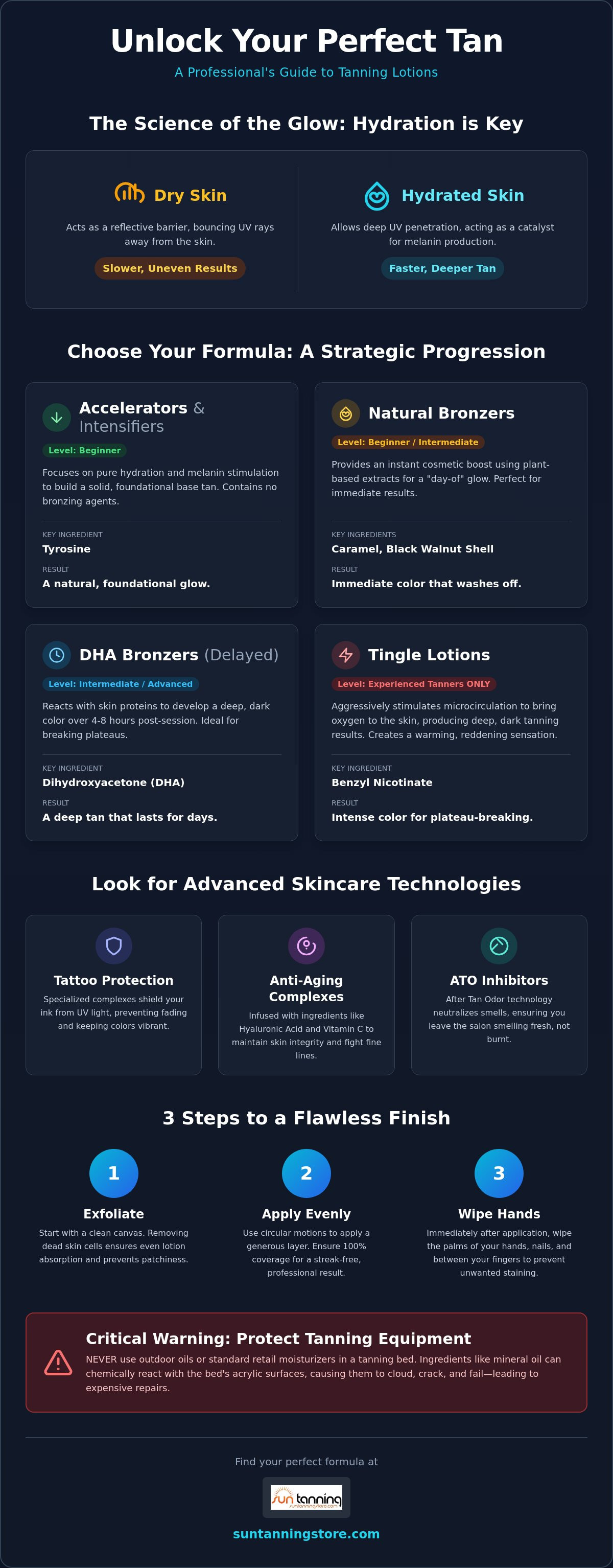
Professional results require more than just high-intensity lamps. It's about light management. Dry skin acts as a reflective barrier; it literally bounces UV rays away from the body. Hydrated skin, however, allows for deeper penetration and significantly faster results. This is the fundamental reason why using high-quality tanning lotions is non-negotiable for anyone serious about their glow. Advanced Indoor tanning lotions are engineered to prime the skin's surface by increasing its translucency, ensuring that every minute of your session is productive.
These formulas act as a bio-active catalyst for melanin production. Melanin is the natural pigment responsible for your tan's depth. Professional products often contain high concentrations of tyrosine, an amino acid that provides the essential building blocks your body needs to create pigment quickly under UV light. This bio-chemical efficiency means you achieve a darker shade in fewer sessions, maximizing the value of your equipment use.
Modern professional formulas also include specialized After Tan Odor (ATO) inhibitors. These aren't just heavy perfumes designed to mask a scent. They are sophisticated chemical stabilizers that prevent the breakdown of skin oils during the heating process. This technology ensures you leave the session smelling fresh rather than "burnt."
Maintenance is equally critical. Using outdoor oils or standard retail moisturizers in a commercial bed is a costly mistake. These products frequently contain mineral oils or petroleum-based ingredients that chemically react with tanning bed acrylics. This reaction causes the acrylic to cloud, crack, and eventually fail, leading to expensive repairs for units like the ProSun Onyx or Jade series.
Breaking the Tanning Plateau
Your skin eventually hits a biological limit known as a tanning plateau. Without technical intervention, your color will stop darkening regardless of how often you tan. Plateau-breaking formulas use advanced peptides to signal the skin to continue melanin synthesis beyond its natural baseline. Alternating between different types of tanning lotions, such as rotating a base-building intensifier with a high-DHA bronzer, keeps the skin responsive to UV stimulus and prevents adaptation.
UV Lotions vs. Sunless Self-Tanners
There is a distinct difference between UV-activated formulas and sunless self-tanners. Indoor tanning lotions are specifically engineered to work in tandem with UV lamps to create a "real" tan from within. While some include DHA (Dihydroxyacetone) for immediate cosmetic color, the primary goal is to stimulate your skin's own pigment. Standard "fake tan" products lack the accelerators needed for UV sessions and often contain SPF or mineral blockers that actually hinder the tanning process.
Choosing Your Formula: Accelerators, Bronzers, and Tingles Explained
Selecting the right formula is a strategic progression. You can't jump from a beginner base to a high-intensity tingle without consequences. Most users start with Accelerators (frequently labeled as Intensifiers). These products focus on pure hydration and melanin stimulation without any added bronzing agents. They're the gold standard for building a solid foundation. Once your base is established, you can move into the complex world of bronzers to bypass natural plateaus and reach deeper shades.
Natural bronzers utilize plant-based extracts such as henna, black walnut shell, or caramel to provide immediate color. This is a cosmetic "day-of" glow that washes off with your next shower. It's an excellent choice for tanners who want an instant boost without the commitment of long-term staining. Evaluating these bronzing agents requires an understanding of FDA safety regulations for sunless tanners, especially regarding the use of Dihydroxyacetone (DHA).
Delayed-action DHA bronzers represent a more advanced tier of tanning lotions. DHA reacts with the proteins in your skin to darken over a period of four to eight hours after your session. This provides a tan that lasts for several days. Finding the right balance between these technologies is easier when you browse a curated selection of professional tanning lotions designed for commercial-grade equipment.
Tingle lotions are the most aggressive tools in a tanner's arsenal. They use Benzyl Nicotinate to stimulate microcirculation, bringing oxygen-rich blood to the skin's surface. This oxygenation acts as a catalyst, accelerating the UV-induced tanning process. It results in a temporary reddening and a "tingling" sensation that can be quite intense. It's high-performance technology reserved strictly for seasoned tanners.
The Bronzer Breakdown: Natural vs. DHA
Choose natural bronzers for immediate events where you need a quick, non-staining color boost. For long-lasting depth, DHA is the superior choice, though it requires more careful application. To avoid streaks, always apply high-DHA formulas in circular motions and wash your hands immediately after use. When you see "X" ratings (like 100X or 200X) on a bottle, remember these are relative measures of intensity within that specific brand's lineup, not a standardized industry metric.
Understanding Tingle Factors
Tingle formulas work by dilating capillaries to increase blood flow. This "tingle" sensation indicates that your skin is receiving maximum oxygen for the tanning reaction. Safety is paramount here. Never apply tingle lotions to the face or sensitive areas. Beginners should avoid these entirely until they've built a significant base tan. If the reddening lasts longer than a few hours or is accompanied by hives, it may be an allergic reaction rather than the intended effect.
Key Ingredients and Skincare Technologies to Look For
Modern tanning lotions are transitioning into high-performance skincare. The 2026 market prioritizes "skincare-first" formulations that treat the skin while darkening it. This shift moves beyond simple hydration; formulas now include anti-aging and firming ingredients like hyaluronic acid and vitamin C to maintain skin integrity. These bio-active components ensure that the tanning process doesn't compromise the skin's texture or elasticity over time.
Base ingredients define the product's delivery efficiency. Traditional water-based lotions are being replaced by coconut milk and oil foundations. These provide a significantly higher lipid content. This superior hydration ensures the skin remains receptive to UV light for the duration of the session. When the skin's moisture barrier is intact, the UV-induced tanning reaction is more uniform and the resulting color lasts longer.
Body art protection is a critical requirement for modern consumers. UV exposure can cause ink to fade or blur over time, particularly with frequent sessions. Professional-grade products now incorporate specialized "Tattoo and Color Fade Protection" technologies. These create a protective moisture barrier that shields pigment from UV-induced degradation. This is an essential feature for anyone looking to maintain the vibrancy of their tattoos while achieving a deep bronze.
Hemp seed oil serves as a primary delivery system for essential fatty acids. It provides a balanced ratio of Omega-3 and Omega-6, which are vital for skin health. Understanding how self-tanning creams work through the Maillard reaction helps explain why these skincare ingredients are so vital. When chemical reactions occur on the skin's surface, the barrier must be reinforced to prevent irritation and ensure an even tone.
Advanced Anti-Aging Complexes
Matrixyl Synthe 6 is a powerful peptide frequently found in premium 2026 formulas. It stimulates six major constituents of the skin matrix to reduce the appearance of fine lines. Antioxidants like Vitamin C and E are also included to combat free radical damage caused by UV exposure. These collagen-boosting ingredients work to maintain skin elasticity, ensuring the skin looks youthful and firm even with frequent tanning sessions.
Specialized Additives
Charcoal and seaweed extracts are utilized for skin detoxification. They effectively refine pores and pull impurities from the skin during the heating process. Cooling essences are another popular addition; they balance the heat of the tanning bed for a more comfortable experience. For extreme hydration, look for electrolytes and watermelon extracts. These ingredients replenish the skin's moisture levels immediately, preventing the dry, "tight" feeling that can occur after a session.
Top Tanning Lotion Brands for 2026: Professional Recommendations
Brand selection is a critical variable in your tanning strategy. It's not just about the scent; it's about the technical delivery of accelerators and bronzers to your skin. Devoted Creations remains the gold standard for high-end skincare integration. Their 2026 lineup continues to prioritize skin integrity with advanced "Tattoo Protection" technology, which prevents the fading of body art during intense UV sessions. For those seeking fashion-forward fragrances and high-DHA concentrations, Ed Hardy offers edgy, powerful formulas designed for immediate, intense color results.
Regular tanners often require a balance of performance and value. Tan Azs U fills this gap perfectly, providing reliable, high-performance lotions that maintain consistent results without the premium price tag of boutique lines. Conversely, Pro Tan is the go-to for competition-grade depth. Their iconic "Beaches and Creme" line remains a staple for building a clean, dark base. Whether you are maintaining a commercial unit or tanning at home, choosing a reputable brand ensures your tanning lotions won't damage equipment acrylics or cause uneven staining. You can find these authorized, high-performance professional tanning lotions and sanitizers in our current collection.
Best for Beginners: The Entry-Level Glow
Beginners should focus on skin health and base building. Gentle intensifiers are the best starting point because they lack heavy dyes that can streak on unconditioned skin. Look for hypoallergenic options if you have sensitive skin to avoid irritation during the heating process. These entry-level products emphasize ease of application, ensuring you achieve an even foundation before moving to more complex bronzing agents. This stage is about preparing the skin to be a perfect canvas for deeper shades later.
Best for Advanced Tanners: Maximum Darkening
Experienced tanners looking to break through plateaus should look for top-tier 400X bronzers. These formulas contain the highest concentrations of DHA and natural bronzing extracts for maximum depth. High-intensity tingle products are also effective for advanced users who understand the microcirculation process. A significant 2026 trend is the rise of hybrid lotions. These are specifically formulated to be compatible with both UV tanning and Red Light Therapy (RLT) systems. If you are using a hybrid bed, consult The Ultimate Guide to Red Light Therapy Canopies to understand how these specialized lotions maximize the benefits of both light spectrums simultaneously.
How to Apply Tanning Lotion for Flawless Results
Precision application is the difference between a professional bronze and a streaky "tanning fail." Even the most expensive tanning lotions cannot compensate for poor technique. Preparation begins long before you enter the tanning room. Exfoliation is the critical first step that most users skip. By removing dead skin cells through mechanical or chemical exfoliation, you create a smooth, uniform surface. This ensures that the active ingredients and bronzers in your formula absorb evenly rather than clinging to dry patches, which is a primary cause of dark spots and uneven fading.
The "Circular Motion" technique is the industry standard for ensuring 100% coverage. Instead of long, vertical strokes, apply your lotion in small, overlapping circles. This method forces the formula into the skin's texture, preventing missed spots and streaks. Start from your ankles and work your way up. This upward progression prevents you from creating "fold lines" in the lotion when you bend over to reach your lower legs.
Clean palms and cuticles are essential for a natural look. Bronzers, especially high-DHA formulas, will heavily stain the porous skin on your hands. Use a damp cloth or specialized tanning wipes to clean your palms, finger webs, and under your fingernails immediately after application. If you're using a high-intensity bronzer, consider using a barrier cream on your cuticles and knuckles to prevent over-absorption in those areas.
Timing your post-session shower is vital for color development. If your lotion contains DHA, you must wait at least four to six hours before showering. This allows the Maillard reaction to fully develop on the skin's surface. Showering too early will wash away the bronzing agents before they have time to bond with your skin proteins, resulting in a significantly lighter tan than intended.
Maximizing Absorption in the Bed
Apply your lotion 10 to 15 minutes before your session begins. This "priming" period allows the skin to start absorbing the accelerators, ensuring they are bio-available the moment the UV lamps engage. Pay extra attention to "difficult to tan" areas like the legs and shins, which have fewer oil glands and often require specialized accelerators to reach the same depth as the torso. Hygiene also impacts results; always ensure a clean environment by properly using a tanning bed sanitizer before your session to remove any residues that might block UV penetration.
Post-Tan Maintenance
Longevity depends on moisture retention. Use specialized Tan Extenders rather than standard retail body lotions. Extenders are formulated without mineral oils or sulfates that can strip your tan. They often contain low-level bronzers to touch up your color daily, keeping your glow for up to 50% longer. Remember that hydration starts from the inside out; increasing your water intake helps maintain skin plumpness and prevents the rapid shedding of tanned skin cells. Ready to find your perfect match? Shop our collection of 600+ authentic tanning lotions here!
Secure Your Professional Bronze for 2026
Achieving professional-grade results in 2026 requires more than just time under the lamps. It demands a strategic approach to skin hydration and pigment stimulation. By prioritizing skincare-first tanning lotions, you ensure that your skin remains healthy while bypassing natural tanning plateaus. Consistent exfoliation and precise application are just as vital as the formula inside the bottle. These technical steps transform a standard session into a high-performance beauty treatment.
As an authorized distributor for industry leaders like Devoted Creations and Ed Hardy, we provide access to the same technology used in the world's top salons. We maintain over 640+ professional formulas in stock, ensuring you find the exact match for your skin's needs. Every purchase comes with our 100% guaranteed authentic product promise, giving you total confidence in your skincare investment.
Browse Our Full Collection of Premium Tanning Lotions today and take the first step toward your deepest, most resilient bronze yet. Your perfect shade is only one session away.
Frequently Asked Questions
Can I use regular lotion in a tanning bed?
No. Regular drugstore lotions frequently contain mineral oils or petroleum-based ingredients that chemically react with and damage tanning bed acrylics. These products also lack the tyrosine and bio-active accelerators essential for UV light management. Using non-specialized moisturizers can lead to cloudy equipment surfaces and inefficient tanning sessions, making them a poor substitute for professional-grade formulas designed specifically for indoor use.
What is the difference between a bronzer and an intensifier?
Intensifiers, also known as accelerators, focus on hydrating the skin and stimulating natural melanin production without the use of added colorants. Bronzers, however, include cosmetic tints or DHA to provide an immediate or delayed darkening effect. If you're a beginner, starting with an intensifier builds a healthy base, while advanced tanners use bronzers to bypass natural plateaus and achieve a deeper bronze.
How long should I wait to shower after applying a DHA tanning lotion?
Wait at least four to six hours before showering, swimming, or engaging in heavy exercise. DHA (Dihydroxyacetone) requires this window to complete the Maillard reaction with your skin's surface proteins. If you rinse the product off too early, you'll interrupt the darkening process, resulting in a significantly lighter shade and a tan that fades much faster than a fully developed one.
Do tanning lotions expire, and how can I tell?
Yes, most professional formulas remain effective for 12 to 18 months after they are opened. You can identify the specific shelf life by looking for the Period After Opening (PAO) symbol on the bottle, which looks like a small open jar. If the lotion exhibits a sour odor, changes color, or has a separated, watery consistency, the active ingredients have likely degraded.
Will tanning lotion protect my tattoos from fading?
Only specialized tanning lotions with "Tattoo Protection" technology will effectively shield your body art. These products use specific botanical blends and high-lipid barriers to prevent UV rays from breaking down ink pigments. Standard formulas lack these protective complexes, which means your tattoos may gradually lose their vibrancy and sharp edges if you don't use a product designed for ink maintenance.
Why does my skin feel hot and look red after using a tingle lotion?
This effect is caused by Benzyl Nicotinate, an active ingredient that stimulates microcirculation by bringing oxygen-rich blood to the skin's surface. Oxygen is a vital catalyst in the chemical tanning process, so the tingle sensation indicates that your skin is primed for maximum UV absorption. While the intense heat and redness can be startling, it's a normal part of how these advanced formulas function.
How much tanning lotion should I apply per session?
Apply approximately one ounce of product, which is roughly enough to fill a standard shot glass, for full-body coverage. Using less than this amount prevents your skin from reaching the saturation point needed to stop UV reflection. Conversely, over-application can lead to product "pilling" or greasy residue that interferes with the bed's performance. Consistent, even coverage is the key to a professional finish.
Is it worth buying professional salon lotions over drugstore brands?
Professional tanning lotions are a superior investment because they contain higher concentrations of tyrosine and skin-firming peptides. Drugstore alternatives often rely on inexpensive fillers and lower-grade DHA, which can result in an unnatural orange tint or significant skin dehydration. Salon-grade products are engineered to work with high-intensity lamps, ensuring you get the darkest results possible while maintaining your skin's long-term elasticity and health.