


The Ultimate Guide to Tanning Lotion for Tanning Beds: Results, Science, and Selection
Your choice of tanning lotion for tanning bed sessions is the single most important factor in determining whether you achieve a professional bronze or a streaky, orange disaster. You've likely dealt with the frustration of dry, itchy skin or the fear of damaging expensive equipment with subpar products. It's a common concern for those looking to maximize their results without compromising their investment. High-performance tanning is about more than just UV exposure; it's about managing light refraction and skin health simultaneously.
This guide will help you master the science of indoor tanning accelerators, bronzers, and intensifiers. You'll learn how to achieve a darker, longer-lasting tan while maintaining soft, hydrated skin and protecting your tanning bed acrylics from chemical degradation. We'll provide the technical insight needed to select a professional-grade formula that aligns with your specific skin type and goals.
We'll break down the latest 2026 skincare-first trends, explain the critical role of ingredients like Tyrosine and DHA, and explore the benefits of hybrid lotions (formulated for both UV and Red Light Therapy). From identifying the best moisturizers for tattoo protection to understanding how to avoid common application errors, you'll gain the confidence to choose products that deliver consistent, high-performance results every time.
Key Takeaways
- Understand how skin hydration acts as a performance catalyst, allowing UV light to penetrate deeper for a more efficient and darker tan.
- Navigate the functional differences between bronzers, intensifiers, and tingle formulas to choose the best tanning lotion for tanning bed performance.
- Prioritize skincare-first ingredients that mitigate trans-epidermal water loss and maintain skin elasticity during high-heat exposure.
- Implement professional application protocols to ensure a streak-free, uniform finish while maximizing the lifespan of your product.
- Protect your equipment investment by identifying and avoiding ingredients that cause chemical degradation of tanning bed acrylics.
The Science of UV Absorption: Why Dedicated Tanning Bed Lotions are Essential
High-performance tanning is not a passive process. It requires a specific chemical catalyst to bridge the gap between UV emission and skin pigmentation. A professional indoor tanning lotion acts as this catalyst, specifically engineered to accelerate the skin's natural tanning process under controlled conditions. Unlike generic moisturizers, these formulas contain high concentrations of Tyrosine. This amino acid is the essential precursor to melanin production; it primes your skin to respond immediately to UV exposure. Without this topical boost, your body spends the first several minutes of a session just "waking up" its pigment-producing cells, effectively wasting valuable lamp time.
Indoor vs. Outdoor Lotions: A Critical Distinction
Outdoor sunscreens are designed to reflect or absorb UV rays to prevent burning. In a controlled tanning environment, using SPF is entirely counterproductive. It creates a physical barrier that wastes energy and session time. Salon-grade tanning lotion for tanning bed use also excludes mineral oil and petroleum-based fillers. This is a critical technical detail. Petroleum products create a film that reflects light and causes chemical degradation of tanning bed acrylics, leading to expensive equipment repairs. Indoor formulas focus instead on rapid oxidation. They help the melanin that has already reached the skin's surface darken quickly when exposed to oxygen and UV light, ensuring a deeper bronze in a shorter timeframe.
How Hydration Dictates Your Tanning Plateau
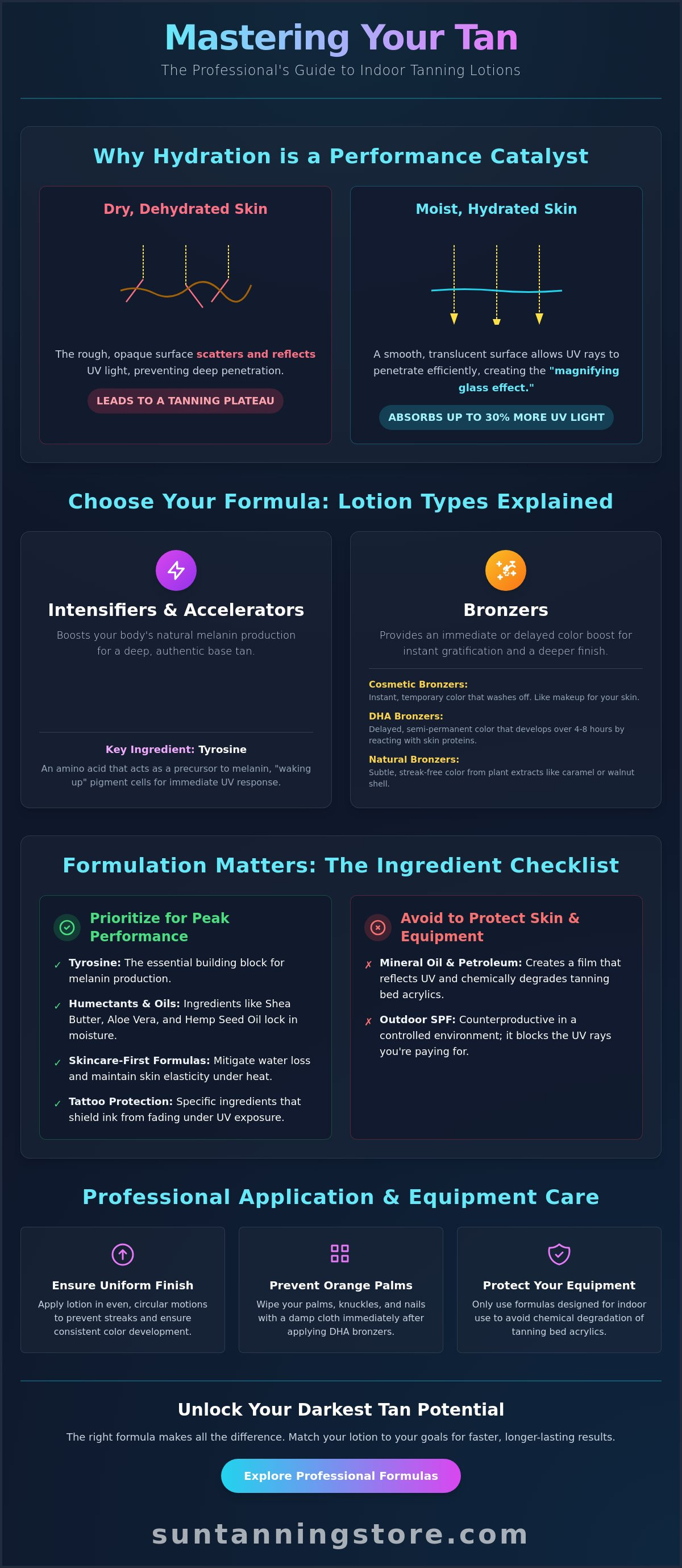
Dry skin is the primary obstacle to a professional-grade bronze. When skin is dehydrated, the surface becomes rough and opaque, causing UV light to scatter and reflect away (refraction) rather than being absorbed. This inefficiency often leads to a "tanning plateau," where your color stops deepening regardless of how often you tan. Premium lotions solve this through what professionals call the "magnifying glass effect." By saturating the skin with specific essential oils and humectants, the lotion creates a smooth, translucent surface that allows UV rays to pass through the epidermis with minimal resistance.
Maintaining high hydration levels also mitigates trans-epidermal water loss (TEWL) caused by the high heat of tanning lamps. Consider these functional benefits of hydrated skin:
- Increased UV Penetration: Moist skin can absorb up to 30% more UV light than dry skin.
- Color Longevity: Hydrated cells stay on the surface longer, delaying the exfoliation process that fades your tan.
- Skin Integrity: Proper moisture prevents the "leathery" texture associated with overexposure and dry-tanning.
By using a dedicated formula, you aren't just buying a scent; you're investing in a technical tool that optimizes light absorption while preserving your skin's structural health.
Decoding Lotion Types: Bronzers, Intensifiers, and Tingle Formulas
Selecting the right tanning lotion for tanning bed sessions is a technical decision, not just an aesthetic one. Price points in the professional market vary significantly. While premium costs often reflect advanced skincare technology, they don't always guarantee faster results if the formula isn't matched to your experience level. You must align your product choice with your current melanin base to avoid plateauing or skin irritation. While the FDA guidance on tanning products focuses on safety and UV labeling, choosing the correct category ensures you achieve results with maximum efficiency.
Bronzers: Immediate Color vs. Delayed DHA
Bronzers offer a multi-dimensional approach to color. Cosmetic bronzers act as a temporary "makeup" for the skin, providing an immediate glow that washes off in the shower. DHA (Dihydroxyacetone) formulas are more advanced; they react with skin proteins to create a semi-permanent bronze that develops over 4 to 8 hours. Natural bronzers utilize plant-based extracts like caramel or walnut shell for a subtle, streak-free boost. Always wipe your palms with a damp cloth immediately after application. This prevents the "orange palm" effect caused by DHA over-saturation in thick skin tissue.
Intensifiers and Maximizers: The Purest Tan
Intensifiers, also known as maximizers or "white lotions," contain no added dyes or bronzing agents. They focus entirely on stimulating your body's natural pigment production through high concentrations of Tyrosine and essential oils. These are the ideal choice for beginners building a base tan or those with sensitive skin. Because they lack dyes, they are completely stain-free for towels and clothing. They also pose the lowest risk of residue buildup on bed acrylics. For those starting their journey, exploring professional-grade tanning lotions and sanitizers can help identify a clean, effective maximizer that won't compromise your equipment.
Tingle Lotions: For Advanced Tanners Only
Tingle formulas use active ingredients like Benzyl Nicotinate to increase micro-circulation at the skin surface. This process brings oxygen-rich blood to the melanin, accelerating the oxidation process for a significantly darker result. Users will experience intense heat and skin reddening. This is a deliberate physiological response, not a UV burn. However, these products are strictly for experienced tanners. Never use tingle lotions on the face or sensitive areas. Ensure you wash your hands thoroughly to avoid transferring the active ingredients to children or pets, as contact can cause significant discomfort.
If the heat of a tingle is too intense, consider "cooling" lotions as a sophisticated alternative. These provide a refreshing, menthol-based sensation that offsets the high temperatures of the tanning bed without the aggressive circulatory stimulation of a tingle formula.
Premium Ingredients: What to Look for (and Avoid) for Skin Health
The 2026 tanning market has shifted toward a "Skincare First" approach. It's no longer sufficient for a formula to just provide color; it must also preserve the skin's biological integrity. High heat during a session triggers trans-epidermal water loss (TEWL), a process where moisture evaporates from the skin's surface. This dehydration is the primary cause of the aged, leathery texture often associated with improper tanning habits. By utilizing a high-performance tanning lotion for tanning bed use, you're delivering concentrated antioxidants that neutralize free radicals generated during UV exposure. Modern clean formulas have also moved toward paraben-free and sulfate-free profiles to accommodate users with chemical sensitivities.
The Power of Hemp Seed Oil and Silicone
Hemp seed oil remains the gold standard for fatty acid replenishment in professional tanning products. It provides an ideal ratio of Omega-3 and Omega-6 fatty acids, which mimic the skin's natural lipid barrier to prevent moisture escape. Silicone is another essential component in premium lotions, though it's often misunderstood. High-grade, non-comedogenic silicones create a "blurring" effect that visually smooths the skin while locking in active ingredients. These advanced silicones do not clog pores. Instead, they provide a breathable, velvet-like shield that ensures your skin remains soft long after the session ends.
Anti-Aging and Tattoo Protection Technologies
For users with body art, "Tattoo Shield" technology is a non-negotiable feature. These formulas use concentrated botanical blockers to prevent UV rays from breaking down ink pigments, ensuring your tattoos remain vibrant and sharp. Premium lotions also incorporate collagen-boosting peptides to maintain skin elasticity and caffeine as a firming agent. Caffeine acts as a temporary vasoconstrictor, which helps tighten the skin's appearance and reduce the visible signs of cellulite. While it's vital to stay informed about the health risks of indoor tanning, integrating these advanced skincare technologies helps mitigate the aesthetic signs of skin fatigue and UV-induced stress.
The Mineral Oil Red Flag
Mineral oil is the primary enemy of tanning bed maintenance and performance. It creates a heavy, greasy film that reflects UV light away from the body, effectively reducing the efficiency of your session. More importantly, mineral oil causes chemical degradation of tanning bed acrylics, leading to clouding and structural cracking that requires expensive replacement. Professional distributors strictly exclude products containing mineral oil because they prioritize equipment longevity and maximum light transmission for their customers.
Application Mastery: Achieving a Professional, Streak-Free Glow
Application technique is 50% of your final result. Even the most advanced tanning lotion for tanning bed use will underperform if it's applied unevenly or on poorly prepared skin. To achieve a high-end bronze, you must treat the application process as a professional protocol rather than a casual task. Precision ensures that you maximize the value of your product while avoiding the common pitfalls of streaking or uneven development.
The Pre-Tan Prep Routine
Exfoliation is non-negotiable. Complete this step 24 hours prior to your session to remove dead skin cells and ensure a smooth surface for absorption. Pay close attention to "prime spots" like elbows, knees, and ankles. These areas are naturally drier and tend to absorb excess product, which often leads to unnatural dark patches. Before you begin your session, ensure your equipment is prepped with professional tanning bed sanitizers to maintain a hygienic environment that won't interfere with the lotion’s chemistry or your skin’s health.
Step-by-Step: The Circular Motion Technique
Precision matters during the actual application. Apply the formula using circular, overlapping motions to eliminate gaps and ensure total coverage across the entire body. While bare hands are traditional, using a tanning mitt offers superior control and prevents product from over-saturating your palms. For hard-to-reach areas like the mid-back, a lotion applicator is a valuable tool for maintaining consistency. If you're using high-DHA bronzers, remember that "less is more." Over-application doesn't lead to a darker tan; it typically leads to product buildup and potential streaking. Timing also impacts efficiency. Most modern professional formulas are designed for application immediately before you enter the bed, ensuring active ingredients are at their peak when UV exposure begins.
Post-Tan Maintenance: The First 4 Hours
The first four hours after your session are critical for color setting. If your formula contains DHA bronzers, avoid showering or heavy sweating during this window to allow the chemical reaction with your skin's proteins to finalize. When you do shower, use cool water. This keeps the pores closed and locks the color in place. Replace your standard grocery-store body wash with pH-balanced "Tan Extenders." These specialized moisturizers are formulated without the harsh sulfates that strip away your bronze. To maintain your professional results between sessions, you should invest in premium tanning lotions and extenders that support long-term skin hydration.
Hand hygiene is the final, essential step. Wash your hands thoroughly immediately after application, even if you didn't see any visible tint. This prevents the active bronzing agents from developing in the creases of your knuckles and palms, which is the most common sign of an amateur application.
Protecting Your Equipment: How Lotion Choice Impacts Bed Longevity
Your choice of tanning lotion for tanning bed sessions directly dictates the lifespan of your hardware. While the skincare benefits of premium formulas are well-documented, their role in equipment preservation is often overlooked by casual users. Many budget-grade or "outdoor" lotions rely on heavy petroleum derivatives and mineral oils. These ingredients are chemically incompatible with the high-grade acrylics used in professional tanning systems. When subjected to the intense heat of UV lamps, these oils undergo a thermal reaction that leaches plasticizers from the acrylic, leading to permanent structural damage and surface degradation.
Acrylic Clouding and Stress Cracks
Improper lotion choice is the primary cause of "crazing," which refers to the appearance of thousands of microscopic hairline cracks within the bed surface. These cracks aren't just aesthetic flaws; they compromise the physical integrity of the shield. Over time, these cracks and the chemical film left by unapproved oils lead to permanent acrylic clouding. A clouded acrylic can block up to 50% of the UV output from your lamps, effectively rendering a high-performance bed inefficient. This results in poor tanning results for the user and higher operational costs for the owner. To prevent this, always follow up every session with approved sanitizers to remove any residue. If the damage is already visible, the only solution is a professional tanning bed acrylic replacement to restore peak UV transmission and safety.
The Authorized Distributor Advantage
Reliability begins with sourcing. Buying from an authorized dealer like Sun Tanning Store ensures that you are receiving professional-grade, fresh inventory. The "diverted" products often found on mass marketplaces are frequently expired, watered down, or stored in temperature-uncontrolled warehouses that degrade the active ingredients. Using compromised tanning lotion for tanning bed sessions not only yields poor results but can also introduce unknown chemical contaminants to your tanning environment. Sun Tanning Store serves as an expert bridge between manufacturers and consumers, providing both the specialized equipment and the compatible consumables needed for success.
Maintaining your equipment requires a holistic approach. Pairing fresh, authorized lotions with high-output replacement tanning lamps ensures that your system operates at peak efficiency. This synergy between hardware and chemistry is what separates professional results from amateur attempts. By investing in the correct products, you avoid the hidden costs of equipment repair and ensure that every session delivers the maximum possible bronze. Sun Tanning Store remains the authoritative source for tanners who prioritize both their skin health and their equipment investment.
Optimize Your Professional Bronze and Equipment Performance
Achieving a deep, long-lasting tan requires a strategic combination of advanced skin chemistry and proper equipment maintenance. By selecting a high-performance tanning lotion for tanning bed use, you're not just accelerating melanin production; you're actively safeguarding your skin's hydration and the structural integrity of your tanning bed's acrylics. Professional results are the product of consistent application techniques and the use of authorized, salon-grade formulas that exclude harmful mineral oils and petroleum derivatives.
As an authorized national distributor, Sun Tanning Store provides access to professional grade salon supplies and expert support for both residential and commercial equipment. Our curated selection ensures you receive fresh, high-potency products that deliver reliable results without compromising your hardware investment. Whether you are building a base tan or pushing past a plateau, the right tools make the difference in your tanning efficiency and skin health.
Shop Professional Tanning Lotions and Salon Accessories today to secure the performance your skin deserves. We are here to help you achieve your darkest results with confidence and technical precision.
Frequently Asked Questions
Can I use regular outdoor sunblock in a tanning bed?
You cannot use regular outdoor sunblock in a tanning bed. SPF formulas are designed to reflect or absorb UV rays, which directly contradicts the purpose of a controlled indoor tanning session. Additionally, outdoor products frequently contain mineral oils and petroleum-based ingredients that cause chemical degradation and permanent clouding of tanning bed acrylics. Using these products can lead to expensive equipment repairs and significantly reduced UV output.
How long should I wait to shower after using a tanning bed lotion with bronzers?
You should wait at least 4 to 8 hours before showering after using a tanning lotion for tanning bed sessions that contains DHA bronzers. This timeframe allows the bronzing agents to fully react with your skin's proteins for a deep, semi-permanent color. Showering too early will rinse away the developing pigments, resulting in a lighter or potentially uneven finish. If you must shower sooner, use cool water and avoid scrubbing the skin.
Will tanning bed lotion stain my clothes or the bed?
High-DHA bronzers and cosmetic tints can temporarily stain light-colored clothing or towels if the product hasn't fully absorbed into the skin. However, professional-grade lotions are formulated to be safe for tanning bed surfaces when followed by a proper cleaning protocol. It is essential to use approved sanitizers immediately after every session to prevent residue buildup that can damage the acrylic shield over time.
Why does my skin smell "after-tan" and can lotion fix it?
The "after-tan" odor is caused by the interaction of high-intensity UV light with natural skin bacteria and the oxidation of melanin. Premium tanning lotions are engineered with ATO (After Tan Odor) inhibitors that neutralize these scents at the molecular level. Choosing a formula with high-quality botanical extracts and specialized stabilizing agents ensures you leave your session with a fresh, clean scent rather than a burnt aroma.
How much lotion should I actually use per session?
A standard application requires approximately 1 ounce, roughly the volume of a shot glass, of tanning lotion for tanning bed use to cover the entire body. Applying too little product leads to dry skin and poor UV absorption, while over-application is wasteful and can cause product buildup or streaking. Aim for a thin, uniform layer that absorbs completely into the skin without leaving a greasy or heavy residue on the surface.
Do tanning lotions expire, and how can I tell?
Tanning lotions typically expire 12 to 24 months after opening, or approximately three years from the manufacture date if the seal remains intact. You can check the "period after opening" (PAO) symbol on the bottle, which looks like a small open jar with a number followed by the letter M. Expired lotions lose their chemical potency, meaning the accelerators and bronzers will no longer deliver the promised results.
Is it safe to use tingle lotions on my face?
It is not safe to use tingle lotions on your face. Facial skin is significantly thinner and more sensitive than the skin on your body, making the intense micro-circulation triggered by tingle ingredients highly irritating. Using these products on the face can cause extreme redness, swelling, and prolonged discomfort. Always use a dedicated facial tanning accelerator or a gentle intensifier specifically formulated for sensitive skin areas.
What is the best type of lotion for someone with very fair skin?
Individuals with very fair skin should begin their tanning journey with a high-quality intensifier or maximizer. These formulas are designed to stimulate natural melanin production without the use of heavy bronzing dyes that can look unnatural on pale skin tones. Once a solid base tan is established, you can gradually transition to a light bronzer. Avoid tingle formulas entirely until your skin has built up a significant tolerance to UV exposure.