


Tanning Bed Sanitizer Guide: Professional Hygiene & Equipment Care for 2026
Your cleaning routine might be silently destroying your most valuable assets. While many salon owners believe any industrial disinfectant will suffice, using an unapproved tanning bed sanitizer often leads to cloudy, brittle, or cracked acrylics that block UV penetration and compromise client results. It is a costly mistake (often irreversible) that stems from a misunderstanding of chemical compatibility and evolving state-level health mandates. You likely feel the pressure of balancing rigorous hygiene standards with the need to protect expensive equipment from chemical degradation; it is a delicate trade-off between client safety and long-term profitability.
We understand that navigating shifting regulations, such as the FDA's March 2026 decision to return age-restriction authority to the states, adds a layer of complexity to your daily operations. This guide provides the technical precision required to master the science of sanitization. We will break down the essential mixing ratios for quaternary ammonium compounds, explain how to maintain 100% EPA compliance, and reveal the specific protocols that keep your acrylics crystal clear for maximum UV output. Prepare to transform your maintenance routine into a professional-grade hygiene strategy that protects both your clients and your bottom line.
Key Takeaways
- Understand why pH-neutral, non-abrasive germicides are mandatory for preventing the micro-cracking and cloudiness caused by standard household cleaners.
- Master the essential "dwell time" protocol to ensure 100% elimination of pathogens while protecting the structural integrity of your equipment.
- Implement a professional tanning bed sanitizer routine that eliminates lotion film, allowing for maximum UV penetration and better tanning results.
- Identify the specific roles of quaternary ammonium compounds and surfactants in effectively breaking down stubborn silicone-based bronzers.
- Evaluate the logistical trade-offs between sanitizing wipes and concentrated sprays to optimize both cost-efficiency and salon turnaround times.
The Science of Tanning Bed Sanitizer: Why Household Cleaners Are Dangerous
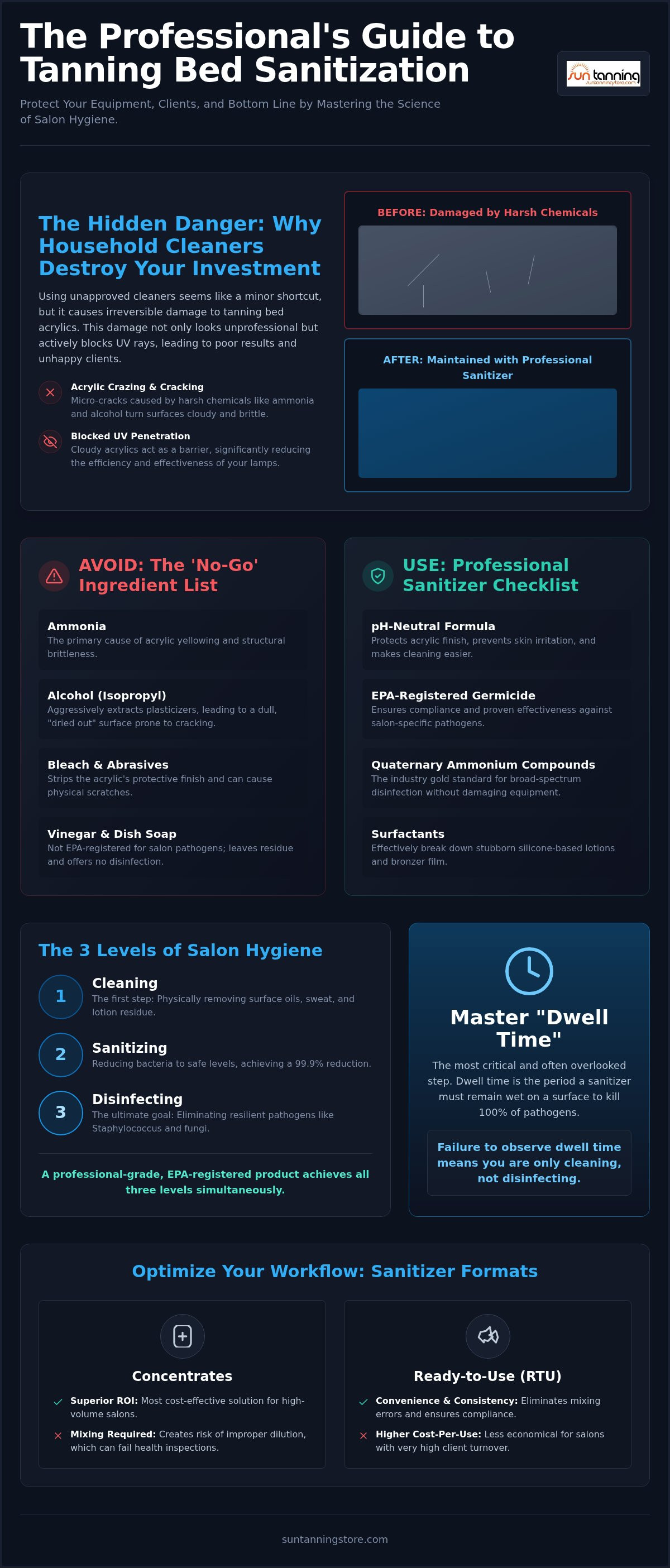
Professional maintenance starts with chemistry. A high-quality tanning bed sanitizer isn't just a surface cleaner; it's a precision-engineered, pH-neutral germicide designed for specific materials. Most household cleaners rely on aggressive solvents like ammonia or isopropyl alcohol to cut through grease. While these work on glass or ceramic, they're catastrophic for polymethyl methacrylate, the technical name for tanning bed acrylic. Acrylic is a porous thermoplastic. When exposed to harsh chemicals, it undergoes a process called "crazing." These are microscopic stress cracks that eventually turn the surface cloudy. This cloudiness doesn't just look unprofessional. It physically blocks UV rays, reducing the efficiency of your lamps and frustrating your clients, which is why proper equipment maintenance is essential for long-term success.
Compliance is another critical factor. Professional-grade sanitizers must be EPA-registered for salon use. This registration ensures the product has been tested specifically for the pathogens found in a tanning environment. Using an unregistered "home remedy" like vinegar or diluted dish soap leaves you vulnerable to health board violations and potential lawsuits. It's a risk that far outweighs the minor savings of using non-professional supplies.
Sanitizing vs. Disinfecting: Knowing the Difference
The terms are often used interchangeably, but the technical definitions vary significantly in a professional setting. Cleaning is the first step; it involves removing surface oils, sweat, and tanning lotions. Sanitizing takes it further by reducing bacteria to safe levels, typically a 99.9% reduction. However, true protection requires a disinfectant. A high-level tanning bed sanitizer must be able to eliminate microbes found on tanning beds, including resilient pathogens like staphylococcus aureus and various fungi. Without a broad-spectrum disinfectant, you're merely moving germs around rather than eradicating them.
The Role of pH-Neutral Formulas
Balance is everything. If a cleaner is too acidic or alkaline, it strips the acrylic's protective finish over time. A pH-neutral formula maintains the "slick" surface of the bed. This is vital because a smooth surface prevents silicone-based bronzers from bonding to the acrylic, making subsequent cleanings much easier. Beyond equipment care, pH balance impacts the client experience. Residue from highly alkaline cleaners can cause skin irritation or rashes for the next tanner. By choosing a neutral formula, you protect the equipment's ROI and ensure a comfortable environment for every guest.
Essential Ingredients: What to Look for in a Tanning Bed Cleaner
Choosing a tanning bed sanitizer requires a deep understanding of active chemical agents. The industry gold standard is Quaternary Ammonium Compounds, often called "Quats." These work by disrupting the cell membranes of pathogens, providing a broad-spectrum kill without damaging the bed. However, a disinfectant alone isn't enough. Professional cleaners also include surfactants, which are specialized molecules that lower the surface tension of liquids. In a salon, surfactants are critical because they break down the heavy silicone oils and bronzers found in modern tanning lotions that otherwise create a stubborn, UV-blocking film.
Efficiency often dictates the choice between concentrates and Ready-to-Use (RTU) formulas. High-volume salons typically prefer concentrates for their superior ROI, as a single gallon of concentrated solution can produce dozens of gallons of usable cleaner. Conversely, RTU sprays offer convenience and eliminate the risk of improper mixing ratios, which is a common point of failure during health inspections. Regardless of the format, modern formulas now prioritize sophisticated deodorizers that neutralize the "burnt hair" smell often associated with UV exposure, replacing it with a clean, high-end fragrance that enhances the salon atmosphere.
The 'No-Go' Ingredient List
Avoid any product containing ammonia, as it is the primary cause of acrylic yellowing and structural brittleness. Alcohol is equally dangerous; it aggressively extracts plasticizers from the acrylic, leading to a dull, "dried out" surface that is prone to cracking. Bleach should also be strictly avoided. In the enclosed environment of a tanning bed, bleach fumes can cause severe respiratory irritation for clients and may trigger adverse skin reactions when combined with sweat and tanning accelerators.
EPA Registration and Labeling
Every professional disinfectant must carry an EPA registration number, signifying that its "kill claims" have been verified through rigorous testing. Because tanning beds are classified under FDA regulations for tanning equipment as Class II medical devices, the standards for hygiene are exceptionally high. For 2026, ensure your cleaner is rated to handle MRSA, Ringworm, and Influenza. To verify efficacy, always check the label for the specific dwell time required to neutralize the pathogens listed in the technical specifications. If you are seeing signs of wear from previous cleaning errors, it might be time to upgrade to a professional tanning bed sanitizer to restore your equipment's performance.
The Professional Sanitization Protocol: Step-by-Step for 2026
Execution is as critical as the chemical composition of your cleaner. Even the most advanced tanning bed sanitizer will fail to protect your clients if the application protocol is flawed. Professional sanitization is a multi-stage process that begins with physical preparation. Before applying any disinfectant, you must remove excess debris, sweat, and tanning lotion residue. These organic materials create a physical barrier that shields pathogens from the sanitizing agent. Use a dedicated, dry cloth to clear the surface first; this ensures the chemical solution makes direct contact with the acrylic rather than just sitting on top of a layer of bronzer.
The most common failure in salon hygiene is ignoring "dwell time." This is the specific duration a surface must remain wet with the solution to achieve the kill claims listed on the label. Depending on the specific formula, this window typically ranges from 60 seconds to 10 minutes. If you spray and immediately wipe, you aren't disinfecting; you're simply moving bacteria around. This oversight significantly increases the risk of skin infections such as staph or ringworm. For 2026, the standard for high-efficiency salons is a 60-second dwell time, but you must verify this against your product's EPA-approved instructions to ensure full compliance.
Cross-contamination prevention is the next priority. Never use the same microfiber cloth for multiple beds without a full laundry cycle between uses. Many modern facilities have transitioned to high-quality disposable wipes to eliminate this risk entirely. Once the dwell time is complete, wipe the surface in a consistent, overlapping pattern. Finish with a post-sanitization inspection to check for streaks. Any visible film or residue acts as a filter that blocks UV rays, directly reducing the tanning efficacy of your equipment.
Proper Dilution Ratios for Concentrates
Precision matters when mixing your tanning bed sanitizer. There's a persistent myth that "more is better," but over-concentrated solutions leave a sticky, dulling film on the acrylic that attracts more dirt. For major professional brands, the standard dilution is 2 ounces of concentrate per gallon of water. To eliminate human error and ensure consistent results, commercial salons should utilize automated proportioning systems. These systems guarantee the correct parts-per-million (ppm) concentration required by state health boards while preventing product waste.
Cleaning High-Touch Areas Beyond the Acrylic
Hygiene extends beyond the tanning surface. High-touch areas like the bed handles, fan vents, and headrest pillows require the same level of disinfection as the acrylic itself. During weekly deep-cleaning sessions, you should also clean the underside of the acrylic and the lamp reflectors. Dust buildup on reflectors can reduce UV output by up to 10%. If your current acrylics are already showing signs of permanent cloudiness or "crazing" from past cleaning errors, visit Sun Tanning Store to source factory-spec replacements that restore your bed's original performance.
Protecting Your ROI: Sanitization and Equipment Maintenance
ROI in the tanning industry is measured by the lifespan of your components and the quality of the results they deliver. Using a sub-par tanning bed sanitizer is one of the fastest ways to accelerate equipment depreciation. When improper chemicals cause the acrylic to cloud or crack, you aren't just looking at an aesthetic issue; you're facing significant tanning bed acrylic replacement costs that could have been avoided with a professional-grade solution. Beyond the physical damage, there is the hidden cost of "lost tanning power" that eats away at your margins every single day.
UV transparency is the lifeblood of your business. Industry data indicates that even a 1% film buildup, which is often invisible to the naked eye, can reduce UV output by as much as 10%. This means your lamps are working at full capacity and consuming electricity, but your clients receive a fraction of the intended benefit. Over time, this leads to dissatisfied customers who feel they "aren't getting dark," prompting them to seek out competitors with better-maintained equipment. Maintaining a strict cleaning protocol ensures your lamps perform as advertised for their entire rated lifespan.
Hybrid units, which combine UV tanning with red light therapy, require even more meticulous care. These specialized acrylics must remain perfectly clear to allow both UV and red light wavelengths to penetrate the skin effectively. Additionally, always be mindful of the cooling fans. Overspraying sanitizer near intake vents can lead to chemical ingestion, where the mist is pulled into the internal electronics and lamp sockets. This can cause corrosion or premature component failure. If you need to refresh your maintenance supplies, you can shop our professional-grade sanitizers and replacement parts to ensure your equipment stays in peak condition.
Maximizing UV Transparency
Clean surfaces aren't always transparent surfaces. To achieve a streak-free finish, use a two-step technique: apply the tanning bed sanitizer, allow for the required dwell time, and then buff the acrylic with a fresh, dry microfiber cloth. This final buffing stage removes any residual surfactants that might otherwise create a hazy film. The cost of a premium sanitizer is negligible compared to the revenue lost when clients perceive your beds as "weak" due to film-related UV blockage.
Sanitization for Home Tanning Bed Owners
Residential users often overlook hygiene because the bed isn't shared with the public. However, sweat and skin oils will still degrade the acrylic if left to sit. For low-volume home use, a full cleaning after every session is still mandatory. Store your sanitizers in a cool, dark place to maintain chemical potency, as heat can break down the active ingredients over time. Integrating these steps into your tanning salon equipment packages maintenance schedule will help your home unit last for decades rather than years.
Choosing the Right Sanitizer for Your Tanning Setup
Efficiency drives profitability. Choosing a tanning bed sanitizer involves balancing operational speed with bottom-line costs. While pre-moistened wipes provide undeniable speed for rapid room turnover, sprays derived from gallon-sized concentrates remain the undisputed leaders in cost-efficiency for high-volume commercial environments. Wipes offer a standardized application that eliminates the risk of overspray, but the per-use cost is significantly higher than a properly diluted concentrate. For most salon owners, the most pragmatic approach is a hybrid strategy: utilizing sprays for the primary bed surfaces and wipes for smaller accessories or specialized home units.
Sensory details also influence the client's perception of your facility. Modern scent profiles have moved beyond the sterile, "hospital-grade" odors of the past. Today's premium sanitizers balance a powerful germicidal kill with light, luxury fragrances that signal a high-end experience to your guests. Compatibility is the final, non-negotiable factor. If you're operating advanced equipment like the ProSun Jade 32 or the Onyx series, you must use a verified tanning bed sanitizer that is specifically tested for high-output acrylics. Using an unapproved or generic chemical can void your manufacturer warranty and lead to the premature degradation discussed in previous sections.
Commercial Salon Needs vs. Residential Convenience
Salons with high turnover should prioritize hospital-grade concentrates. These formulas allow for bulk purchasing, which significantly reduces shipping costs and long-term overhead. Conversely, home users often find the convenience of pre-moistened wipes more practical, especially for smaller red light therapy units or red light tanning canopies. Regardless of your volume, only purchase from authorized distributors to ensure you're receiving authentic, unexpired products. Expired chemicals lose their potency, meaning the dwell times you've calculated may no longer be effective against resilient pathogens.
Sun Tanning Store: Your Partner in Salon Maintenance
Maintaining equipment ROI requires more than just a cleaning schedule; it requires the right supply partner. At Sun Tanning Store, we act as a reliable bridge between manufacturers and salon owners, providing access to a comprehensive range of tanning bed parts and accessories including specialized, warranty-approved cleaners. Our expert support team can help you identify chemicals that are 100% compatible with ProSun and other major brands. By sourcing your maintenance products from an authorized national distributor, you ensure your equipment stays compliant, your acrylics stay clear, and your business remains protected against the hidden costs of improper hygiene.
Mastering Equipment Longevity Through Professional Hygiene
Protecting your investment requires more than just a quick wipe between sessions. As established in this guide, the choice of a professional tanning bed sanitizer is a fundamental business decision that impacts both your equipment's lifespan and your clients' results. By adhering to strict dwell time protocols and utilizing pH-neutral, Quat-based formulas, you eliminate the risk of microscopic stress cracks while ensuring a germ-free environment. This level of technical precision prevents the "cloudy acrylic" trap, allowing your ProSun beds to maintain maximum UV transparency and peak performance throughout their lifecycle.
Ready to upgrade your maintenance protocol? As an authorized national distributor for industry leaders like ProSun and Lucasol, Sun Tanning Store provides the specialized supplies you need to remain compliant and profitable. We offer expert technical support specifically for salon owners and provide free shipping on qualifying national orders to keep your overhead low. Shop Professional Tanning Bed Sanitizers and Maintenance Supplies today and ensure your facility sets the standard for safety and efficiency in 2026. Your equipment and your clients will notice the difference.
Frequently Asked Questions
Can I use Windex or glass cleaner on my tanning bed acrylic?
No, you should never use ammonia-based glass cleaners on tanning bed acrylics. Ammonia is a harsh solvent that causes "crazing," which are microscopic stress cracks that turn the surface cloudy and brittle. This damage is permanent and blocks UV rays, eventually requiring a full replacement of the acrylic to restore tanning performance. Always use a pH-neutral tanning bed sanitizer to protect your equipment's structural integrity.
How long does tanning bed sanitizer need to sit before I wipe it off?
Most professional disinfectants require a "dwell time" of 60 seconds to 10 minutes to effectively kill pathogens. If you wipe the surface immediately after spraying, you aren't disinfecting; you're simply moving bacteria around. Check your product's EPA label for the specific duration required to neutralize threats like MRSA and ringworm. In states with strict health boards, ensuring the correct dwell time is a mandatory part of maintaining legal compliance.
Is it safe to use baby wipes to clean a tanning bed?
No, baby wipes are not an acceptable substitute for professional salon hygiene products. They are formulated for skin sensitivity and lack the germicidal agents needed to eliminate fungi or bacteria on non-porous surfaces. Furthermore, baby wipes often contain moisturizing oils or aloe that leave a film on the acrylic. This residue blocks UV light and creates a sticky surface that attracts more tanning lotion buildup.
How often should I clean the underside of the tanning bed acrylic?
You should clean the underside of the acrylic at least once a month for residential beds and weekly for high-volume commercial units. Dust and chemical mist can migrate behind the acrylic, coating both the lamps and the reflectors. This hidden buildup can reduce your bed's UV output by a significant margin. Regular maintenance of the underside ensures your lamps operate at their maximum rated efficiency.
What is the best way to remove tanning lotion buildup from the bed?
The most effective method is using a professional cleaner containing surfactants. These specialized ingredients break down the silicone oils and bronzers found in modern lotions without the need for abrasive scrubbing. Apply your tanning bed sanitizer, allow it to sit for the full dwell time to soften the residue, and then buff the surface with a clean microfiber cloth. This process removes the film while maintaining a streak-free finish.
Does tanning bed sanitizer expire or lose its effectiveness over time?
Yes, sanitizer concentrates typically have a shelf life of one to two years when stored in a cool, dark place. Once you dilute the concentrate with water, the solution begins to lose its chemical potency more rapidly. Most commercial salons refresh their spray bottles every 24 hours. This practice ensures that the solution maintains the parts-per-million (ppm) concentration required to meet state health board standards for disinfection.
Are there organic or natural alternatives for tanning bed sanitization?
There are currently no "natural" alternatives, such as vinegar or tea tree oil, that meet EPA requirements for professional salon use. While these substances might remove surface dirt, they don't provide the broad-spectrum kill needed to protect clients from resilient skin infections. To ensure 100% germ-free results and stay compliant with state board regulations, you must use an EPA-registered, hospital-grade disinfectant.
Can I use the same sanitizer for my spray tanning equipment?
Yes, professional tanning bed disinfectants are generally safe for the non-porous surfaces of spray tanning booths and floor mats. However, don't spray the solution directly into the internal components of your spray gun or turbine. For the application hardware itself, stick to the specific flushing agents provided in your spray tanning start-up kit to prevent clogs or corrosion in the precision nozzles.