


How to Clean Tanning Bed Acrylics: The Ultimate Sanitization Guide
Using the wrong household cleaner on your equipment is the fastest way to turn a $500 tanning bed acrylic into a cloudy, cracked liability. It's a common mistake that compromises both hygiene and performance. You've likely felt that hesitation before spraying down a bed, worrying if your current solution is causing invisible "crazing" or if it's actually killing 99.9% of germs as required by state regulations in regions like Ohio and Colorado. Understanding how to clean tanning bed acrylics is about more than just a quick wipe; it's a critical maintenance step that protects UV transparency and prevents expensive equipment failure.
We're here to provide the professional methodology for sanitization that ensures your equipment maintains maximum output and a pristine, streak-free finish. You'll learn the essential 60-second contact rule for EPA-registered disinfectants and which specific chemicals to avoid to prevent premature aging of your acrylic sheets. This guide outlines the exact steps to achieve a sanitized environment that meets safety standards while extending the lifespan of your commercial or home tanning units.
Key Takeaways
- Master the professional protocol for how to clean tanning bed acrylics to maintain maximum UV transmission and prevent the structural "crazing" caused by common household cleaners.
- Identify why ammonia, alcohol, and vinegar are destructive to semi-porous thermoplastic sheets and lead to permanent surface clouding or cracking.
- Discover the critical 60-second contact time and precise dilution ratios required for EPA-registered sanitizers to effectively eliminate pathogens.
- Understand why microfiber cloths are the only industry-approved material for preventing micro-scratches and streaks during the sanitization process.
- Recognize the early signs of UV-induced yellowing and heat damage to determine the optimal timing for equipment component replacement.
Understanding Tanning Bed Acrylics and the Role of Specialized Sanitizers
Acrylic isn't just a window. It's a high-performance thermoplastic sheet specifically engineered to allow maximum ultraviolet (UV) transmission. Most Indoor tanning beds use these specialized panels because they withstand high heat while remaining transparent to the specific wavelengths required for tanning. Unlike standard glass, which blocks a significant portion of UV rays, these acrylics act as a critical bridge between the lamps and the user. If you're researching how to clean tanning bed acrylics, you must first recognize that you're working with a semi-porous material. This porosity means the surface can actually absorb the harsh chemical vapors found in everyday household cleaners, leading to structural failure over time.
Standard glass cleaners fail because they are formulated for non-porous surfaces. Most contain ammonia or vinegar, which triggers a chemical reaction known as "crazing" in acrylic. This results in thousands of microscopic internal cracks that eventually turn the sheet brittle. Beyond structural integrity, there's the "UV Block" effect. Lotion buildup, skin oils, and sweat residue create an invisible film that can decrease tanning efficiency by up to 20%. This means users aren't getting the results they pay for, and lamps have to work harder to achieve the same effect. Regular cleaning isn't just about looks; it's about maintaining the technical performance of your equipment.
Sanitization is distinct from simple cleaning. While a "cleaner" might remove a smudge, a true tanning bed sanitizer is an EPA-registered disinfectant designed to kill specific pathogens. In a high-heat, high-moisture environment, bacteria such as staph and various fungi can thrive. Professional-grade sanitizers are required by state regulations in many areas to ensure a safe environment. These products are pH-neutral and specifically balanced to interact safely with the thermoplastic without stripping its protective finish.
The Science of UV Transmission
Clarity is the primary metric for acrylic performance. Clear, well-maintained acrylic allows UVA and UVB rays to reach the skin with minimal interference. When you use the wrong chemicals, you create "clouding," which acts as a physical filter. This clouding scatters the UV rays rather than letting them pass through cleanly. Maintaining crystal-clear transparency is the only way to ensure consistent tanning results across every session. Even a slight haze can significantly impact the user experience and the perceived value of the service.
Why Acrylic is an Investment
Replacing a single professional-grade acrylic sheet is expensive; costs often exceed $500 per panel depending on the bed model. However, these components are remarkably durable when maintained correctly. By using the proper methods for how to clean tanning bed acrylics, you can extend their functional lifespan to 1,000 hours of use or more. Proper care involves using pH-neutral solutions that prevent the material from drying out or becoming yellowed. Protecting this investment through daily, disciplined sanitization is far more cost-effective than premature equipment failure.
What NOT to Use: Avoiding the Mistakes That Ruin Acrylics
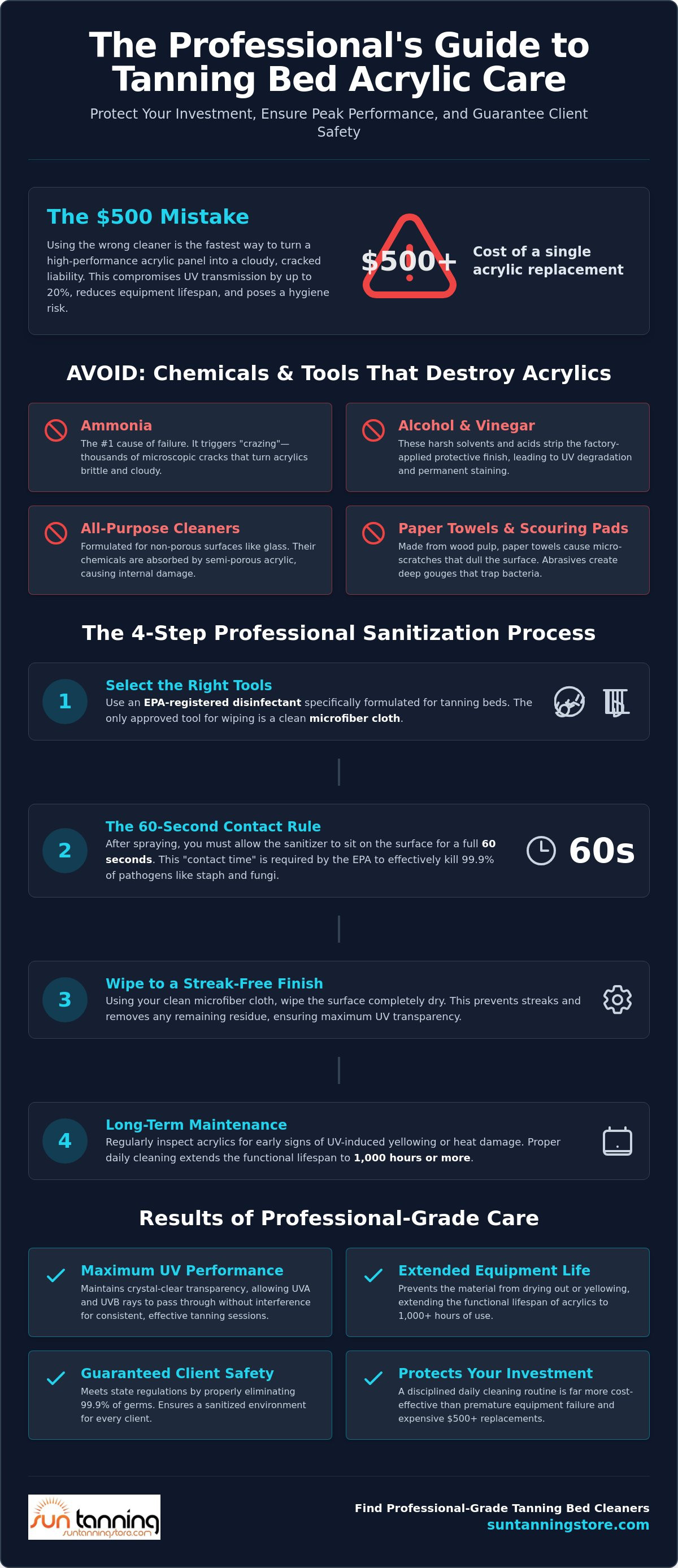
Using the wrong chemicals is the fastest way to destroy your equipment. Ammonia is the primary catalyst for equipment failure in the tanning industry. While these chemicals effectively strip grease from household windows, they initiate a destructive process when applied to specialized tanning thermoplastics. Many owners mistakenly reach for common window cleaners, only to find their expensive acrylic sheets clouded and brittle within weeks. Understanding how to clean tanning bed acrylics safely requires a total rejection of standard household "all-purpose" cleaners.
Alcohol and vinegar are equally problematic. Although often cited in DIY cleaning guides, these substances act as harsh solvents or acids that strip the acrylic’s factory-applied protective finish. Once this finish is gone, the material becomes vulnerable to UV degradation and staining. Abrasive tools present another physical risk. Paper towels, which are manufactured from wood pulp, can leave microscopic scratches that dull the surface over time. Scouring pads are even more dangerous, as they can create deep gouges that trap bacteria and impede UV transmission. Choosing professional-grade tanning sanitizers ensures you avoid these chemical pitfalls from the start.
Aerosol sprays also pose a hidden operational hazard. The fine mists produced by these cans often drift past the acrylic surface, settling directly onto the tanning lamps and reflectors. When the bed is activated, this residue can bake onto the glass, causing the lamps to overheat or, in extreme cases, creating a fire hazard. Stick to trigger-pull spray bottles that provide a controlled, heavy droplet to keep the solution exactly where it belongs.
The "Crazing" Phenomenon Explained
Crazing is the industry term for the network of fine, hair-like cracks that appear just below the surface of the acrylic. It isn't a surface scratch; it's a structural breakdown. Once crazing begins, it's irreversible and will eventually lead to the acrylic shattering under the weight of a user. The heat generated by tanning lamps (which can reach significant temperatures during back-to-back sessions) accelerates this chemical damage, literally baking the incorrect cleaner into the pores of the material. If you see these tiny internal fractures, total acrylic replacement is your only safe option.
Safe vs. Unsafe Chemical List
Protect your investment by strictly adhering to these chemical guidelines. Professional environments should never allow the following forbidden ingredients near a tanning unit:
- Ammonia: Causes immediate crazing and cloudiness.
- Bleach: Strips the UV-resistant coating and yellows the sheet.
- Alcohol: Acts as a solvent that dries out the thermoplastic.
- Citrus-based solvents: Can dissolve the surface finish and leave oily residues.
Conversely, safe maintenance relies on specific formulations designed for high-heat environments. Look for products containing quaternary ammonium at the manufacturer’s recommended dilution ratio. These specialized surfactants effectively lift skin oils without reacting with the plastic. A pH-neutral solution is the gold standard for acrylic safety because it cleans and disinfects without altering the material's chemical structure. Mastering how to clean tanning bed acrylics starts with reading the ingredient label on every bottle in your facility.
Step-by-Step Guide: How to Clean Tanning Bed Acrylics Like a Pro
Success in equipment maintenance relies on a repeatable, disciplined sequence. Learning how to clean tanning bed acrylics effectively is a two-part process involving daily sanitization and weekly technical maintenance. Before you begin, ensure you've prepared your solution correctly. If you're using concentrates, follow the manufacturer's dilution ratio exactly. Precision is mandatory; over-diluting makes the sanitizer ineffective against pathogens, while under-diluting can leave a tacky, UV-blocking residue on the thermoplastic surface. Always mix fresh batches daily to maintain the chemical potency required for hospital-grade disinfection.
Start by removing any large debris or excessive lotion buildup. Users often leave behind thick layers of bronzer, skin oils, or sweat that act as a physical barrier. A quick pre-wipe with a clean microfiber cloth can remove these obstructions, allowing the sanitizer to make direct contact with the acrylic surface. This is where the "Spray and Wait" rule becomes critical. For a sanitizer to be effective, it must remain wet on the surface for a specific duration. In accordance with strict sanitization standards, you should allow the solution to sit for at least 60 seconds to ensure it kills 99.9% of bacteria, viruses, and fungi.
The Daily Sanitization Routine
- Step 1: Apply the tanning bed sanitizer evenly across the entire canopy and bench surface. Ensure you cover high-contact areas like the headrest and any side panels or handles.
- Step 2: Allow the solution to dwell for a full 60 seconds. This contact time is the only way to achieve true disinfection rather than just a superficial cleaning.
- Step 3: Wipe the surface with a clean, soft microfiber cloth using a consistent side-to-side motion. Avoid circular patterns, as these can trap grit and cause micro-scratches that eventually dull the acrylic's clarity.
Weekly Deep Cleaning (Under the Acrylic)
Hygiene doesn't stop at the surface. Dust and lotion vapors often migrate behind the panels, coating your lamps and reflectors. This buildup acts as a thermal insulator, shortening lamp life and significantly reducing UV output. Mastering how to clean tanning bed acrylics includes addressing these hidden areas to protect your equipment's performance.
- Step 4: Safely remove the acrylic panels according to your specific bed model's manual. This typically involves releasing several retaining clips or removing the side trim pieces.
- Step 5: Use a dedicated duster or a dry microfiber cloth to clean the lamps and the highly reflective surfaces behind them. Wipe the backside of the acrylic sheet with your sanitizer solution to remove any "fogging" or film.
- Step 6: Reinstall the panels carefully. Ensure all clips are fully secured to prevent rattling or vibration-induced cracking during the next session.
Perform a final post-cleaning inspection after reassembly. Look for streaks, lint, or cloudy patches under bright light. A perfectly cleaned bed should appear crystal clear, ensuring every watt of UV energy reaches the user without interference. This level of detail doesn't just meet safety standards; it maximizes the ROI of your lamps and the satisfaction of your clients.
Essential Tools and Tanning Bed Sanitizer Selection
Efficiency in maintenance starts with the correct chemical selection. Choosing between concentrates and Ready-to-Use (RTU) sprays depends entirely on your session volume. RTU formats offer immediate convenience for home users or low-traffic environments, as they eliminate the risk of improper mixing. Commercial operations, however, prioritize concentrates for their logistical advantages and cost-efficiency. A single gallon of concentrate can often produce up to 64 gallons of hospital-grade solution. Regardless of the format, understanding how to clean tanning bed acrylics requires using products that are specifically formulated to be non-reactive with thermoplastics.
Microfiber cloths are the only acceptable material for this task. Paper towels, which are often made from wood pulp, act as a mild abrasive that creates a dull, hazy finish over time. Microfiber’s synthetic loops lift skin oils and debris away from the surface rather than dragging them across it. To ensure total clarity, adopt a "double-sided" cleaning philosophy. While the top surface receives the most direct contact, the underside often accumulates a thin film of dust and aerosolized tanning lotions. Keeping both sides clear is the only way to maintain the 20% efficiency gain discussed in previous sections. For those seeking professional-grade results, you can find complete kits in our tanning bed accessories collection.
Safety gear is a non-negotiable aspect of professional sanitization. Professional-grade chemicals are designed to be potent. Use nitrile gloves to prevent skin irritation and consider eye protection when mixing concentrates to avoid accidental splashes. This pragmatism protects the operator while ensuring the equipment is treated with the necessary chemical strength to meet state health codes.
Choosing the Right Sanitizer
Commercial compliance hinges on using EPA-approved, hospital-grade disinfectants. These products are rigorously tested to kill resistant pathogens like MRSA and Vancomycin-resistant Enterococcus (VRE). Beyond technical specifications, consider the scent profile. High-volume salons typically avoid heavy chemical odors, opting instead for "fresh" or "citrus" scents that reinforce the perception of a clean, premium environment. If you need to restock, you can buy tanning bed sanitizers that balance high-level disinfection with a pleasant user experience.
Maintaining Your Cleaning Tools
Your tools are only as effective as their current state of cleanliness. Microfiber cloths require specific care to remain non-abrasive. Wash them separately from other towels and never use fabric softener. Softeners coat the synthetic fibers in a waxy layer, which then transfers to the acrylic, causing streaks and attracting dust. Avoid cross-contamination by using a fresh, laundered cloth for every bed. Reusing the same cloth across multiple units simply moves bacteria from one station to another, undermining the entire purpose of your sanitization protocol. Dedicated, labeled spray bottles for your diluted concentrates will help prevent chemical mix-ups and ensure consistent results every time you perform the task of how to clean tanning bed acrylics.
Long-Term Maintenance and When to Replace Your Acrylics
Consistent maintenance is the only way to protect your equipment's ROI. Even when you've mastered how to clean tanning bed acrylics with professional-grade solutions, the material will eventually reach the end of its functional life. Monitoring for "yellowing" is your primary visual cue. This discoloration isn't just a surface stain; it's a sign of solarization, where the plastic's chemical structure has changed due to prolonged UV exposure. Yellowed acrylic acts as a filter, blocking the specific wavelengths required for an effective tan and reducing the overall efficiency of your lamps.
The heat factor is another critical variable. Cooling fans aren't just for user comfort; they are essential for keeping the acrylic at a stable operating temperature. If fans fail or filters become clogged, the concentrated heat from the lamps can warp the sheets or accelerate the crazing process discussed in earlier sections. Signs of structural failure, such as deep cracks that you can feel with a fingernail, are immediate red flags. These compromise the safety of the unit and require immediate attention. When you reach this stage, you can find high-quality tanning bed acrylic replacements for all major brands to restore your bed to factory specifications.
The 1,000-Hour Rule
Most manufacturers recommend a total replacement of acrylic panels every 1,000 to 1,500 hours of operation. Over time, the thermoplastic becomes brittle and loses its flexibility, making it prone to shattering under stress. It's a best practice to keep a detailed maintenance log to track both lamp hours and acrylic age. This data-driven approach ensures you aren't leaving money on the table with underperforming equipment or risking a safety incident due to aged components. Proper record-keeping is just as vital as knowing how to clean tanning bed acrylics on a daily basis.
Upgrading Your Setup
When it's time for a replacement, consider the specific needs of your users. Choosing between "frosted" and "clear" acrylic options can change the tanning experience; frosted panels help diffuse light for a more even tan, while clear panels offer the most direct UV transmission. For those starting fresh, our tanning salon equipment packages often include the initial maintenance supplies you need to start off on the right foot. Mastery of this process starts with the right materials and ends with knowing when to invest in new components.
Shop all tanning bed cleaners and sanitizers at Sun Tanning Store.
Maximize Your Equipment's Lifespan and Performance
Protecting your investment requires more than just a quick wipe after a session. It's about a disciplined approach to chemical selection and timing. By avoiding destructive ingredients like ammonia and strictly adhering to the 60-second contact rule, you ensure your equipment remains safe and structurally sound. Mastering how to clean tanning bed acrylics prevents the "crazing" and clouding that lead to expensive, premature replacements. Consistent daily sanitization combined with technical maintenance every 1,000 hours keeps your UV transmission at peak levels for every user.
As an authorized distributor for ProSun and other leading manufacturers, we provide the specialized tools you need to maintain professional standards. We offer national shipping on all replacement parts and provide expert support for commercial salon maintenance to keep your facility running at high efficiency. Just as interior equipment requires a specialized touch, your property's exterior also benefits from professional care; for instance, Poseidon Power Washing LLC provides safe, low-pressure cleaning solutions that protect high-end residential and commercial surfaces. Don't let improper cleaning compromise your results or your hardware's integrity. You're now equipped with the professional methodology to keep your units in pristine condition.
Browse Professional Tanning Bed Sanitizers and Cleaners today and invest in the long-term clarity of your equipment.
Frequently Asked Questions
Can I use Windex or glass cleaner on my tanning bed?
No, you should never use Windex or standard household glass cleaners on your equipment. These products contain ammonia, which triggers a destructive chemical reaction known as crazing. This results in permanent, microscopic internal cracks that make the acrylic brittle and cloudy. To protect your investment, always use a pH-neutral sanitizer specifically formulated for indoor tanning thermoplastics that won't compromise structural integrity.
How often should I clean my tanning bed acrylics?
You must sanitize the surface after every single session to meet state health regulations and ensure user safety. This immediate action prevents the buildup of skin oils and bronzers. Additionally, perform a deep clean once per week. During this weekly maintenance, you should remove the panels to clean the underside and dust the lamps, ensuring your equipment maintains its maximum UV transmission efficiency.
What is the best cloth to use for cleaning tanning bed acrylic?
A high-quality microfiber cloth is the only industry-approved material for this task. Microfiber is engineered to lift and trap debris within its synthetic fibers rather than dragging grit across the panel. This prevents the micro-scratches that dull the finish over time. Ensure you use a fresh, laundered cloth for every bed to prevent cross-contamination and maintain a professional, streak-free environment.
Is it safe to use paper towels on a tanning bed?
No, paper towels are not safe for use on specialized tanning acrylics. Because they are manufactured from wood pulp, they act as a mild abrasive. Over time, consistent use of paper towels will create a hazy, scratched surface that scatters UV rays and reduces tanning effectiveness. Stick to soft microfiber cloths to maintain the crystal-clear finish required for optimal session results and equipment longevity.
What happens if I don’t clean the underside of the acrylic?
Neglecting the underside of the panels leads to a buildup of dust and aerosolized lotion vapors. This film acts as a thermal insulator, causing lamps to run hotter and significantly shortening their functional lifespan. It also creates a physical barrier that reduces UV output. Learning how to clean tanning bed acrylics properly must include this internal maintenance to ensure you aren't losing significant tanning power to invisible residue.
How long should I let the sanitizer sit before wiping?
You should allow the sanitizer to remain wet on the surface for at least 60 seconds. This duration, known as contact time, is essential for the chemicals to effectively kill 99.9% of bacteria, viruses, and fungi. Wiping the solution off too quickly results in a clean-looking surface that remains biologically contaminated. Always follow the specific dwell time listed on your product's EPA-registered label for commercial compliance.
Can I use a vinegar and water solution to sanitize my tanning bed?
No, a vinegar and water solution is not an acceptable substitute for professional-grade sanitizers. Vinegar is highly acidic and can strip the protective UV-resistant coating from the acrylic over time. Furthermore, vinegar is not an EPA-registered disinfectant and will not kill resistant pathogens like staph or MRSA. Using DIY solutions typically leads to equipment damage and potential failure during health department inspections.
How do I know if my tanning bed acrylic needs to be replaced?
You should replace your panels if you notice significant yellowing, deep cracks, or surface cloudiness that persists after cleaning. These signs indicate structural solarization or permanent chemical damage. Most manufacturers recommend replacement every 1,000 to 1,500 hours of use. Understanding how to clean tanning bed acrylics helps delay this, but once the material feels brittle or shows internal crazing, it becomes a safety hazard that requires immediate replacement.